India secures its first ammonia dual-fuel bulk car...
1 hour ago

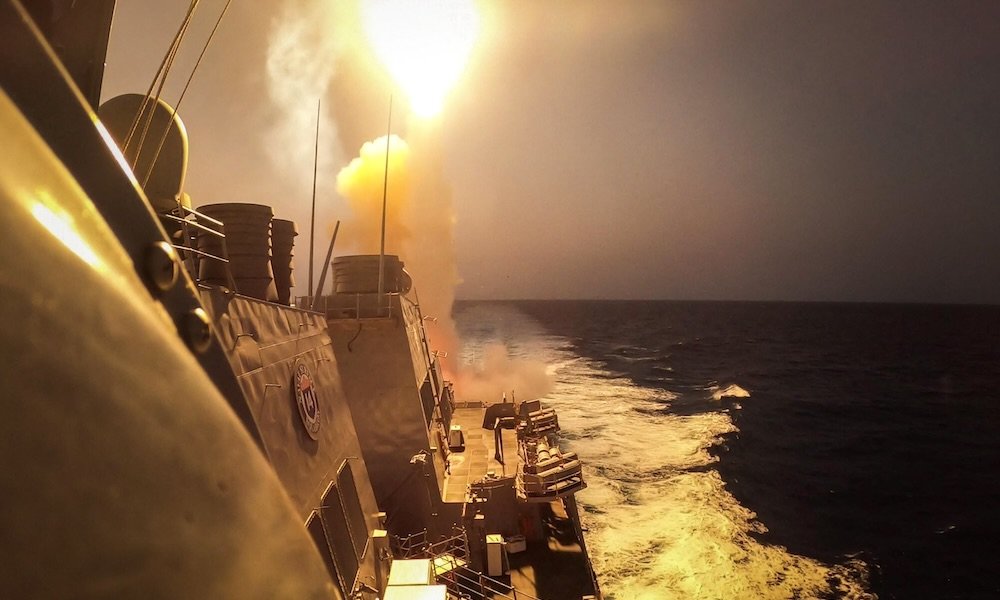
The tussle for control of the Strait of Hormuz has entered a new phase, with US president Donald Trump suggesting the United States could itself charge tolls on vessels transiting the waterway, a dual-corridor system emerging under Iranian and Omani management, and two Qatari LNG tankers blocked by Iran’s Revolutionary Guard.
Trump’s comments, made to reporters on Monday, added a startling new dimension to the already fraught question of who controls and profits from one of the world’s most critical energy chokepoint, rekindling comments made early last year over his keenness to take control of another chokepoint, the Panama Canal. Asked whether he would accept a deal allowing Iran to charge Hormuz transit fees, Trump turned the question around entirely. “What about us charging tolls? I’d rather do that than let them have them. Why shouldn’t we? We’re the winner. We won,” he said.
The remarks appear to contemplate direct US military control over a waterway that lies predominantly within Omani and Iranian territorial waters and through which approximately 20% of the world’s oil and LNG passed before the war. Trump simultaneously reiterated his “final” ultimatum to Tehran, insisting any deal must include the full reopening of Hormuz to free traffic. “We have to have a deal that’s acceptable to me, and part of that deal is going to be, we want free traffic of oil,” he said.
Both sides now appear to be converging on the assumption that the strait’s post-war governance will look fundamentally different from anything that existed before. Iranian parliament speaker Mohammad Bagher Ghalibaf wrote last month that “the Strait of Hormuz situation won’t return to its pre-war status,” while Iranian foreign minister Abbas Araghchi has called for “new arrangements” and a new protocol governing the waterway agreed between the countries bordering it.
The physical reality of transit through Hormuz is already evolving rapidly. Maritime intelligence firm Windward reports that the strait has split into a dual-corridor system – the original IRGC-controlled northern route now operating alongside a new southern pathway hugging the Omani coastline, which scaled from its first use to coordinated multi-vessel transits in under four days. The speed of that operational evolution suggests deliberate coordination rather than improvisation.
Windward also warns that kinetic risk has expanded into port infrastructure in ways that should alarm commercial operators with Iranian drones and missiles striking vessels based on suspected ownership rather than location or flag alone. The expansion of the attack envelope from open-water transits to vessels at berth in allied Gulf states represents a significant escalation of the threat profile.
Iran’s military blocked two Qatari LNG tankers approaching the Strait of Hormuz yesterday, ordering them to remain in place without explanation.