Asyad Shipping enters kamsarmax space with $73m bu...
2 hours ago

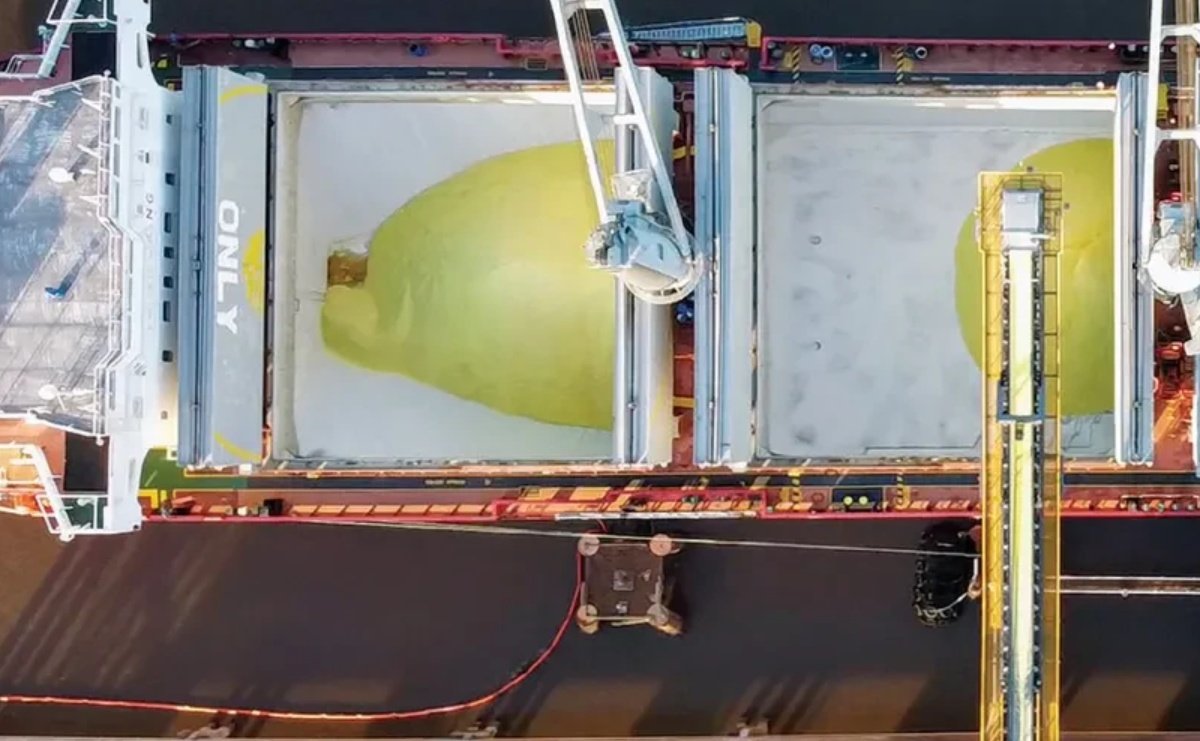
Global seaborne sulphur shipments have suffered a dramatic contraction in the wake of the US-Israeli military campaign against Iran, with the effective closure of the Strait of Hormuz since late February triggering the sharpest monthly declines in a decade, according to new data from Athens-based Ursa Shipbrokers.
The Persian Gulf accounts for more than half of all global ocean sulphur exports, making the region’s supply disruption a systemic shock to one of the world’s most industrially critical commodity chains. Sulphur, principally consumed through its derivative sulphuric acid, is regarded by the US Geological Survey as one of the most important raw materials underpinning global industrial and fertiliser production.
The broking house’s analysis shows that global sulphur loadings onto dry bulk carriers fell to an estimated 1.5m tonnes in March 2026 – a decline of 700,000 tonnes or 31.2% month-on-month and 45.7% below March 2025 levels. For the full first quarter of 2026, global port loadings reached just 5.9m tonnes, down 1.9m tonnes or 24.6% year-on-year against Q1 2025’s 7.8m tonnes.
The world has relied on the Persian Gulf for around 53% of annual seaborne sulphur loadings
The picture from Gulf coastline exporters – encompassing Bahrain, Iran, Iraq, Kuwait, Oman, Qatar, Saudi Arabia and the UAE – is grimmer still. Gulf loadings in Q1 2026 are estimated at just 2.7m tonnes, a decline of 1.5m tonnes or 36.2% compared with the same period last year. In March alone, regional export volumes collapsed to around 400,000 tonnes across all routes, representing a month-on-month fall of 65.9% and a year-on-year contraction of 74.5% – figures Ursa describes as an unprecedented contraction pointing to a “material tightening of global availability from a highly concentrated supply base.”
The crisis compounds what was already a softening market. Global sulphur trade peaked in 2024 at 30.3m tonnes before easing to 29.4m tonnes in 2025. January and February 2026 had already shown year-on-year weakness before the Hormuz closure accelerated the decline sharply.
Approximately 90% of ocean sulphur cargoes are carried on geared tonnage – supramaxes, handysizes and ultramaxes – leaving that vessel segment particularly exposed to the trade disruption.
The consequences of the sulphur squeeze are now radiating well beyond shipping markets, with copper and nickel producers among the most acutely exposed industrial users.
Sulphuric acid is a critical input for copper miners using solvent-extraction and electrowinning technology on oxide ores, and for nickel producers running high-pressure acid leach plants. Around a fifth of global primary refined copper is produced via this process, and the Democratic Republic of Congo – the world’s second-largest copper producer – relies on the Gulf for the majority of its sulphur imports, with the SX-EW process accounting for roughly half of its copper output.
Indonesia, the world’s largest nickel producer, sources around 75% of its sulphur requirements from the Middle East. With stocks already depleted, some producers have begun cutting run-rates. Macquarie estimates that the rise in sulphur prices since January has added $4,000 per tonne to Indonesian HPAL nickel production costs, helping push LME nickel prices to an 11-week high of $18,655 per tonne.
Compounding the strain, governments are prioritising the agricultural sector – which absorbs around two-thirds of global sulphur demand – over industrial users. China has announced an imminent ban on sulphuric acid exports, Turkey has already implemented one, and India is understood to be weighing similar restrictions, further tightening an already constrained global market and pushing prices to record highs.
For copper, bank Natixis calculates that sulphur represents 20% of cash production costs for Congo’s SX-EW operations, with every $100 per tonne rise in the sulphur price translating into a 4% increase in operating costs – dynamics now feeding into copper’s broader bull narrative, with LME three-month prices returning above $13,000 per tonne.
Whether a recently announced ceasefire leads to a durable peace and the full reopening of Hormuz remains uncertain. Even a resolution, analysts warn, would see sulphur consumers competing fiercely with agriculture for recovering supplies – a contest the fertiliser sector has historically won.
Splash reported earlier this week how roughly 24% of the global bulk fertiliser supply is now effectively shut in behind the Strait of Hormuz
AXSMarine puts the volume of fertiliser stranded within the Gulf at around 833,800 metric tonnes, the majority of it urea – the world’s most widely used nitrogen fertiliser. Investment bank Jefferies estimates that the loss of Gulf nitrogen exports alone accounts for around 30% of global urea supply.
The growing fertiliser and sulphur shipping crisis will be discussed in detail next week at Geneva Dry, the world’s premier commodities shipping conference.