Baltic Dry Index climbs to 1972 up 46 points
49 minutes ago

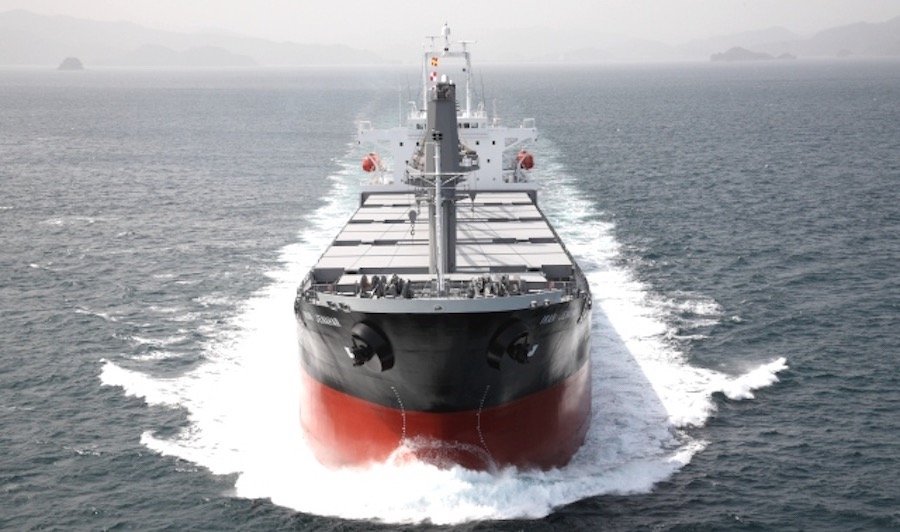
At a time when certainty is in short supply, learning how to think disruptively can help us make better decisions, argues Thomas Zaidman, managing director of Sagitta Marine.
The Swiss Federal Intelligence Service (FIS) recently published a manual in which this most peaceable of nations laments the growth of cognitive blind spots in understanding where risk exists and where threats might arise.
At the start of another year which appears promises to be as surprising and disruptive as the last, what better time to take some sensible Swiss advice and reflect on how our mental biases impact our thinking and how improve our understanding of the present and future.
The FIS identifies six potential weak points in or thinking; how do we translate this emphasis on psychology and what it tells us about our own mental blind spots into a shipping context?
Stress test your beliefs
It sounds simple, but how often do we push the button without really thinking through all the potential implications and whether what we think is right or wrong. Beliefs can be firm and strongly held; that doesn’t mean they are always right in a fast-changing, volatile market.
In shipping, this often shows up when we assume a particular trade or cargo flow will always be there. A belief that a basin is structurally tight or that a customer will consistently re-fix can lead to overconfidence on positioning. Stress-testing that belief means asking what happens if volumes pause, a port becomes constrained and whether today’s decision still holds up under those scenarios.
Think statistically
We place a lot of emphasis on gut feel but in truth that gut only reflects what the data already tells us. If you know where the market is, how it’s trending and what the bigger picture looks like, you can make that decision based on actual insight rather than hope.
Gut feel matters, but over time it is shaped by patterns. Looking at historical rate distributions, seasonal behaviour, ballaster positioning, and forward supply helps separate probability from hope. A statistically informed decision – such as fixing length versus staying spot – doesn’t eliminate risk, but it ensures the odds are consciously understood rather than guessed.
Ask yourself what you know and what you don’t
It’s very easy to assume we know better than colleagues or counterparts, but we can all benefit from a little Rumsfeld-style speculation. How can I model uncertainty to reflect knowledge gaps or emerging risks?
We often assume we understand a voyage because we have ‘done it before’. But minor variables – draft restrictions, berth productivity, local working practices, weather windows – can materially change outcomes. Acknowledging what is unknown allows uncertainty to be priced in, contingencies to be planned, and surprises to be managed rather than reacted to.
Show intellectual modesty
Every day is a school day they say, but in reality, unless we practice lifelong learning, we tend to rely on accumulated and assumed knowledge rather than fresh ideas. Not knowing something doesn’t mean it can’t be learned, understood and acted upon.
Markets evolve faster than experience alone. Ports modernise, regulations shift, and counterparties adapt. Operators who remain curious, about alternative routes, or changing charterer behaviour, are better positioned than those relying solely on how things used to work. In shipping, learning is not optional; it is part of risk control.
Deploy creative thinking
Probably the cornerstone of active risk management in shipping. On paper the business is vanishingly simple. In practice, it’s a Swiss watch of moving parts that need to work together. Doing so efficiently requires creative application of intellect and experience to really see where the opportunity exists and how to exploit it.
Two voyages with identical rates can deliver very different results depending on sequencing, bunkering strategy, or optionality built into the fixture. Creative thinking might mean structuring flexibility into redelivery, combining operational efficiencies, or identifying a triangulation others overlook. This is where experience and imagination intersect to create real value.
Periodically think the opposite of your assumptions
Assumptions are innate to our many unconscious biases so it should be a natural process to perform a mental 180 every now and then. This might be the most theoretical of these exercises; you don’t have to act against your instincts but examining them might be just what is needed.
If the consensus is that rates must rise, ask what would happen if they don’t. If everyone is chasing a trade, ask why. Testing the inverse scenario, without necessarily acting on it—often reveals hidden risks or overlooked opportunities. In shipping, this discipline can prevent crowded positioning and costly confirmation bias.