India likely to maintain Russian oil purchases
1 hour ago

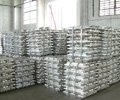
Geopolitical developments in the Middle East were expected to boost prices across the Asian aluminum market amid a tight supply-demand balance, and could push Japanese aluminum premiums higher, market sources said on March 2.
Market views on the ongoing second-quarter negotiations over main Japanese port premiums have grown more cautious, with some participants increasingly concerned that any conflict-related supply disruption could push premiums even higher, sources said.
Initial Q2 MJP indications were heard at $220 per metric ton CIF Japan on Feb. 25, according to Platts, part of S&P Global Energy.
Platts later received the news of a second offer at $250/mt CIF Japan on Feb. 26, which was later retracted on March 2. Expectations were building that the Q2 MJP could not only exceed the Q1 settlement of $195/mt but potentially rise toward $220/mt, according to sources.
However, smelters in the Middle East and global traders were on the sidelines, and the supply chain had not yet undergone a systemic restructuring, according to sources.
Platts assessed the CIF spot premium for 99.7% P1020/1020A aluminum ingot at main Japanese ports at $172/mt plus LME cash on March 2, up $4/mt day over day.
Meanwhile, the most-active aluminum contract on the Shanghai Futures Exchange closed at Yuan 24,465/mt ($3,555/mt) on March 2, up 3.2% from the previous settlement price, exchange data showed.
Strait of Hormuz risk seen as primary chokepoint
An escalation in conflict could tighten supply through two channels: reduced Iranian output and increased disruption risk for producers and logistics in the Gulf Cooperation Council, with the Strait of Hormuz viewed as the primary chokepoint, market participants said.
A prolonged blockade would trap alumina imports and aluminum exports in the Middle East, inevitably causing a significant global supply deficit, sources said.
“The smelters are now checking how they can re-route their logistics. But the larger problem is the feedstock for alumina. So, at some point in time, there will be some production delays or a reduction in quantity,” an Asian trader said.
“A lot of the Middle Eastern tons are bound for Europe, Asian premiums will increase once Europe sees the shortage,” a second Asian trader said.
“All major Middle Eastern smelters will be impacted,” an Asian aluminum smelter said.
“Oil tankers are stuck right now, so we have tons as well and naturally we will have to look for other routes and freight and insurance prices will increase so this will bring premiums up definitely,” a Middle East-based smelter source said.
Iran’s primary aluminum output is expected to total 608,000 mt in 2025, according to S&P Global Energy CERA data.
Gulf Cooperation Council is the world’s third-largest primary aluminum producing region, with a total output of 6.16 million mt in 2025, accounting for 8.3% of the world’s total aluminum output, according to the International Aluminum Institute.
Asian sources added that the Middle East primary aluminum sector remains structurally short of raw materials, with domestic alumina capacity insufficient to meet local demand, leaving the region heavily reliant on long-term imports.
The global primary aluminum market is “tight,” and is expected to show a 298,000 mt deficit in Q2 and a modest 86,000 mt surplus across 2026, according to a February S&P Global Energy CERA report.
Source: Platts