Russian oil exports stay above pre-2022 Ukraine wa...
1 hour ago

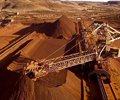
The arrival of Simandou’s high-grade iron ore has the potential to alter the landscape of the iron ore markets. This is the first of a six-part interview series, in which Platts News has talked to magnetite ore producers to discuss their strategy and competitive advantage.
Iron ore is entering a new world where the steelmaking commodity is evolving as a geopolitical tool like critical minerals, Hawsons Iron Ltd. Managing Director Tom Revy told Platts, part of S&P Global Energy.
A prefeasibility study for the company’s Hawsons Iron project in New South Wales, Australia, released in December 2025 revealed a total capex of A$4.96 billion ($3.52 billion)needed for the project to produce up to 12 million metric tons/year of over 68% Fe magnetite concentrate with a 26-year life of mine. This was based only on the 2.3 billion mt probable ore reserve also announced at the time.
The reserve was calculated at an average grade of 11.7% DTR (recovered magnetic fraction) and 16.7% total iron.
The PFS revealed C1 cost of $49.34/mt and CFR cost of $89.94/dry mt, with the Hawsons Iron project to produce up to 12 million metric tons/year of over 68% Fe magnetite concentrate with a 26-year life of mine.
The project will have a pre-tax net present value of A$1.36 billion at a product price of $140/mt, according to the PFS.
This positions Hawsons to be developed at a time when global metals markets are shifting in a way that is good for high-grade iron ore developers, Revy said.
“Right now, we live in a very different world … [which] is moving away from globalization and moving more toward nationalization,” Revy said.
Meanwhile, Australia is also developing defense-related strategic ties, such as the “Quad” with key customers India, Japan, and the US, as well as AUKUS, a trilateral partnership with the UK and the US, he added.
In this environment, “the world is starting to view minerals very differently. I can’t remember the last time mining and the phrase ‘critical minerals’ were mentioned so prolifically in the media, which has certainly drawn attention to mining,” he said.
Revy said China produces around 1 billion mt of steel annually, and India is targeting 300 million mt by 2030.
“China itself produces 55% of global steel and is the largest producer by a multiple. So people have to start viewing iron ore and steel as critical. It was the foundation of civilization. It’s the basis of our civilization today, whether it’s infrastructure, logistics, building, medical, whatever the case may be, we can’t live without it,” he said.
Simandou part of political shift
The giant Simandou high-grade iron ore project in Guinea is “part of that” trend of minerals being caught up in geopolitics, due to its dual ownership between Chinese and Western interests, Revy said.
While high-grade ores are better suited to electric arc furnaces (EAFs), “the product of Simandou is still fundamentally a blast furnace (BF) product,” Revy said.
“It will probably displace some of the lower-grade material that’s out there. This is obviously driven by economics because it’s better financially to treat higher-grade materials as much as anything else,” Revy said.
However, Revy said Simandou will not impact the market for Hawsons Iron, which has “identified significant demand for its high-grade magnetite concentrate from all sectors of the global steelmaking industry, encompassing BF, pellet plants, EAF and direct reduced iron/hot briquetted iron processes and technologies,” the company said in a Dec. 17 statement.
Cost escalation
Yet mining and processing costs are higher than those for lower-grade hematite, and capital costs associated with equipment in Australia have gone up “higher than general inflation” over the past five to eight years, Revy said.
Hawsons, being located at the “globally renowned” mining region of Broken Hill, the birthplace of BHP Group, has significant advantages, he noted.
The project is 40 kilometers away from a rail line and 35 km from a power line. Independent studies have also confirmed access to water, although the company has reduced water use by at least two-thirds by adopting a dry comminution pathway.
Broken Hill is also “one of the best places in the world to develop renewable power by way of solar and wind turbines,” Revy said.
Hawsons Iron is also working with UK financial advisory Cutfield Freeman & Co. Ltd., which Revy said has funded a number of magnetite projects globally, as well as other large projects, to help his company reach production.
Source: Platts