Euroseas secures 60% rate jump for boxship after c...
6 days ago

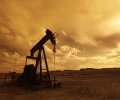
The Korea Customs Service and the Government of Alberta, Canada, announced the “Joint Statement on the Simplification of Origin Verification Documents” for Canadian Alberta crude oil in Edmonton, Alberta, Canada, on April 20, local time.
Although Canada is an energy powerhouse with the world’s third-largest crude oil reserves, domestic utilization has been limited despite the Korea-Canada Free Trade Agreement (FTA) due to structural difficulties in proving origin. Because crude oil from various producers is mixed during transport from vast extraction sites to shipping ports, it has been practically difficult to separate and certify the origin for each individual producer.
on-originating crude oil. The Korea Customs Service will then accept an official confirmation letter from the Alberta government, which verifies that origin requirements have been met, as a valid proof of origin document.
This measure allows for the application of FTA preferential tariffs without placing the burden of origin verification on individual Canadian exporters. Notably, Canadian crude oil arriving via Pacific shipping routes is unaffected by geopolitical crises in the Middle East, and is thus expected to contribute to the establishment of a stable energy supply chain. This move is anticipated to strengthen national energy security by diversifying South Korea’s crude oil import sources—which have been heavily concentrated on Middle Eastern oil—to include Canada.
At the signing ceremony, the Hon. Danielle Smith, Premier of Alberta, stated, “This simplified origin framework will enable Alberta exporters to increase crude oil exports to Korea by up to 33 million barrels annually.”
Lee Myung-koo, Commissioner of the Korea Customs Service, emphasized, “This joint statement is a prime example of ‘demand-driven regulatory innovation,’ where we resolved a structural challenge by directly cooperating with the Government of Alberta within the framework of FTA origin regulations.” He added, “We will continue to take the lead in identifying key items essential for national resource security and building stable supply chains.”
Source: Business Korea