Coal Hits 1-Year High | Hellenic Shipping News Wor...
1 hour ago

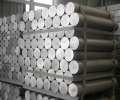
This report is part of a series on impactful trends in the US aluminum market based on S&P Global Energy pricing, news, and analytics from S&P Global Energy CERA, as well as a review of other statistical data.
Many US aluminum extruders began the year looking back on 2025 as another year of unfulfilled expectations, with hopes for a better 2026.
The first half of 2025 brought a surge in demand for most extruders and the promise of increased onshoring due to the extension of the Section 232 import tariff to include extrusions, as well as the 25% duty increase in March from the previous 10% in place since 2018.
At the same time, a flood of US P1020 and scrap imports, along with wider scrap discounts, boosted the profitability of remelt billet makers.
As the tariff rose, first to 25% and then to 50% in early June, ample US stocks of aluminum raw materials kept the Platts US Midwest premium from covering the tariff for a time, meaning extrusion imports also were disincentivized.
But the rising all-inclusive price of aluminum began to curb demand, and extrusion importers started applying the tariff to aluminum content in a manner that US companies and legal sources warned understates the intended tariff.

By June, the surge faded, and many extruders saw a sharp drop in new business. “We lost momentum big time in June,” a Midwest extruder said.
The Aluminum Association showed new orders for extruded products from January through November 2025 up 5.1% compared with 2024, yet shipments were down 1.4% through September, according to the latest updates. Within the extruded products category, shipments of extruded shapes fell 2.2%, while pipe and tube rose 4.6%, and rod and bar stayed flat.
By the end of 2025, extruders noticed mixed results, depending on sectors served and geography, with some saying their business was up as much as 10% overall. However, a mid-sized extruder with plants in multiple locations experienced a 10% drop in overall volumes.
Extruders said they have continued to see new business from solar applications, data centers, electric vehicle charging stations, and some pockets of the automotive industry.
But the truck trailer sector was described by one larger diversified extruder as “dismal,” and building and construction ended flat for that company but sharply down for others.
Outlooks for 2026 vary
Outlooks for 2026 and January business are mixed. While a domestic producer said he thought overall US billet and extrusion demand might be up or down 2%-5%, a second import producer said extruders were “pretty bullish” for 2026.
“My biggest billet customer in January is having one of their biggest Januarys ever. I think overall demand is actually good,” the second import producer said.
A remelt billet producer said, “Extrusion not great. Everyone is in the doldrums.” He attributed it to the high all-in aluminum price and the loophole for extrusion imports, which he heard may soon be tightened.
Another remelt billet producer noted that extruders did not want to carry over any of their lower-priced 2025 contractual billet into 2026, despite premiums going up, which “means business is soft.”

Some extruders expect demand to rebound if the US continues to lower interest rates, cut taxes for consumers, and tighten tariff rules for midstream importers, while possibly easing tariffs on P1020.
“We’re facing competition from low-value extrusions coming in from Turkey, Malaysia, South Korea, Taiwan,” another larger extruder with multiple plants said. “We’ll see what happens with this [US-Mexico-Canada Agreement] renegotiation.”
Most market participants, as well as analysts from S&P Global Energy CERA and S&P Global Mobility, expect the US to consider a possible lower tariff or quota for Canadian P1020 in 2026, which could lower the MW premium.
Extruders fear substitution with other materials if aluminum prices remain too high.
2026 billet upcharges climb a few cents
Extruders will also be paying more for billet under 2026 annual contracts, due to the billet tariff rather than a significant shift in supply or demand.
US billet imports from January through October 2025 were mostly flat compared with 2024, down just 0.14%, according to US Department of Commerce data.
A survey of billet producers, extruders, and traders found that most maintained the historical practice of fixing annual billet upcharges over the monthly average Platts Midwest Transaction price.
As is typical, the contract upcharges for 2026 ended up around spot prices in the fourth quarter, despite offers starting much higher in September.
The Platts US spot 6063 billet upcharge started 2025 in a range of 8.50-10 cents/pound above the MWT, rose to a high of 14.50-16.50 cents/lb from September-November, and ended the year at 13-15 cents/lb. It has held in that range so far in January. Platts is part of S&P Global Energy.
Contract upcharges for typical 6063, 7-8-inch billet logs, delivered Midwest average freights, were reported mostly in a range of 12-15 cents/lb over MWT, compared with 8-12 cents/lb for 2025. For longer freights, cut billet or larger diameters, deals ranged as high as 16-21 cents/lb.
In Canada, billet contracts are basis the Platts US Midwest implied duty-unpaid calculated P1020 price, with upcharges at similar levels, to enable Canadian extrusions to compete in the US subject to tariffs. In some cases, the contracts contain floors of 10-15 cents in the event the MW DUP falls below, as was seen in 2025, due to the calculation not always reflecting perceived tradable levels.
Toll conversion charges spike
For extruders paying remelt billet producers to toll their scrap into secondary billet, there was a significant change in toll conversion contract prices due to a sharp widening in aluminum scrap discounts throughout 2025.
The Platts spot assessment for 6063 new bare scrap ended the year at 44-47 cents/lb below MWT, compared with a discount of 13-16 cents/lb as of Jan. 2, 2025. As of Jan. 29, 2026, the discount had widened to 55-60 cents/lb.
Extruders said 2026 toll conversion charges range from 30-35 cents/lb, with some deals at up to 40 cents/lb. This is up from the low 20s cents/lb for 2025.
This year could also bring supply-demand shocks, given the tight rein on inventories due to the potential risk of tariff removal.
“A lot of extruders were nervous about over-committing,” an industry source said.
On the demand side, “We’re all cautiously optimistic there is some upside potential, but we’re only three weeks into January,” the Midwest extruder said.
Source: Platts