US voices concern over Panama-flagged vessel deten...
2 hours ago

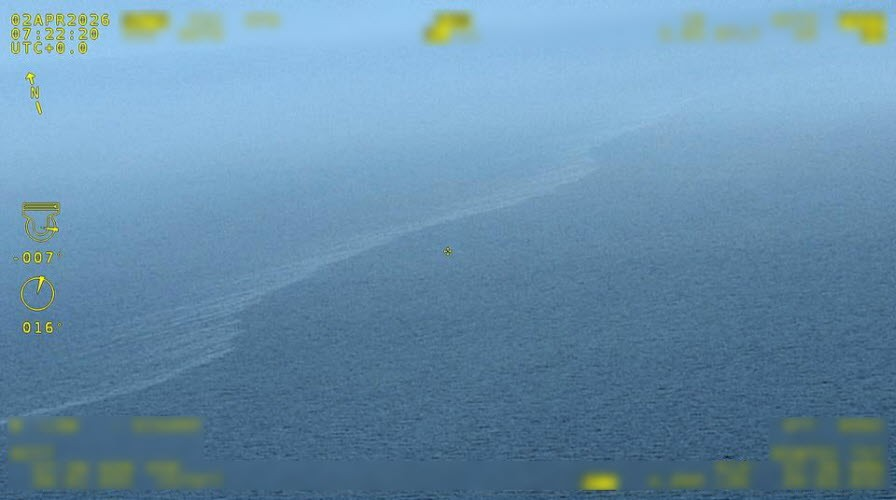
The Swedish Coast Guard said Friday it has ordered a tanker suspected of causing an oil spill in the Baltic Sea, east of Gotland, to anchor in Swedish territorial waters.
The Coast Guard boarded the vessel early Friday and took it and its 24-member crew to anchorage south of Ystad. The operation is being conducted in cooperation with the Swedish police.
During the investigation, authorities determined that the vessel is listed under European Union sanctions. Officials also noted “several unclear circumstances surrounding it, including the status of its flag.”
A prosecutor is leading a preliminary investigation into suspected environmental crimes, the Coast Guard said.
Early on Thursday, a Coast Guard surveillance aircraft detected a mineral oil spill east of Gotland. The spill was over 12 kilometers long at the time.
The Coast Guard noted that the ship in question, which was en route from a port in the Gulf of Finland with a stated destination of Santos in Brazil, has an unclear flag status and is on the EU sanctions list.
“We act when we detect emissions. This is the result of our enhanced maritime surveillance, which we are conducting as a result of the deteriorating security situation in the Baltic Sea region,” Daniel Stenling, deputy head of operations at the Coast Guard, said in a statement.
There were no immediate details on what caused the spill.
Officials say the Baltic Sea is an extremely sensitive ecosystem, and there is zero tolerance for emissions. Intervening against ships that pollute, according to the officials, is part of the Coast Guard’s everyday work.
“It is without doubt interesting in this context that the ship is surrounded by various uncertainties in addition to being suspected of an oil spill. Whether this entails further criminal suspicions will be revealed by the investigation,” added Stenling.
The incident reportedly took place in the Swedish economic zone, outside Swedish territory. The ship is carrying oil and there are 24 crew members on board.
According to international agreements, in the economic zone, the coastal state has the authority to intervene against and investigate, for example, environmental crimes and fishing crimes.
In cases like this, the Coast Guard can order the vessel in question to proceed to Swedish territorial waters to anchor, which facilitates the investigation.
“As far as we know, this is the first time we have been able to trace a discharge to a vessel subject to sanctions, and which may be suspected of environmental crimes,” commented Stenling.