GPA’s Gainesville Inland Port set for May opening...
19 minutes ago

Wolfgang Lehmacher on Asean’s moment of opportunity.
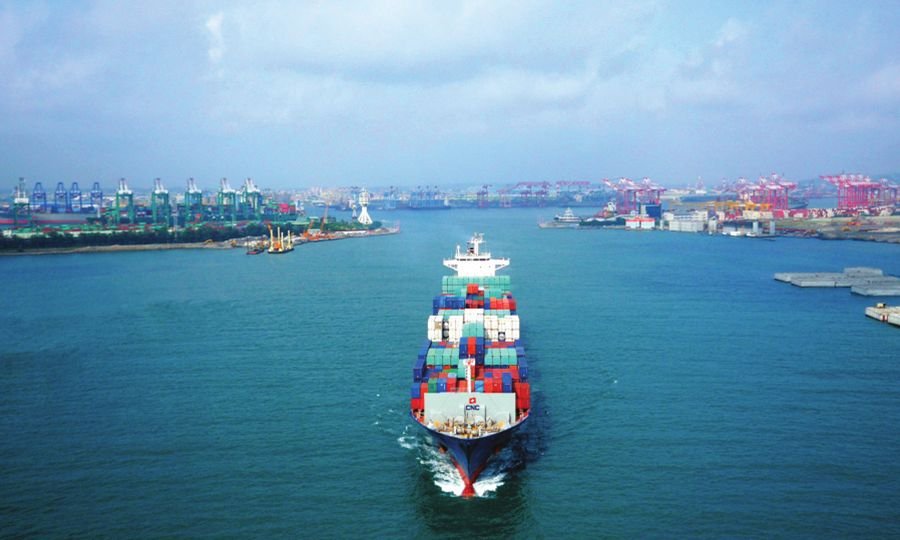
A container loaded with electronics leaves a factory complex outside Ho Chi Minh City, rolls by truck to the Cai Mep-Thi Vai deepwater complex, and sails for Long Beach. This looks like a win. Exports from Southeast Asia to the US have climbed as Chinese shipments came under steep tariffs. But follow the bill of materials and finance flows and a question arises: will Asean remain an appendix in China’s supply chains, or become a node in the system that runs them?
Exports to the US have surged. Many Asean products face lower US rates than comparable Chinese goods. Asean looks like the default China plus option. Chinese manufacturers opened plants and China has become the region’s largest trading partner. The region has deepened its dependence on Chinese capital, technology and components.
Vietnam and the Philippines have invested in more complex electronics and services. Malaysia and Thailand have seen flatter trajectories, while Indonesia and Cambodia remain relatively undiversified. More volume does not mean more capability, if design, tooling and key components still arrive in crates or digital images. If a future US-China deal narrows tariff differentials or extends carve-outs on product lines, much of the production that has arrived, in principle, will leave just as fast, particularly in footloose, low-margin segments.
Design, advanced components, critical software, and customer relationships often sit in China, the US, or Europe, while Asean handles final assembly and labour-intensive steps. Services contribute roughly half of the total value added in many manufacturing value chains. The margin is shifting to whoever controls the data, platforms, and decision-making.
On this front, Asean holds more cards than the factory Asia label suggests. The region’s digital economy can reach the high hundreds of billions of dollars by 2030, and scenario work around the Asean Digital Economy Framework Agreement suggests that a fully implemented deal could push it towards $2tn. Ports such as Cai Mep–Thi Vai, Singapore and Port Klang host Asia-US and Asia-Europe mainline services, acting as consolidation hubs for regional cargo and as feeders into corridors such as the India-Middle East-Europe Economic Corridor. The question is whether the orchestration intelligence behind those services, such as the scheduling software, booking platforms and tradefinance engines, will increasingly reside in Asean.
In Connectography, Parag Khanna describes a world of “competitive connectivity” – with cities and supply chains as the vital nodes – as the true arms race of this century.
Without sustained investment in education, skills and health, Asean risks wasting its demographic dividend. Some cities, notably Singapore and Penang, already act as hubs for engineering, chip design and regional control towers, while others remain in lowskill manufacturing and informal services. We might see globally connected, high-skill, high-wage pockets surrounded by large pools of low-productivity, low-wage activity.
Under severe warming scenarios with limited adaptation, Asean’s collective GDP could shrink by a third or more by mid-century, as floods, heat, storms, and sea-level rise risk damaging ports and disrupting cities. Yet this opens a premium for locations that combine resilient infrastructure and credible decarbonisation with efficient trade and digital connectivity, as global capital and brands search for platforms that can withstand climate and tariff shocks.
Asean can leverage foreign direct investment to support education that trains engineers, data analysts, logistics specialists, and cybersecurity professionals. The region should align incentives with businesses that bring higher-value functions such as R&D, digital platforms, and green infrastructure. Asean can emerge as an orchestrator of goods, data and capital, writing not only another chapter in factory Asia, but the operating manual for its digital and green upgrade.