Decarbonisation is becoming a trade imperative for...
10 hours ago

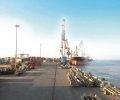
India’s Deendayal Port Authority is positioning Kandla as a competitive bunkering hub by mid-2028, targeting a cost of $700-$750/mt for Renewable Fuel of Non-Biological Origin-compliant eMethanol, significantly below current prices, according to DPA chairman Sushil Kumar Singh.
DPA has firmed up plans with Assam Petro-chemicals and Thermax to produce renewable methanol at Kandla, while simultaneously working with Solar Energy Corp. of India (SECI) for a separate procurement tender to source domestic eMethanol, Singh said late April 3.
“Kandla falls more or less midway between Rotterdam and Singapore,” Singh told Platts, part of S&P Global Energy. “Kandla will become one of the potential points where the ships will start seeking refueling of their tanks.”
The SECI tender aims to secure 500,000 metric tons/year of RFNBO-compliant methanol in two years, Singh said, adding Kandla will offer competitive rates to fuel ships seeking to comply with tightening emissions regulations while offering them other benefits as they bring in cargo.
DPA completed its first shore-to-ship methanol bunkering trial on April 2, validating the infrastructure and procedures, and aims to have a second demonstration using methanol barges to test ship-to-ship bunkering at high seas, Singh said.
Platts assessed low-carbon methanol FOB Shanghai at $925/mt on April 6, up 1.31% from a month earlier.
Renewable methanol partnerships
Under a definitive agreement with Assam Petro-chemicals, DPA will invest in the production of 60,000 mt/year eMethanol, with the petrochemicals company providing technology support under a revenue-sharing model, Singh said.
“We have done some analysis… we will be much cheaper than the supply points at Singapore and also at Rotterdam,” Singh said, referring to the tie with Assam Petro-chemicals.
This “will create a traction at this place for the ships seeking methanol as a fuel, so that will close down some gap between fossil and non-fossil [fuels]. Subsequently, if the net-zero framework comes and the carbon pricing kicks in, that will further reduce the gap.”
Meanwhile, Thermax has already been awarded a contract for a 5,000 liters/day biomethanol plant, with construction set to begin next month, Singh said. Additionally, e-fuels company HIF Global has expressed interest in setting up a 120,000 mt/year eMethanol plant.
A key challenge remains securing biogenic CO2 required for RFNBO-compliant eMethanol, he said. While HIF Global plans to generate biogenic CO2 through biomass feedstock, others are exploring CO2 capture from industries.
While DPA’s plans are based on an International Maritime Organization (IMO) estimate that 200 dual-fuel compliant vessels could be operating between Rotterdam and Singapore by 2030, there is uncertainty owing to the IMO’s deferment of net zero timelines.
“It all depends upon what exactly is considered as zero or near-zero emission fuel by IMO for its net zero framework,” he said. “So that will have some impact on the kind of market or the demand that we’ll see from 2029-30 onwards.”
SECI auction structure
SECI is structuring a procurement tender based on Kandla’s assured offtake commitment, Singh said. The tender is likely to feature a 15-year take-or-pay agreement, which mandates buying the fuel as per the agreement even if there are no users.
As part of its design, DPA is requesting a mechanism to allow reopening of pricing negotiations if market rates decline beyond a specific point, according to Singh.
“SECI will consider us an assured buyer,” Singh said. “Based on our assurance that we need 500,000 mt/year of RFNBO-compliant methanol every year, they will procure it.”
Once finalized, SECI will tender for suppliers capable of delivering the contracted volumes to Kandla, with the port authority responsible for subsequent distribution to shipping lines.
“Once it comes to us, then it is Kandla’s responsibility to distribute it to the shipping lines as per the demand. So that will be our other absolutely separate kind of an agreement that we will have with the shippers,” he said.
“We don’t foresee a scenario where there will be no demand… We can supply it to the other ports and also to the industry.”
As part of its design, DPA is requesting a mechanism to allow reopening of pricing negotiations if market rates decline beyond a specific point, as technological changes may impact the prices in the future, according to Singh.
If demand from vessels falls short, Kandla can supply other ports or sell to industrial users, Singh said, describing the projected supply volume as conservative.
Renewable ammonia base
DPA hub is also to host developers producing renewable ammonia that will also be required as an environmentally friendly fuel option for the shipping industry, Singh said L&T, which has a supply agreement with Japanese trading house ITOCHU, is to produce an estimated 300,000 mt/y of renewable ammonia at Kandla 2029 onward, Singh said.
The project represents the first phase, with plans for subsequent capacity expansion. The renewable ammonia will primarily serve as bunker fuel for ships, with some volumes directed to process industries.
Reliance Industries, Welspun, and AM Green are the other renewable ammonia developers who have been allocated land for renewable ammonia production, Singh said.
The four companies collectively aim to produce 5.5 million mt/y of renewable ammonia at Kandla by 2030, Singh said. The port authority itself is not producing renewable ammonia; it is facilitating developers on its plug-and-play hub.

DPA plans to upgrade a 1 MW renewable hydrogen facility, a part of its portfolio which has already been commissioned, to 10 MW, Singh said.
Platts assessed the India renewable hydrogen term contract at $3.18/kg on April 2, down 0.31% from a month earlier.
Source: Platts