FUJAIRAH DATA: Oil product stocks fall nearly 7% t...
2 hours ago

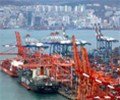
More than half of cranes installed at South Korean ports are Chinese-made, highlighting deepening reliance that could weaken the country’s broader industrial ecosystem, data showed.
According to figures submitted by the Ministry of Oceans and Fisheries to Rep. Cho Seung-hwan of the People Power Party, 510 out of 893 cranes installed at domestic ports — or 56.9 percent — were manufactured in China as of March. Among container cranes, considered core equipment, the share rises to 58.2 percent.
The trend has accelerated since the 2000s. Of 770 cranes newly introduced after 2000, 510 were Chinese-made, more than double the 247 domestically produced units.
Industry observers attribute the shift to private terminal operators favoring lower-cost equipment from Chinese firms such as Shanghai Zhenhua Heavy Industries Company to reduce upfront investment. This has eroded the price competitiveness of local manufacturers and led to fewer project orders, creating a negative cycle.
Port cranes are high-value systems that combine steel, machinery and electrical control technologies. A single large container crane requires roughly 1,500 tons of high-grade steel plates. The Korea Iron & Steel Association estimates that more than 240,000 tons of steel have been used in Chinese-made cranes installed in South Korean ports.
As Chinese suppliers expand their presence, steel demand tied to crane production is also shifting overseas. Data from the association shows that 4,864 tons — or 98.8 percent — of the 4,922 tons of cranes imported last year came from China.
“Rising dependence on Chinese equipment means port infrastructure expansion is no longer translating into demand for South Korea’s steel industry,” an industry official said.
Cranes typically operate for more than 20 years, meaning that once Chinese equipment is installed, maintenance, repairs and parts replacement continue to rely on Chinese suppliers. Over time, accumulated expertise and workforce know-how are also transferred abroad.
Kim Yul-seong, a professor at Korea Maritime & Ocean University, said, “Two decades ago, most cargo-handling equipment was produced domestically, but companies scaled back or exited the business due to weak competitiveness. Initial choices can shape market leadership for decades, so a strategic approach is essential.”
Currently, port development projects are negotiated between port authorities and private operators on a case-by-case basis, leaving limited room for government intervention in equipment selection. While some projects, including phases of Busan New Port, have introduced criteria favoring domestic equipment, their impact has been limited.
In a recent bidding process for cargo-handling equipment at Incheon New Port, only three Chinese firms participated.
Industry voices are calling for stronger policy support to promote domestic equipment adoption in upcoming large-scale projects such as Jinhae New Port, where demand is expected to surge. The first phase alone is projected to require 12 container cranes and 54 transfer cranes, with additional large-scale demand in subsequent phases.
The Busan Port Authority is currently reviewing procurement methods for Jinhae New Port, including whether to leave equipment orders to operators or take a more direct role.
“The biggest hurdle to adopting domestic equipment is cost,” an industry official said. “It will be necessary for operators and port authorities to share the financial burden appropriately.”
Rep. Cho, a former oceans minister, emphasized that localization of port equipment is not merely a procurement issue but a critical task for sustaining and expanding heavy industries.
A ministry official also acknowledged that the introduction of port equipment affects not only infrastructure but also upstream and downstream industries.
Source: Pulse