EU Ports Strategy: Competitiveness and Resilience ...
56 minutes ago

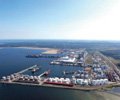
In 2025, oil and gas from ACG and Shah Deniz continued to flow via subsea pipelines to the Sangachal terminal.
According to bp Azerbaijan, The daily capacity of the terminal’s processing systems is currently 1.2 million barrels of crude oil and condensate, and about 81 million standard cubic metres of Shah Deniz gas, while overall processing and export capacity for gas, including ACG associated gas is around 100 million standard cubic metres per day.
During the year, the Sangachal terminal exported around 209 million barrels of oil and condensate, which was sent mainly through the Baku-Tbilisi-Ceyhan (BTC) pipeline.
Gas is exported via the South Caucasus Pipeline (SCP), including the SCP expansion system and via Azerbaijan’s pipelines connecting the terminal’s gas processing facilities with Azerigas’s national grid system.
On average, around 74.4 million standard cubic metres (about 2,628 million standard cubic feet) of Shah Deniz gas was sent from the terminal daily during the year of 2025.
On 2 June 2025, the investors in the Sangachal terminal sanctioned the Sangachal terminal electrification (STEL) project. The $230 million project will enable the terminal to connect with Azerbaijan’s national grid operated by AzerEnerji, via new facilities to be built both within and outside the terminal, including a new 220/110 kV electricity substation.
The STEL project is closely linked to the Shafag project, a 240MW AC solar plant being built in Jabrayil, via a new commercial structure called ‘virtual power transfer arrangement’. Based on this arrangement, the Shafag plant would produce power and deliver it to AzerEnerji in the Jabrayil district, while AzerEnerji would deliver an equivalent quantity of electricity to the Sangachal terminal near Baku. Together, the Shafag and STEL projects are expected to support the reduction of operational emissions by around 50% over the future life of the Sangachal terminal, based on the current outlook and plans.
The terminal currently uses seven gas turbines to generate the power it needs. Following the electrification, the turbines will be removed in phases, freeing up the fuel gas for export.
In 2025, the STEL project awarded three main contracts and made steady progress across all contract work scopes – including engineering, procurement, fabrication, and construction – with site activities currently advancing safely and on schedule.
Construction activities are expected to be completed in two stages – Stage 1 in mid-2027, and Stage 2 by the end of 2028.
Source: AZERTAC