EU Ports Strategy: Competitiveness and Resilience ...
1 hour ago

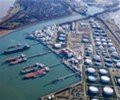
About 15 years ago, Singapore slipped from the top of a global ranking it had dominated for years.
The title of the world’s busiest container port went instead to Shanghai, marking a symbolic moment that reflected China’s meteoric rise as a manufacturing and trading powerhouse.
Since then, Singapore has remained in second place – a position that creates a discomforting tension for a nation that has consistently strived to top global rankings in a slew of economic metrics, be it in connectivity, competitiveness or ease of doing business.
Yet by many measures, the nation has not merely adjusted to that spot, but flourished in it.
The port posted its strongest year on record in 2025, handling more containers, welcoming more ships and selling more marine fuel than ever before.
In January, Singapore authorities reported that in 2025 there were a record 3.22 billion gross tonnes of vessel arrivals at the port here along with 44.66 million twenty-foot equivalent units (TEUs) of container throughput. A TEU refers to a standard-sized shipping container.
That measure of vessel arrivals was up 3.5 per cent from 2024, while container throughput jumped 8.6 per cent from the previous year.
The strong performance, however, is set against the backdrop of intense competition from China, which is home to six of the world’s top 10 busiest container ports.
While Singapore sits in second spot, behind Shanghai’s over 50 million TEUs, Ningbo-Zhoushan, which lies across Hangzhou Bay from Shanghai, is hot on the Republic’s heels, reporting more than 43 million TEUs for 2025.
Should Singapore be concerned about the rapid rise of China’s Ningbo-Zhoushan and will it pose a significant challenge to the country’s status as a leading maritime hub?
WHY IT SHOULD MATTER TO THE AVERAGE SINGAPOREAN
Given that about 90 per cent of the world’s trade is carried by sea, Singapore’s port serves as a “vital gateway” connecting the country seamlessly to the global marketplace, said a PSA Singapore spokesperson in response to CNA TODAY’s queries.
The majority of the country’s international trade is handled by the Port of Singapore, which includes terminals at Tanjong Pagar, Keppel, Brani, Pasir Panjang, Sembawang, Jurong and the new Tuas Port.
In terms of containers alone, the port handled around 370 million tonnes in 2025, compared with just about 2.1 million tonnes of air freight at Changi Airport in the same period, said Associate Professor Yap Wei Yim, head of the minor of maritime management at the Singapore University of Social Sciences (SUSS).
The COVID-19 pandemic offered a stark reminder of Singapore’s dependence on ports: when flights were grounded, it was shipping that kept global supply chains intact, Assoc Prof Yap added.
Beyond the quays and cranes, the port sustains a wider ecosystem – from shipyards and marine logistics firms to fuel suppliers, equipment manufacturers, marine insurance and legal services.
The maritime sector contributes 7 per cent of Singapore’s gross domestic product (GDP) and supports over 170,000 jobs across some 5,000 companies.
Last year, 35 maritime companies opened or expanded operations here, taking the total to more than 200 international shipping groups in Singapore.
Collectively, key maritime companies contributed an estimated annual total business spending of around S$5 billion (US$3.96 billion) to Singapore’s economy, reflecting the depth and diversity of the maritime ecosystem here, said the Maritime & Port Authority of Singapore in a January media release.
Much of this activity, however is invisible to most Singaporeans as it is largely out of sight, tucked away in remote locations, even as it ripples through the economy.
For Mr Sean Lee, chief executive officer (CEO) of Marco Polo Marine, the sector has meant steady work and diverse long-term opportunities in an industry that many Singaporeans rarely think about.
The company, which was founded in 1991 by Mr Lee’s father with three vessels ferrying building materials, has since added a shipyard business and more recently shifted its vessel services from oil and gas to offshore wind farms and the renewable energy sector.
Mr Lee acknowledged that the maritime industry can seem “not so exciting” to outsiders, but this image is one he is keen to play a part in changing.
The firm’s commissioning service operation vessel, MP Wind Archer, which won the prestigious global Offshore Energy Vessel of the Year this year at an event in London, was designed with gyms, a cinema and even karaoke facilities to improve crew welfare and attract younger workers.
“People (used to talk) about working offshore as if it’s dirty – and it’s nothing like that … working on the vessel is actually a cool thing,” he said.
Experts and businesses agreed that Singapore’s brand as a maritime hub is not just about accolades and statistics, but shape how Singapore is perceived globally.
Global rankings are more than bragging rights but rather are signals of how Singapore is seeking to anchor its ecosystem and preserve the jobs, businesses and economic resilience built around its status as a global maritime hub.
So as capacity expands across the region and competition intensifies, what is Singapore doing to stay ahead?
MORE THAN ONE RIVAL
When asked how Singapore stacks up against its rivals, experts pointed out that the fact that Singapore has maintained a second place position is in itself an impressive achievement.
Associate Professor Goh Puay Guan from the department of analytics and operations at NUS Business School noted that most Chinese ports draw their volumes from domestic imports and exports.
Assoc Prof Yap from SUSS said that Shanghai’s leading container volumes can be attributed to the port’s strategic location at the mouth of the Yangtze River, and serving as a key hub for handling container exports and imports in China.
“The Yangtze River and its tributaries are estimated to account for 50 per cent of China’s GDP. This region is also the main hinterland for the port of Ningbo-Zhoushan,” he said.
And while China’s top ports in Shanghai and Ningbo-Zhoushan depend significantly on the continued growth of the country’s economy, Singapore’s port serves a hinterland centred on Southeast Asia and major shipping routes that connect East Asia with Europe, the Middle East and Africa.
“This means that our container throughput performance will largely be dependent on the economic performances of these geographical areas, and being a reliable partner and efficient transshipment hub to shipping lines that serve these markets,” said Assoc Prof Yap.
While Shanghai continues to widen the gap and maintain its lead, experts said that standing out as a maritime hub is not simply about who moves the most containers. The way ports are judged globally has changed, they added.
“While raw volume remains relevant, it is no longer the sole determinant of competitiveness,” said Mr Samrat Bose, a partner at Monitor Deloitte Partner in Southeast Asia, and Ms Christina Zhuang, a senior manager at the professional services firm.
In an email interview, they added that competition is increasingly driven by factors such as operational efficiency, service quality, resilience, and embeddedness in the global supply chain.
“Singapore’s value propositions lie in its connectivity, reliability, and operational integrity. These are harder to replicate than physical capacity alone.”
While Shanghai leads in container ship traffic, Mr Sanshray Agarwal, a senior shipping data scientist at the London Stock Exchange Group (LSEG), said its data showed that Singapore received a far larger number of tankers, and continued to lead in aggregate arrivals across all vessel types.
“Despite handling some of the world’s highest traffic volumes, Singapore maintains average vessel waiting times that are comparable to other major international ports across tankers, bulk carriers, and container ships – another indicator of its competitiveness and resilience,” said Mr Agarwal.
Mr Jayendu Krishna, director at maritime consultancy Drewry Maritime Services, said that a comparison between Chinese ports and Singapore is “not necessarily appropriate”.
China’s ports are mainly gateway ports supported by their hinterland, whereas Singapore is mainly a transshipment port – where containers are transferred from one vessel to another before being shipped onward to their final destinations – with a very small gateway volume.
Gateway volume in Singapore’s case would refer to goods made in Singapore being exported, and goods imported for sale here.
Instead, Singapore competes with major ports in the neighbourhood, such as Port Klang and Port Tanjung Pelepas in Malaysia for container transshipment volumes.
In 2025, when shipping giants Maersk and Hapag-Lloyd formed the Gemini Alliance, it gave “considerable benefit” to Port Tanjung Pelepas, which is located in Iskandar Puteri in Johor Bahru, said Mr Krishna.
According to Malaysia’s Ministry of Transport, Port Tanjung Pelepas recorded a throughput of 14.03 million TEUs in 2025, up 14 per cent over 2024, while Port Klang reported a more modest 3.4 per cent increase in handling volume to 15.14 million TEUs for 2025 from the previous year.
In the future, however, Mr Krishna said other ports such as Can Gio and Cai Mep Ha in Vietnam or a newly planned container terminal in Port Dickson, Malaysia may also raise the stakes.
WHERE SINGAPORE HAS AN EDGE
Maritime businesses that have set up shop here agreed that Singapore’s enduring advantage often begins with its strategic location.
Sitting between China, Southeast Asia, India and the Middle East, the Port of Singapore lies along one of the world’s busiest maritime corridors, the Strait of Malacca and Singapore Strait.
That positioning allows Singapore to benefit from strong seaborne trade flows between these regions – particularly intra-Asia trade, which is now the largest container trade in the world, said SUSS’ Assoc Prof Yap.
Agreeing, Mr Agarwal from LSEG said that Singapore’s position along one of the world’s most important maritime chokepoints, the Singapore Strait, make the port an “indispensable link” for vessels travelling between Asia and Europe or the Middle East.
This geographic advantage is reinforced by Singapore’s status as the world’s largest bunkering hub and a leading provider of ship management, spare parts, financing, and insurance, he added.
Bunkering refers to the supply of marine fuel.
“Vessels calling at Singapore can address multiple operational needs in a single stop, a key factor that strengthens its position as a global maritime hub,” said Mr Agarwal.
In a business where timing is critical, Singapore’s small size, and compact port infrastructure, are also an advantage.
The two main container terminals – Pasir Panjang and Tuas – are less than 20km apart, allowing containers to be shifted quickly between them when shipping schedules change. In contrast, Shanghai’s two major container-handling facilities are more than 80km apart, and Ningbo-Zhousan’s are even more dispersed.
Proximity matters because transshipment operations are inherently more complex than handling export or import cargo, said Assoc Prof Yap from SUSS.
Containers arriving on large mainline vessels must be transferred to feeder ships within tight time windows, often across different shipping alliances which may be handled at different terminals.
A reputation for being reliable and efficient as a transshipment hub is crucial, particularly because such cargo is relatively “footloose” compared to import or export volumes and can be easily moved to rival ports.
During global trade disruptions – such as the Red Sea shipping crisis which began in October 2023 where vessels had to be rerouted around the Cape of Good Hope – global shipping patterns shifted rapidly and ports that could adapt quickly gained traffic, Assoc Prof Yap noted.
Singapore’s continued relevance is also tied to businesses’ shifting priorities as more companies are looking to future-proof their supply chains.
Mr Bhavan Vempati, head of Asia market for ocean products at Danish integrated logistics company Maersk, said more businesses are diversifying – sourcing away from a single origin in China towards emerging markets in Southeast Asia and the Mekong region, such as Vietnam, Thailand and Indonesia.
“This shift is also boosting intra-Asian trade volumes particularly and it is contributing not just to a strong growth in movement of raw materials and semi-finished goods within the region, but also a growth in movement of finished goods, driven by rising income and consumption level in markets across Asia,” he said.
Singapore remains a key port for Maersk’s overall network because it sees strong growth opportunities for its integrated logistics business, such as sea-air transshipments in Southeast Asia via Changi Airport and warehousing.
Singapore’s strong connectivity, high port efficiency and service quality, and a holistic maritime ecosystem makes it one of the “top international maritime centres of the world”, Mr Bhavan added.
Beyond containers, Singapore’s reputation for efficiency and reliability is making waves with the wider maritime ecosystem of shipyards, marine engineering and offshore services.
For shipyard owner and operator PaxOcean, Singapore remains competitive as a base for shipyard and maritime engineering operations, particularly for complex, time-critical and high-value work, said its CEO and managing director Tan Thai Yong.
The firm’s continued investment in Singapore most recently included a S$200 million shipyard along with an innovation hub and centre of excellence.
While he acknowledged competitive pressure from lower-cost or scale-driven locations for more standardised work scopes, Mr Tan said Singapore remains differentiated by the depth of its engineering capability, regulatory clarity, and a trusted operating environment.
Mr Pankaj Porwal, the general manager for fleet sustainability at tanker operator Hafnia, said Singapore stands out for a number of reasons including its high cargo availability, fast turnaround times and stringent safety standards.
He added that Singapore has advanced port facilities and strong backing from equipment makers that facilitate prompt technical assistance and support for vessel operations.
Then there’s also streamlined port clearance procedures, air connectivity and high standards in fresh water, garbage collection and medical support, he said.
“The port continues to perform effectively even as vessel sizes increase and terminal windows become tighter,” said Mr Porwal.
FUTURE-PROOFING OPERATIONS
While Singapore’s port continues to attract international firms and investment, it operates under structural constraints.
Mega ports such as Shanghai and Ningbo-Zhoushan benefit from vast domestic cargo bases, while Singapore relies heavily on transshipment volumes which is more sensitive to network reconfigurations by shipping lines.
Even so, Mr Bose and Ms Zhuang from Monitor Deloitte said Singapore remains well-positioned as a global leader because of the strength of its maritime professional ecosystem – spanning ship finance, legal services, logistics and a pro-business environment.
They pointed out that Singapore has demonstrated resilience in recent years, hitting historical highs in 2025 across multiple indicators despite geopolitical uncertainty and rerouting pressures.
Concern would arise only if a decline in market share were accompanied by deteriorating service reliability, weakening connectivity quality, or an erosion of Singapore’s role within global liner networks.
They added that they do not expect this outcome in the near term.
For maritime businesses, Singapore’s attractiveness hinges on maintaining high standards and adapting to shifting industry priorities such as decarbonisation.
Though lower-cost port alternatives exist, many operators are willing to accept paying a premium in Singapore in exchange for predictability, efficiency and reduced operational risk, said Mr Gurpreet Singh Sandhu, head of fleet management at independent dry bulk owner Berge Bulk.
However, he said Singapore will need to keep evolving over the next decade, including accelerating the provision of compliant and alternative fuels, which will address cost and decarbonisation challenges likely to shape future dry bulk operations.
These challenges are also set to apply to other forms of shipping as well, notably container shipping, experts said.
Strong public-private collaboration supporting decarbonisation infrastructure, such as shore power for suitable vessel segments and structured frameworks for fuel trials, will be increasingly important, Mr Sandhu.
For AET, a global operator of tankers headquartered in Singapore, the availability of safe, reliable bunkering for new fuels will be critical for companies seeking to meet emissions objectives.
“As tanker owners and operators work towards decarbonisation targets and deploy dual-fuel and next-generation vessels, access to low- and lower-carbon fuels becomes an increasingly important factor in port choice,” said its CEO Nick Potter.
Singapore’s authorities said they are keeping up with the times on multiple fronts.
As global trade patterns shift and industry dynamics evolve, PSA Singapore said it will continue to progressively expand capacity, deepen automation, roll out more sustainable and energy-efficient operations and invest in workforce upskilling.
It plans to reimagine the role of a port from a single node to an “intelligent, well-connected network” supporting resilient and sustainable supply chains.
A key part of this strategy is the development of Tuas Port and its supply chain hub at Tuas, which will consolidate Singapore’s container terminals into a fully automated, digitally enabled port.
Tuas Port, which is a development that will span decades, is currently the world’s largest automated terminal with 12 operational berths.
When all four phases are fully completed in the 2040s, it will have a handling capacity of 65 million TEUs.
Being a small state with no natural resources and constrained by limited land mass, maritime Singapore’s competitive edge lies in a skilled and competitive talent pool, said Ms Tan Beng Tee, the executive director of the Singapore Maritime Foundation (SMF).
The SMF is a private sector-led organisation that seeks to develop and promote Singapore as an international maritime centre.
“The maritime industry is currently in a transition phase, and the pace of change will accelerate in the coming years.
“Hence, not only must we prepare those in school to be more industry-ready, we must also build the skills of those in the current workforce so that they are equipped to support the transformation of the companies,” said Ms Tan.
The SMF said it is working with universities to ensure maritime curricula remain relevant, while also upskilling mid-career professionals in areas such as data analytics, artificial intelligence and sustainability.
In a bid to attract tertiary students to the sector, the organisation created 60 scholarships worth S$1.48 million in 2025 through partnerships with sponsoring organisations. Since 2007, more than 700 scholarships worth over S$19 million have been granted.
Ultimately, global competition, too, is not purely a zero-sum game.
Assoc Prof Goh from NUS Business School said there will be elements of what he calls “co-opetition” – a mix of cooperation and competition – in the region, as increasing intra-Asia and China-ASEAN trade will benefit both Singapore and regional ports.
He noted that PSA has set up joint ventures with shipping lines to use Singapore as a hub for their main trade routes, and its overseas investments help in expanding its network and integrated services.
PSA Singapore is a wholly owned subsidiary of PSA International, a leading port group with a global network comprising 184 locations and 77 terminals in 45 countries.
Singapore’s reputation in the maritime industry, meanwhile, continues to precede it and has its practical advantages.
Said Mr Lee from Marco Polo Marine: “When we try to clinch projects, somehow people feel more comfortable that it’s a Singaporean company doing the job, because they feel that we are not fly-by-night, we understand international law and best practices.
“We should leverage on that reputation that we have.”
Source: CNA