Fred. Olsen Seawind takes full control of Scottish...
2 hours ago

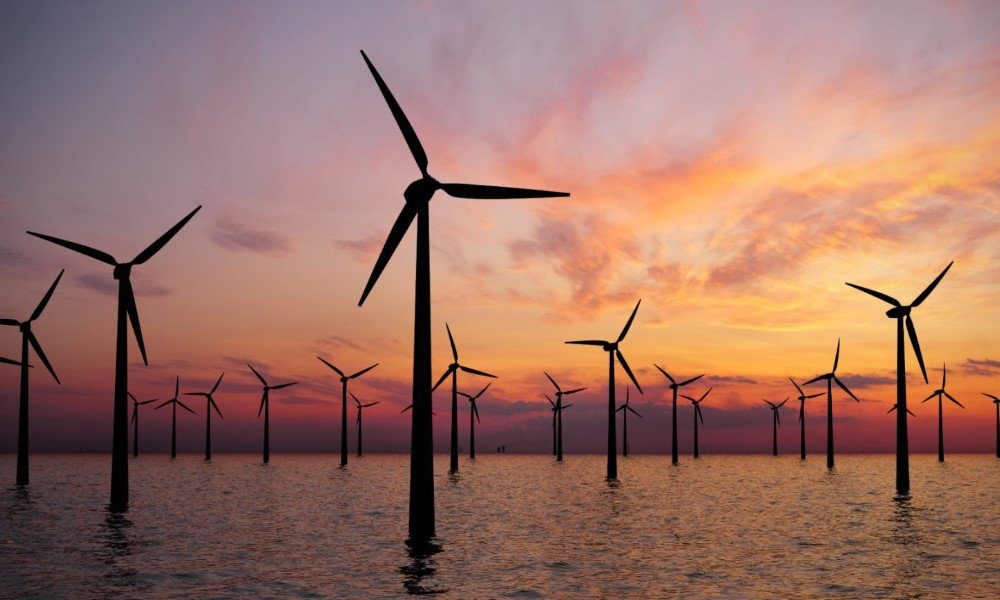

Offshore wind capacity in Europe is expanding faster than grid infrastructure can keep up, and future annual curtailment may waste hundreds of terawatt‑hours of electricity and billions in public money, according to a new report from UK energy consultancy Xodus and Subsea 7.
The study, Offshore Co-Location: Batteries and Beyond for Net Zero, argues that co‑located offshore storage is the most immediate and scalable way to reduce curtailment, ease grid bottlenecks, and create new commercial value. Without intervention, annual curtailment across the UK, Germany, Denmark, and the Netherlands could exceed 300TWh by 2040, up sharply from 72TWh in 2024, with estimates pointing to a two‑ to three‑fold increase by 2030.
“It’s becoming increasingly clear that as more wind turbines are being installed in the North Sea and elsewhere in Europe, the challenge has shifted. The difficulty no longer lies in generating clean electricity, but in ensuring that the power can be stored and transported effectively. If this is achieved, then the wind power generated can be used when it is needed, and greater energy security is realised,” said Olivier Mette, global advisory director at Xodus.
The report outlines a roadmap to 2040 built around three pillars: technological deployment, commercial viability and policy reform. Co-located offshore storage is positioned not as a substitute for grid upgrades but as a complementary measure to manage constraints while larger transmission projects are in progress. The strategy starts with offshore-adapted lithium-ion (Li-ion) batteries as “workhorses”, later shifting to long-duration storage as the backbone of dispatchable offshore wind.
The analysis highlights a need for a new metric—levelized cost of energy plus storage—that captures the combined cost of generation and storage, helping planners and investors value whole‑system benefits. The authors also call for reform of the UK’s contracts for difference (CfD) model, which currently rewards curtailed power and discourages the use of storage.
“In a time of uncertainty and growing demand for energy security, offshore energy storage represents a pivotal step in the evolution of the offshore wind sector. The challenge now is how we maximise the value of energy at a system level and, through integrating storage with offshore infrastructure, create new commercial opportunities,” added Olivier Lodeho, technology director at Subsea 7.
The report notes that 2024 curtailment already costs the sector €8.9bn ($10.45bn) in congestion management, with that figure set to rise. It also finds that capital expenditure for lithium batteries and compressed-air-based hydro-pneumatic systems could fall by 35–40% by 2040 as deployment scales and supply chains mature.