Russian Baltic Port Halts Crude Loading as Drones ...
1 day ago

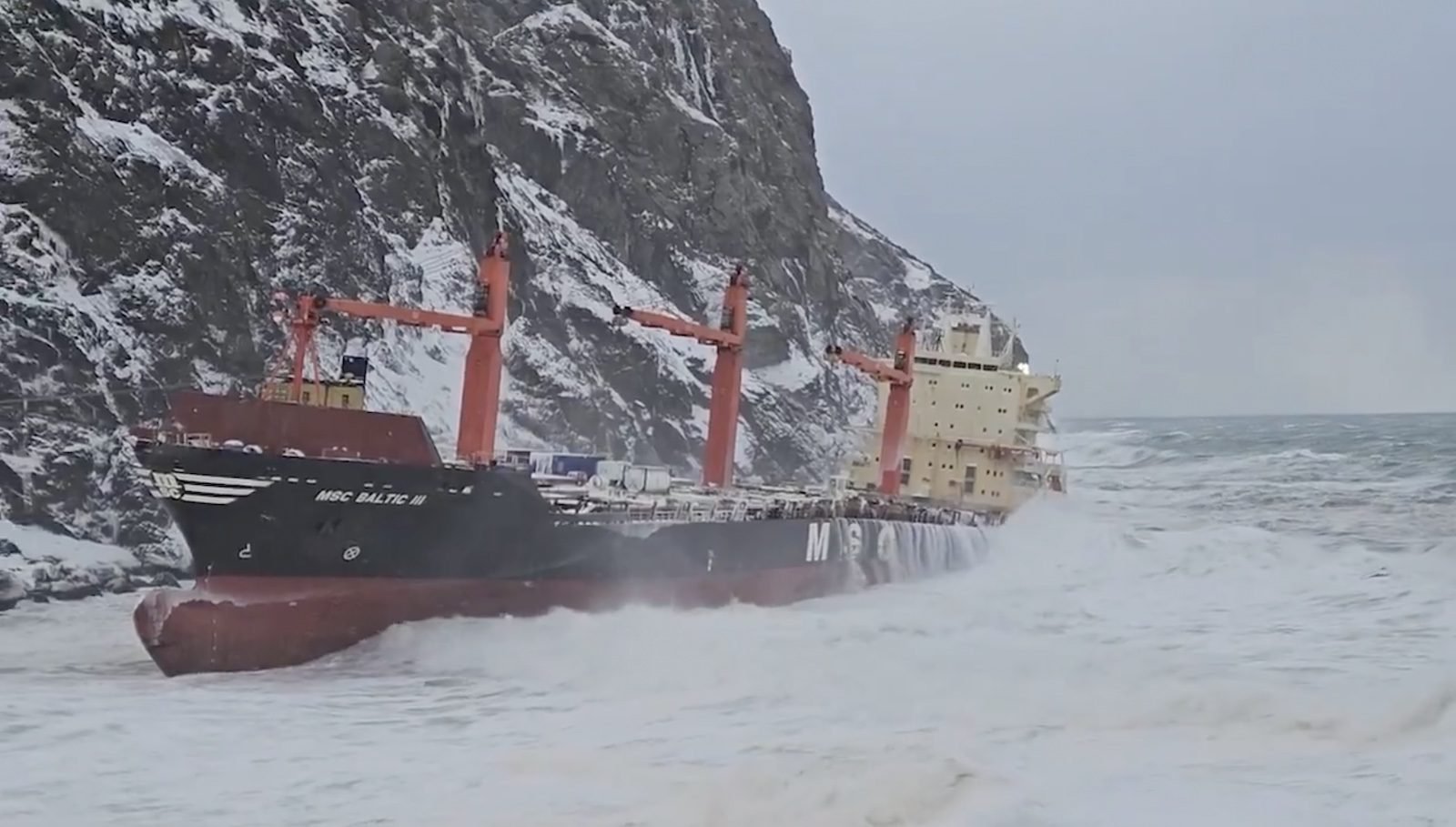
Nearly a year after running aground on Newfoundland’s west coast, the container ship MSC Baltic III continues to deteriorate under relentless North Atlantic winter conditions, with recent inspections confirming accelerating hull damage that is complicating salvage efforts and raising environmental concerns.
The 207-meter vessel lost power and grounded near Wild Cove in the Bay of Islands on February 15, 2025, during severe winter weather. All 20 crew members were safely rescued by Royal Canadian Air Force helicopter shortly after the incident.
When weather has allowed access, recent inspections have documented significant new structural damage. Salvage teams examining cracks and buckling along both sides of the hull found that deterioration has progressed well beyond what was observed during earlier assessments.
“The assessments noted additional damage on both sides,” the Canadian Coast Guard said in its latest update. “The port side crack has spread toward the stern and the starboard buckling has migrated forward.”
Heavy ice accumulation on the vessel has further hampered salvage operations.
Conditions worsened markedly after a series of powerful storms in early December. Inspections conducted December 7 and 8 revealed new steel plate buckling on both sides of the hull, with the stern settling lower in the water. Since then, the ship has suffered multiple hull breaches and has partially settled onto the seabed, effectively ruling out any straightforward refloating option.
Environmental monitoring has produced mixed findings. While no fresh oil pollution was observed during the most recent shoreline patrols and drone overflights following the latest storm, longer-term monitoring has detected increasing amounts of oiled debris washing ashore on nearby beaches.
“A significant amount of debris was found onshore after the last weather event, which is expected following a storm,” the Coast Guard said.
At the time of the grounding, the vessel was carrying heavy fuel oil, marine gas oil, and approximately 470 containers, many of them empty. Salvage crews have removed most of the remaining fuel and offloaded hundreds of containers, but as of December, 65 containers remained trapped below deck and submerged. Those units must be lifted, drained, and removed—an operation that can only proceed in calm weather.
Persistent winter conditions continue to limit access to the wreck. A cableway system has been installed from shore to the vessel, allowing crews to reach the ship during brief weather windows, but opportunities remain infrequent.
“When it is safe for crews to access the vessel, the focus will be on preparing for skimming operations to remove any floating oil that remains within the tanks,” the Coast Guard said.
The Coast Guard has established an emergency safety zone around the site and says its priorities remain stabilizing the wreck, minimizing pollution risk, and preparing for the next phase of salvage once conditions ease.

Sign up for gCaptain’s newsletter and never miss an update