ABS and HD Hyundai to Advance Nuclear-Powered Elec...
15 hours ago

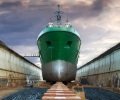

Cautious optimism is growing that Korea’s shipbuilding industry could benefit from rising tensions in the Middle East in the wake of U.S. and Israeli military strikes on Iran.
The outlook stems mainly from expectations of stronger demand for vessels to transport liquefied natural gas (LNG) from the United States, after Qatar suspended operations at its Ras Laffan plant on Monday. The shutdown followed Iranian drone attacks on the world’s largest LNG export facility.
“Korean shipbuilders can take advantage of the Strait of Hormuz blockade and the suspended LNG exports from Qatar,” DS Investment & Securities analyst Kim Dae-seong said Wednesday.
He predicted that Asian and European countries would turn to the U.S. as an alternative source of LNG imports, given the mounting uncertainty over Middle Eastern supply chains.
“The recent crisis will likely lead to purchase agreements and final investment decisions on U.S. LNG projects under the phase of front-end engineering designs,” Kim said. “Unlike Chinese shipyards relying heavily on orders from China and the Middle East, Korean shipyards can benefit from an increase in shipbuilding orders for U.S. projects.”
Following the disruption at the Ras Laffan plant, LNG prices surged in Asia and Europe, prompting major U.S. energy firms to consider expanding gas exports.
Michael Sabel, CEO of Venture Global LNG, one of the largest U.S. LNG producers, told investors Monday that the company has the largest amount of uncontracted LNG cargoes in the world and is ready to help stabilize markets.
“With the largest available incremental LNG capacity in the world, the United States will play a critical role during this historic disruption in the market,” he said during the company’s earnings call.
Yang Jong-seo, a senior researcher at the Korea Eximbank Overseas Economic Research Institute, said future orders for LNG carriers will depend on how much the U.S. can ramp up its LNG production.
He added that the key factor is whether the conflict continues into the fall, when heating demand typically pushes up global LNG consumption.
Industry officials also noted that shipping companies may place additional orders for LNG carriers using profits earned from higher freight rates.
Bloomberg reported Tuesday that shipowners and brokers were demanding more than $200,000 a day for LNG tankers in the Atlantic Basin, nearly double the rate from just a day earlier.
In 2022, when Russia began its full-fledge invasion of Ukraine, Korean shipbuilders also saw a surge in orders for LNG carriers.
Source: The Korea Times