Middle East crisis brings ‘temporary suspensions’ ...
8 hours ago

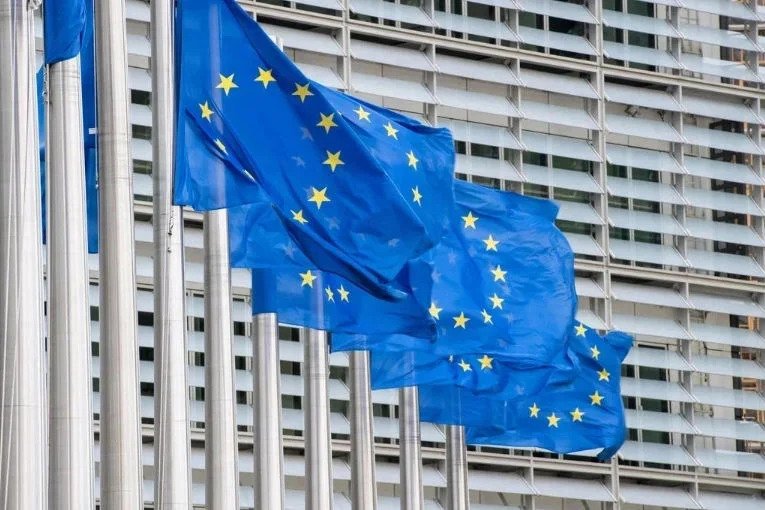
The European Environmental Bureau (EEB), said to be Europe’s largest network of environmental non-government organizations (NGOs), has portrayed the new trade deal between the European Union (EU) and the United States (U.S.) in a different light from the one presented by the European Commission, which hailed its EU–U.S. trade deal as a win for transatlantic ties and economic stability.
While some see the new EU-U.S. trade deal as a step that will pave the way for strengthened energy security across Europe, green groups, which disagree with this assessment, have sounded the alarm, as they believe that the deal risks derailing Europe’s decarbonization efforts.
With this at the forefront, the European Environmental Bureau has warned that the centerpiece of the deal, which is spotlighted as a €700 billion pledge to buy U.S. fossil fuels and nuclear energy over the next three years, is “fundamentally incompatible” with the European Union’s 2030 climate targets.
Luke Haywood, Head of Climate and Energy at EEB, highlighted: “This deal flies in the face of the EU’s climate commitments. Tripling U.S. energy imports in just three years isn’t only physically implausible, it would derail the EU’s mid-term decarbonisation targets.
“Credible pathways to the EU’s 2030 climate targets are incompatible with more imported oil and gas, slow-to-build nuclear reactors and unproven small modular reactors. We should be doubling down on renewables, energy efficiency and electrification. This deal sends a dangerous and dissonant signal to the world.”
The EEB is adamant that the claim that these volumes of U.S. energy imports will substitute for Russian imports is not credible since Eurostat’s data reportedly indicates that the U.S. already holds a 50% share of the EU’s liquefied natural gas (LNG) market.
As a result, fully replacing the remaining 17% supplied by Russia would add only around €9 billion annually, or just 2.5% of total EU energy imports in the European Environmental Bureau’s view. Many EU countries depend on gas imports; thus, they are stepping up their offshore hydrocarbon exploration game.
This is illustrated by Poland, where one of Noble’s rigs recently drilled an oil and gas discovery in the Baltic Sea, which led the operator of the Wolin license block to describe the find as one of the largest conventional oil discoveries in Europe in a decade.
Given the total EU energy imports’ value of around €370 billion in 2024, the EEB claims that shifting oil and gas imports to the U.S. would deliver less than €100 billion extra per year, which in its opinion is far short of the $250 billion per year target touted in the deal even under the most radical scenarios.
Therefore, the European Environmental Bureau is calling on the European Parliament and Member States to scrutinize and reject any elements of the agreement that undermine Europe’s climate goals, energy sovereignty, or international credibility.

𝐇𝐮𝐫𝐫𝐲 𝐮𝐩 𝐚𝐧𝐝 𝐭𝐚𝐤𝐞 𝐚𝐝𝐯𝐚𝐧𝐭𝐚𝐠𝐞 𝐨𝐟 𝐨𝐮𝐫 𝐰𝐢𝐧-𝐰𝐢𝐧 𝐬𝐮𝐦𝐦𝐞𝐫 𝐬𝐚𝐥𝐞 𝐝𝐢𝐬𝐜𝐨𝐮𝐧𝐭 𝐨𝐟 𝐮𝐩 𝐭𝐨 𝟓𝟎% 𝐨𝐧 𝐚𝐝𝐯𝐞𝐫𝐭𝐢𝐬𝐢𝐧𝐠 𝐩𝐚𝐜𝐤𝐚𝐠𝐞𝐬 𝐛𝐲 𝐉𝐮𝐥𝐲 𝟑𝟏!