Two Flex LNG vessels on duty until 2032 and one sh...
1 hour ago

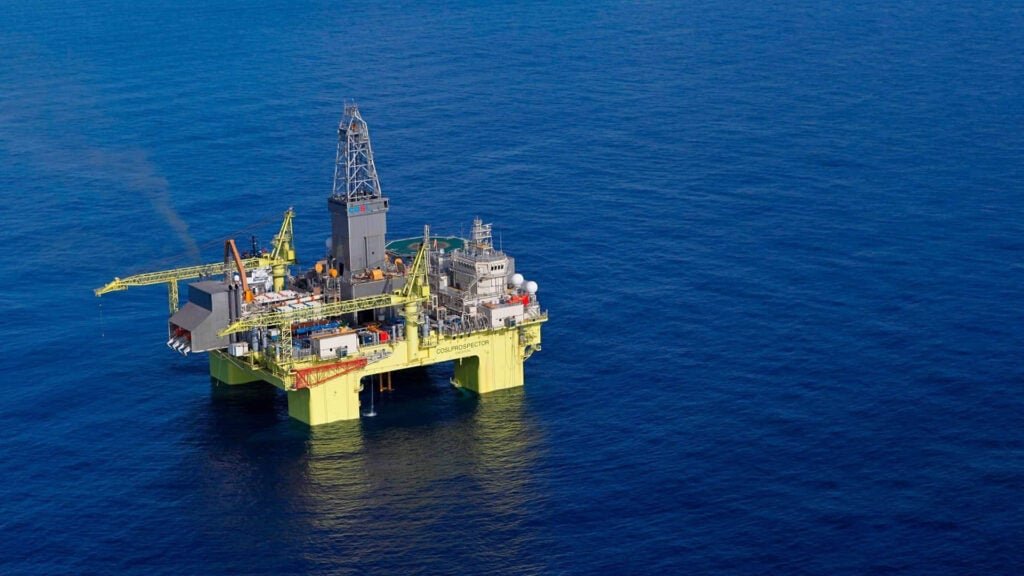
Norwegian state-owned energy giant Equinor has unveiled a new oil discovery in the Barents Sea off the coast of Norway, which was drilled with a semi-submersible rig owned by COSL Drilling Europe, an offshore drilling player.
While explaining that it has made an oil discovery in the Polynya Tubåen prospect, also known as the 7220/7-5 well, Equinor emphasizes that this black gold find strengthens the development of Johan Castberg and will be tied into the field in the Barents Sea.
The well was drilled by the COSL Prospector rig about 16 kilometers southwest of the discovery well 7220/8-1 on the Johan Castberg field and 210 kilometers northwest of Hammerfest. The objective of the 7220/7-5 well was to prove petroleum in Lower Jurassic reservoir rocks in the Tubåen Formation.
The well encountered a 26-meter gas column and a 26-meter oil column in the Tubåen Formation in reservoir rocks totalling 39 meters, with good to very good reservoir quality. The total thickness in the Tubåen Formation is 125 meters.
The gas/oil contact was encountered at 972 meters below sea level, and the oil/water contact was encountered at 998 meters below sea level. The well was not formation-tested, but extensive volumes of data and samples were collected.
The 7220/7-5 well was drilled to a vertical depth of 1,119 meters below sea level, and was terminated in the Fruholmen Formation from the Upper Triassic. The water depth at the site is 361 meters. The well will now be permanently plugged and abandoned.
The preliminary volume estimate is between 14 and 24 million barrels of recoverable oil equivalents. According to the Norwegian Offshore Directorate, the preliminary calculations indicate the size of the discovery is between 2.3 and 3.8 million standard cubic meters of recoverable oil equivalent.
This corresponds to between 14 and 24 million barrels. The licensees – Equinor (operator), Vår Energi, and Petoro – are considering whether it will be possible to tie the discovery back to the Johan Castberg field. This is the 17th exploration well in production licence 532, awarded in the 20th licensing round on the Norwegian Continental Shelf (NCS) in 2009.
The volume basis in Johan Castberg was originally estimated at 500–700 million barrels. Equinor aims to increase this by an additional 200–500 million barrels. In June 2025, an oil discovery called Drivis Tubåen was made in the Castberg area, estimated at 13–20 million barrels in the Drivis structure.
The Norwegian giant claims that last week marked the start of construction for the development of Isflak, the first discovery to be tied into Johan Castberg. Aker Solutions in Sandnessjøen is building a well frame for two new wells that will be connected to existing subsea facilities.
Grete Birgitte Haaland, Area Director for Exploration and Production North at Equinor, commented: “With Johan Castberg, we opened a new oil province in the Barents Sea one year ago.
“It is encouraging that we are now making new discoveries in the area. We plan to drill one to two exploration wells annually in this region going forward to increase the resource base and maintain plateau production for a longer period.”
This oil find comes days after Equinor made another discovery in the Norwegian sector of the North Sea with one of Odfjell Drilling’s semi-submersible rigs.

Take the spotlight and anchor your brand in the heart of the offshore world!
Join us for a bigger impact and amplify your presence at the core hub of the offshore energy community!