Vessel brings over half a billion gallons of US LN...
30 minutes ago

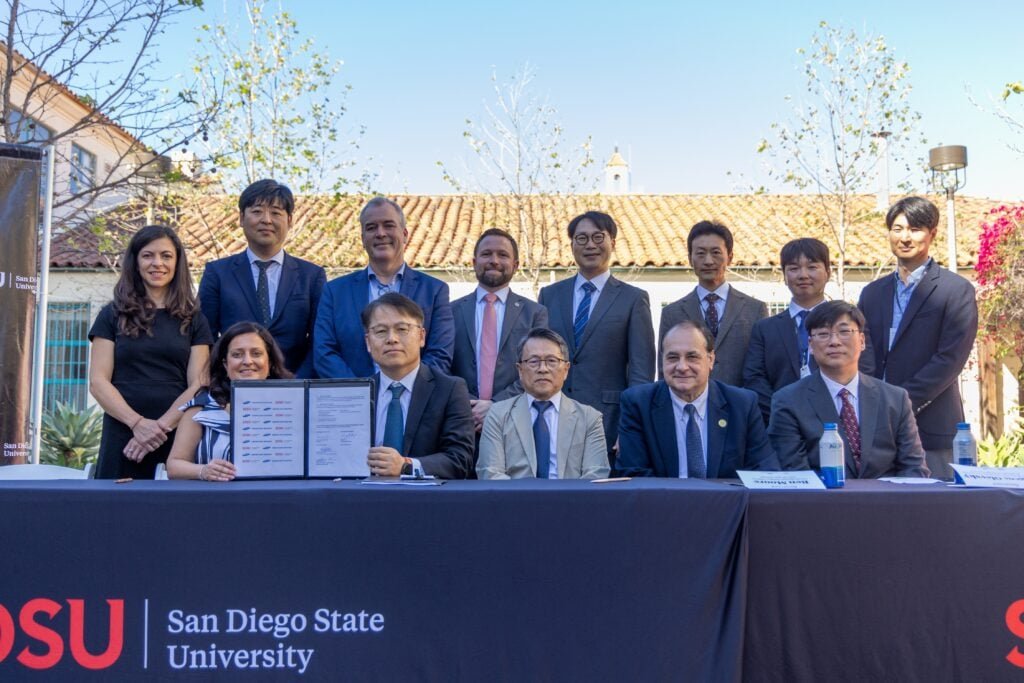
South Korea’s Samsung Heavy Industries (SHI) and San Diego State University (SDSU) have opened a joint research center in the U.S. to support the Make American Shipbuilding Great Again (MASGA) initiative.
The SHI-SDSU Advanced Maritime Center (SSAM), SHI’s first research hub in the U.S., is located in San Diego, California, described as the ideal location for Korea-U.S. collaboration in shipbuilding research and workforce development, as it is home to General Dynamics NASSCO, the largest shipyard on the U.S. West Coast, the South Korean company noted.
The initiative is set to combine SHI’s capabilities and advanced shipbuilding technologies with SDSU College of Engineering’s technology portfolio spanning AI and autonomous intelligent systems, intelligent wireless communications and embedded systems, advanced manufacturing and materials, and eco-friendly and energy systems.
“The establishment of the joint research center in the United States marks the starting point for fully implementing MASGA, which has been long in preparation,” said Wang-keun Lee, COO of SHI. “We expect the center to contribute to expanding Korea-U.S. cooperation in shipbuilding and offshore technologies.”
SHI said it plans to build a technology cooperation framework centered on the SSAM Center with SDSU and NASSCO, and explore practical collaboration measures to support the revitalization of the U.S. shipbuilding industry in AI-based production automation, robotics, and eco-friendly technologies.
The center will also carry out initiatives to strengthen the company’s local network, including identifying research projects with U.S. universities, government agencies, and related institutions.
“We look forward to advancing sustainable technologies, including AI-driven manufacturing, through collaboration between Samsung Heavy Industries and our College of Engineering, and to building strong career pathways for future industry leaders,” said SDSU President Adela de la Torre.
To remind, in July 2025, South Korea pledged $150 billion into a dedicated U.S. shipbuilding rejuvenation fund, as part of a much larger, $350 billion bilateral trade agreement with Washington. The deal aims to breathe new life into the American vessel construction industry in return for a lower tariff rate of 15%. Before this, the U.S. President’s administration had plans to impose 25% “reciprocal” tariffs on Korean imports, starting on August 1.
The agreement between the two countries came two months after representatives from South Korea’s vessel construction industry held talks ‘for the first time ever’ with the U.S. Trade Representative (USTR) to explore opportunities for shipbuilding cooperation.

Take the spotlight and anchor your brand in the heart of the offshore world!
Join us for a bigger impact and amplify your presence at the core hub of the offshore energy community!