Wärtsilä: All-Time High Operating Result And Cash ...
2 months ago

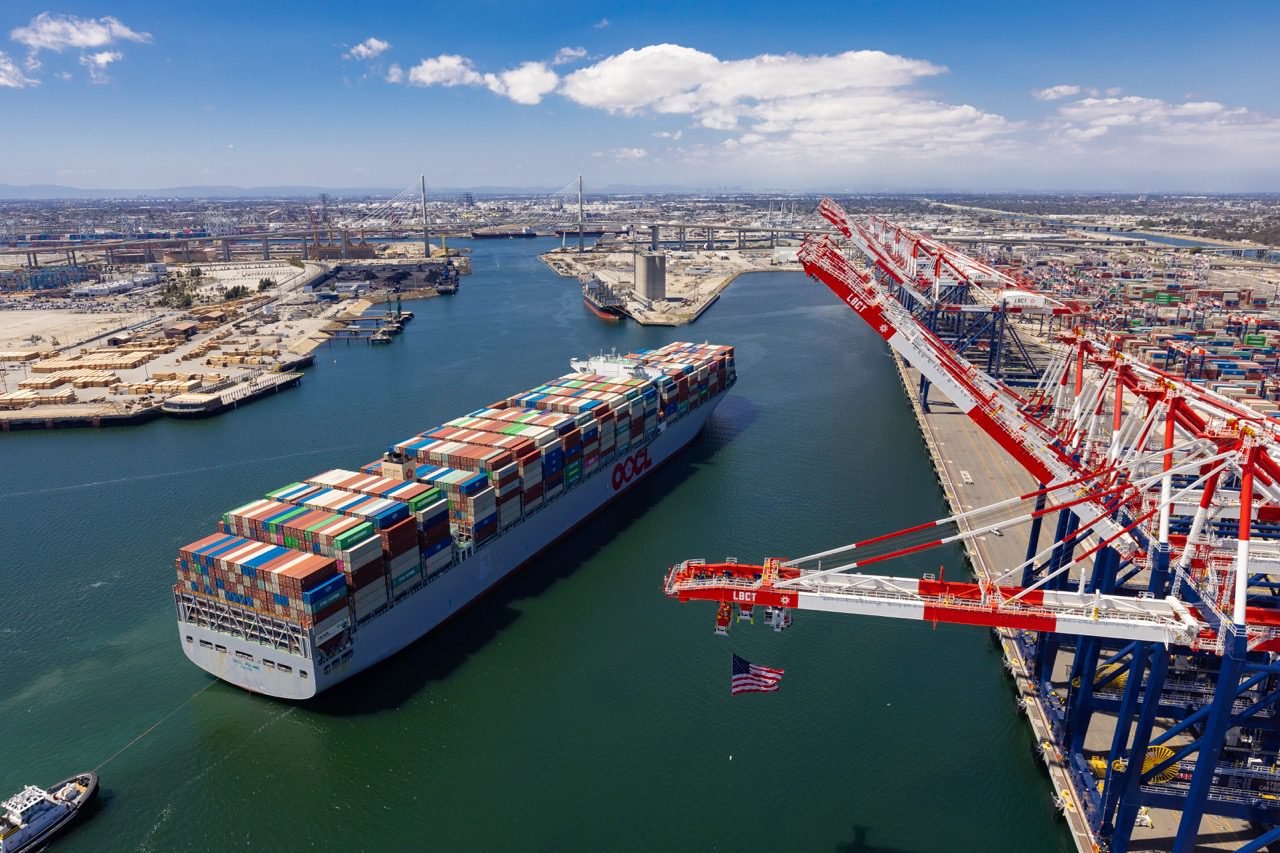
Los Angeles and Long Beach are closing out 2025 near record cargo volumes after a tariff-driven import surge, even as frontloading fades and a weaker 2026 looms.
Two of America’s busiest container gateways are closing out 2025 with near-record cargo volumes despite persistent tariff uncertainty that has rattled global supply chains and sent shockwaves through U.S. import markets.
The Port of Long Beach is on track to exceed its all-time cargo record of 9.6 million twenty-foot equivalent units set in 2024, moving 9,047,477 TEUs through the first eleven months of 2025—a 2.9% increase over the same period last year. Meanwhile, the Port of Los Angeles has handled 9,447,731 TEUs through November, putting it 1% ahead of 2024 and on course to surpass 10 million TEUs for the year, making it the port’s third-best performance on record.
The strong annual performance comes even as both facilities posted November declines compared to 2024’s elevated levels. Long Beach processed 817,561 TEUs in November, down 7.5% year-over-year, while Los Angeles handled 782,249 TEUs, a 12% decrease.
“Even with all the trade uncertainty, we’ll finish 2025 north of 10 million TEUs, putting this year firmly in our top three of all time,” said Port of Los Angeles Executive Director Gene Seroka. “All that cargo moved without congestion and not a single ship backed up.”
Seroka credited the ports’ operational reliability to coordinated efforts across the supply chain. “That’s a credit to our longshore labor, truckers, terminal operators, rail partners and every stakeholder who keeps this complex system running smoothly,” he added. “That kind of reliability is why 200,000 importers and exporters each year continue to choose Los Angeles—and trust us in any market condition.”
Port of Long Beach CEO Mario Cordero echoed similar this, noting the facility maintained steady operations despite extraordinary market pressures. “Cargo moved at a steady rate with no congestion or disruptions at the Port of Long Beach as consumers, businesses and supply chain partners endured an extraordinary amount of uncertainty caused by shifting trade policies throughout 2025,” Cordero said.
Frontloading Strategy Creates Cargo Vacuum
The robust first-half performance at both ports was largely driven by importers rushing goods into the country ahead of tariffs. This strategic frontloading, however, has created a subsequent slowdown that industry analysts expect to persist well into 2026.
According to the National Retail Federation’s Global Port Tracker report, U.S. container ports handled 2.07 million TEUs in October, down 7.9% year-over-year, with November projected at 1.91 million TEU (down 11.6%) and December forecast at 1.86 million TEU (down 12.7%). The December figure would mark the slowest month since June 2023.
“We are seeing the results of the tariffs in weakening cargo demand going forward from the fourth quarter of this year and likely into the first half of next year,” said Ben Hackett, founder of Hackett Associates. “Container shipping rates are already declining on both coasts due to less need for cargo space for goods from both Asia and Europe.”
The frontloading phenomenon has left retailers well-stocked for the holiday season but facing diminished import needs in subsequent months. “Stores are stocked up and ready for a record holiday season but there is still a great deal of uncertainty about what will happen in 2026 with trade policy,” said Jonathan Gold, NRF Vice President for Supply Chain and Customs Policy.
Uncertain Outlook for 2026
Trade policy remains the dominant variable shaping cargo forecasts. The administration recently reduced tariffs on some food products, but the future of other tariffs imposed under the International Emergency Economic Powers Act awaits a Supreme Court decision.
Looking ahead to 2026, the Global Port Tracker projects continued headwinds, with January forecast at 2 million TEU (down 10.3%), February at 1.86 million TEU (down 8.5%), March at 1.79 million TEU (down 16.8%), and April at 1.97 million TEU (down 10.9%).
Despite maritime sector challenges, consumer demand remains robust. The NRF is forecasting record holiday sales exceeding $1 trillion for the first time, up between 3.7% and 4.2% over 2024. This divergence between strong retail performance and declining import volumes underscores the effectiveness of retailers’ advance cargo strategies.
Port executives at both facilities expressed cautious optimism for 2026. Cordero said his facility looks forward to “a moderate increase in cargo for 2026”, while Seroka emphasized that operational excellence would continue regardless of volume fluctuations.
As the maritime industry enters 2026, port officials and supply chain stakeholders agree that tariff policy will remain the critical factor determining cargo flows, with container shipping markets continuing to adjust to what analysts describe as a “new normal” of reduced demand across both U.S. coasts.
Sign up for gCaptain’s newsletter and never miss an update