Wärtsilä: All-Time High Operating Result And Cash ...
2 months ago

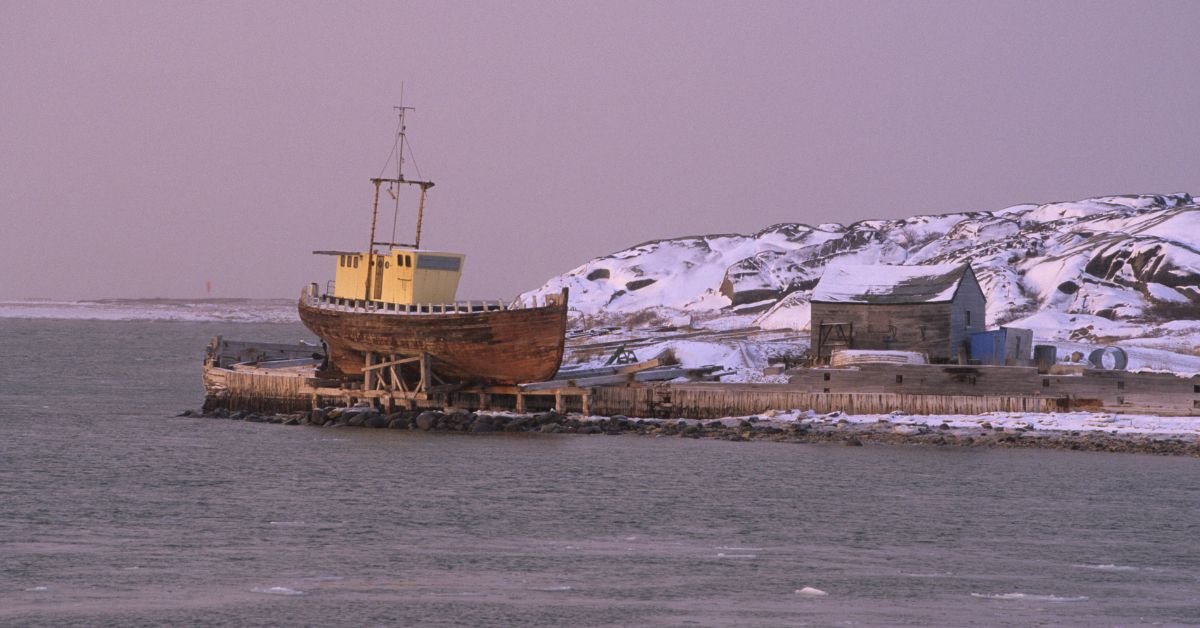
The Canadian government is planning to develop a remote northern port on Hudson Bay to export natural gas, potash, canola and other commodities as the nation is trying to decrease its economic dependence on the U.S.
Energy Minister Tim Hodgson said that there is tremendous potential for turning the port of Churchill, Manitoba, into a large export hub, opening new trade routes to Europe and other markets.
The Minister said he has seen several pitches for projects to move goods through the location, which is at almost the same latitude as Oslo, Norway.
The idea of a northern port enjoys the backing of politicians from Canada’s western region, rich in resources.
But observers are sceptical about Churchill as a viable shipping route, as transforming it into a port for handling bulk goods would take many years and billions, for a route that is blocked by ice most of the time.
The government is also planning to get icebreakers for the Canadian Coast Guard. With those vessels, you are not talking about a 4-month shipping season but a lane which would remain open for most of the year.
Churchill’s Port was first used for exporting grain in the 1930s and is the continent’s only deepwater port with direct access to the Arctic Ocean and a rail line linking south.
Access to the port has always been limited due to ice.
Hodgson said that for products from Western Canada, Hudson Bay is the closest route to Europe. It offers an alternative for all the canola, potash and grain.
He added that if there are more roads and more investment in railways, then Churchill will become quite viable.
PM Mark Carney’s government is trying to seek approvals for infrastructure projects, due to the trade war started by U.S President Trump.
The Port witnessed a revival in the past decade. It aims to ship 20,000 tonnes of zinc concentrate this year and some grain before the ice returns.
Year-round shipping from the port would be possible with icebreakers and investment into roadways and railways.
There are other proposals as well, with regard to shipping through the Hudson Bay. One group has pitched developing an LNG export facility further south on the coast.
The current rail line is still in better condition than it was 30 years ago. Authorities are also modernising the basic port facilities, such as the wharf decks.
Disclaimer :
The information contained in this website is for general information purposes only. While we endeavour to keep the information up to date and correct, we make no representations or warranties of any kind, express or implied, about the completeness, accuracy, reliability, suitability or availability with respect to the website or the information, products, services, or related graphics contained on the website for any purpose. Any reliance you place on such information is therefore strictly at your own risk.
In no event will we be liable for any loss or damage including without limitation, indirect or consequential loss or damage, or any loss or damage whatsoever arising from loss of data or profits arising out of, or in connection with, the use of this website.

Disclaimer :
The information contained in this website is for general information purposes only. While we endeavour to keep the information up to date and correct, we make no representations or warranties of any kind, express or implied, about the completeness, accuracy, reliability, suitability or availability with respect to the website or the information, products, services, or related graphics contained on the website for any purpose. Any reliance you place on such information is therefore strictly at your own risk.
Do you have info to share with us ? Suggest a correction