Tanker Crew Rescues Solo Rower Hit By Rogue Waves ...
1 hour ago

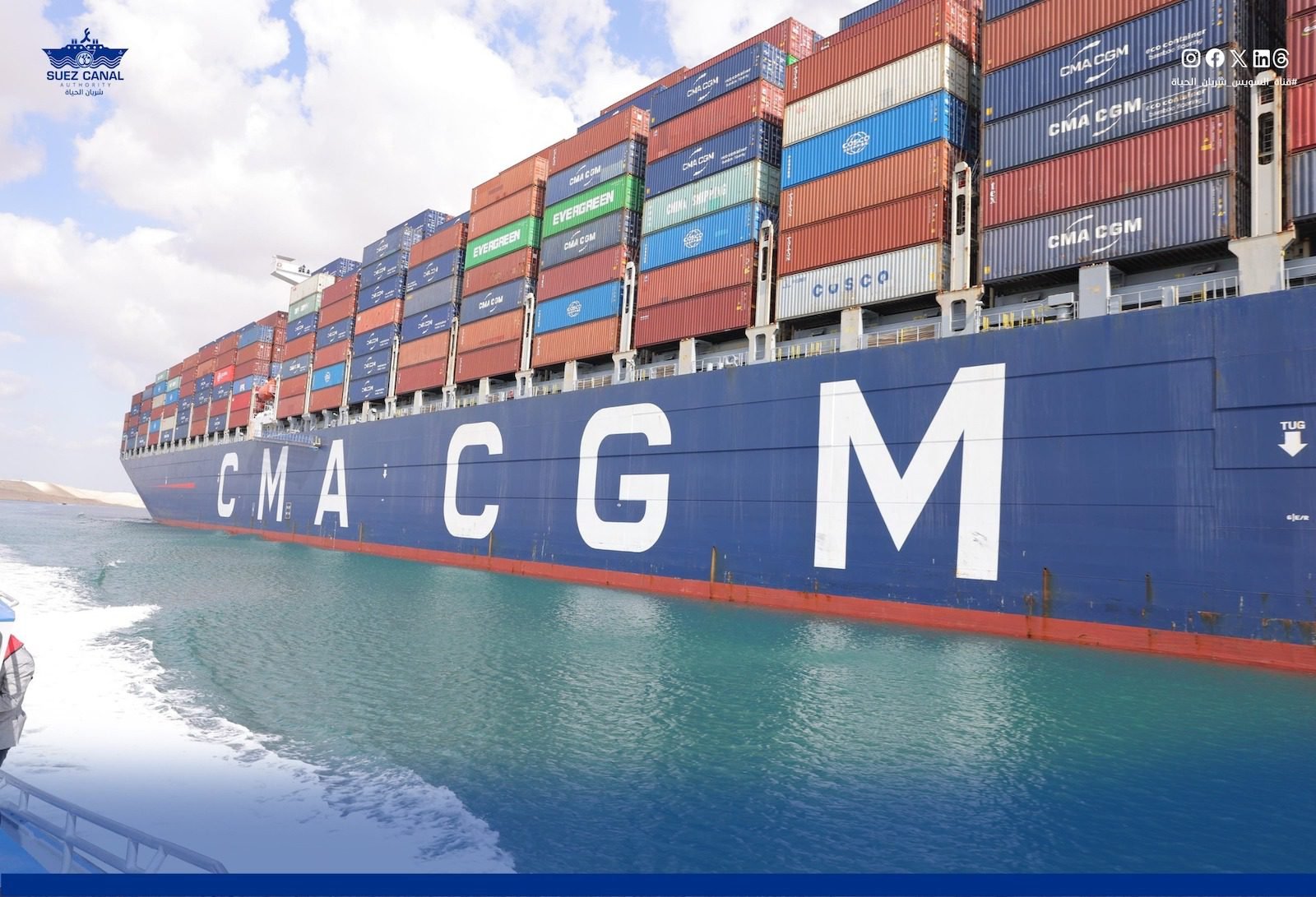
Drewry’s World Container Index fell 10% to $2,212 per 40-foot container this week, marking the second consecutive week of declining rates as carriers navigate conflicting strategies over Suez Canal transits and face weakening demand in the aftermath of the Chinese New Year cargo rush.
The decline was driven primarily by steep drops on Transpacific and Asia-Europe trade routes. Spot rates from Shanghai to New York decreased 11% to $3,191 per 40-foot container, while Shanghai to Los Angeles fell 12% to $2,546. The maritime consultancy expects freight rates to continue their downward trajectory in the coming weeks.
“Carriers increased blank sailings this week to counter softening demand following the end of the Chinese New Year cargo rush,” Drewry noted in its latest assessment. The practice of canceling scheduled sailings is a common tactic to manage capacity when cargo volumes weaken.
The rate declines come amid growing uncertainty over carrier routing decisions through the Red Sea. While some lines are cautiously returning to the Suez Canal after nearly two years of diversions, others are pulling back, creating what Drewry analysts describe as a “drip-feed” approach to capacity reintroduction.
Asia-Europe routes saw particularly sharp drops, with Shanghai to Rotterdam falling 9% to $2,510 per 40-foot container and Shanghai to Genoa declining 8% to $3,520. The volatility reflects carriers’ conflicting operational decisions: CMA CGM is switching three Asia-Europe services from the Suez route back to the Cape of Good Hope, while Maersk plans to resume scheduled service from India to the U.S. East Coast via the canal starting January 26.
According to Drewry’s analysis, these conflicting operational decisions suggest that effective shipping capacity will be reintroduced to the market gradually rather than all at once. This measured approach allows carriers to carefully assess risk and adjust their networks, preventing what the consultancy describes as a “catastrophic collapse in spot rates.”
The strategic divergence among carriers underscores the delicate balance between managing security risks and maintaining market stability. Diversions around the Cape of Good Hope have absorbed approximately 2 million TEU of global container shipping capacity, with the crisis having reduced global shipping capacity by an estimated 8%.
Drewry analyst Philip Damas emphasized the significance of the Suez situation, noting that “the return to the Suez Canal is one of this year’s key swing factors for capacity, freight rates and transit times,” with carriers closely watching insurance costs, competitor behavior, and the risk of port congestion.
Industry analysts have warned that freight rates could fall up to 25% globally in 2026, even with no change to the Red Sea situation.
Sign up for gCaptain’s newsletter and never miss an update