Tanker Shipping Rates May Rise due to Venezuelan O...
2 hours ago

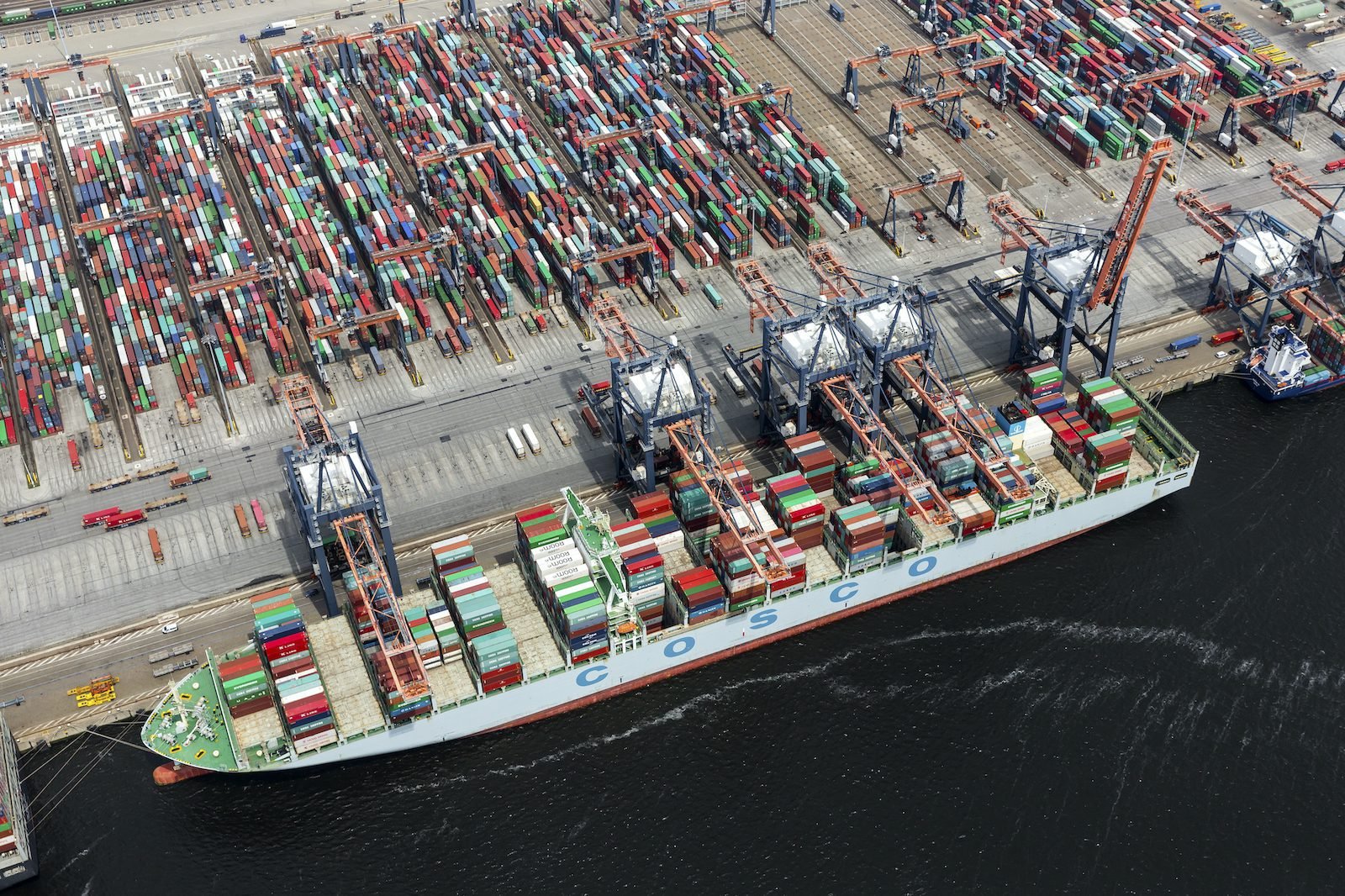
By Gavin van Marle (The Loadstar) – Mid-November FAK [freight all kinds] price hikes continued to strengthen container freight spot rates on the Asia-Europe trades this week.
As per Drewry’s World Container Index (WCI) yesterday, the Shanghai-Rotterdam leg gained 8% on the week before, to finish at $2,193 per 40ft, while the WCI’s Shanghai-Genoa route was up 6% week on week, to end at $2,319 per 40ft.
And Drewry warned that new FAK rate levels advised by carriers for implementation on 1 December could see rates further strengthen over the forthcoming fortnight.
“Carriers on the Asia–Europe trade route are trying to push spot rates up by introducing higher FAK rates, ranging from $3,100 to $4,000 per 40ft, effective 1 December, in an attempt to elevate spot rates before the start of the new annual contract negotiation season,” the analyst noted.
However, today’s Shanghai Containerised Freight Index (SCFI), which has recently been acting as a “forward curve” for the following week’s WCI, today saw spot rates on its Shanghai-North Europe base port leg slide 3.5% this week, to end at $2,734 per 40ft, indicating possible pressure for the remainder of the month.
One Asia-Europe freight buyer told The Loadstar today that some carriers had already begun to discount the 1 December FAK levels, for example: “MSC has already cut its increase in December, with the rates now being advertised at $2,215, plus its GFS [global fuel surcharge] of $79 per teu.”
This could well chime with new data from Xeneta, which shows capacity on the Far East-North Europe trade was up 4.8% over the week before, while capacity on the Far East-Mediterranean trade was up 8.7% week on week.
“Average spot rates from Far East to North Europe and Mediterranean are up compared to a week ago while offered capacity is also increasing – suggesting healthy demand on these trades,” Xeneta chief analyst Peter Sand said.
And he noted that the situation was starkly different on the Asia-North America trades, which saw another week of sustained spot rate declines, with 15 November GRIs of between $1,00-$3,000 per40ft falling completely flat.
“There are striking differences in the fortunes for container shipping from the Far East into Europe compared with the US, and it is setting the scene for 2026,” Mr Sand continued.
“The other side of the coin sees spot rates falling into the US east coast and west coast this week, with increases in offered capacity seemingly too much for the level of demand.
“These trends on the fronthauls into Europe and US are likely to continue into 2026, with demand into Europe bolstered by Chinese goods finding new markets outside North America.
“At the same time, the US trade policy will have a negative impact on consumer demand and ocean container volumes in the year ahead,” he added.
The WCI’s Shanghai-Los Angeles component lost 7% on the week before, to end at $2,172 per 40ft, while the Shanghai-New York leg was down 10% week on week, to $2,922 per 40ft. And the SCFI reading from today suggests further declines next week: the Shanghai-US west coast base port leg was down 10%, to $1,645 per 40ft, and the Shanghai-US east coast base port leg fell 8%, to $2,384 per 40ft.
US forwarder Freight Right said it had been paying $1,400-$1,600 for 40ft shipments to the US west coast this week and expected prices to remain at that level, or fall further, for the rest of the year.
“With about a week and a half left in November, we’re not expecting rates to rise again before month-end, despite carriers’ tendency to try increases wherever possible. For December, base case is the same or slightly lower rates, not higher, given very weak shipment activity and upcoming international holidays and factory closures in Asia,” it said.
However, capacity has also been added to the transpacific trades, Xeneta data revealed, up 5.4% on the previous week to the west coast and by 11.4% to the east coast, although carriers are likely to find it difficult to fill the ships.
“We see “pretty dead” volume to the east coast, which is why the USEC premium over USWC has compressed to roughly $700.
“Carriers are actively hunting for USEC volumes, keeping those rates under heavier pressure,” Freight Right noted.
The Loadstar is known at the highest levels of logistics and supply chain management as one of the best sources of influential analysis and commentary.
Sign up for gCaptain’s newsletter and never miss an update