Wärtsilä: All-Time High Operating Result And Cash ...
1 month ago

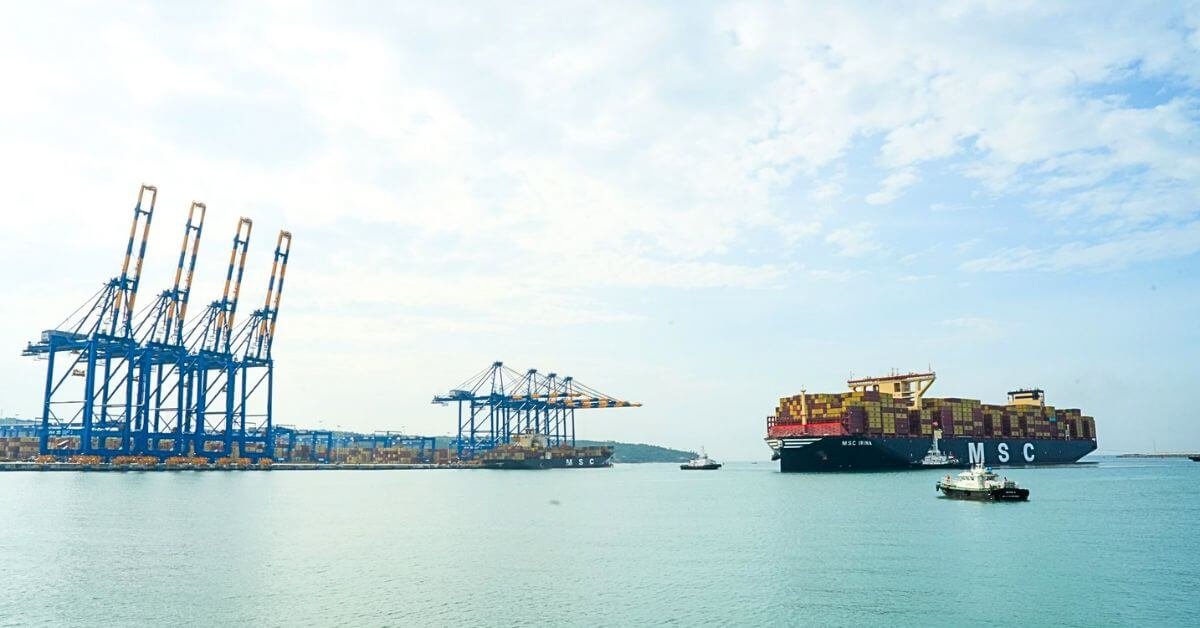

The Indian Institute of Technology, Madras, has developed and deployed India’s first fully indigenous Vessel Traffic Management System (VTMS).
The system is currently operational at Vizhinjam International Seaport Limited (VISL) in Kerala, which was inaugurated by Prime Minister Narendra Modi on 2 May 2025. Two other western coast ports are reportedly in discussions to adopt the system.
The VTMS was developed entirely by IIT-M’s National Technology Centre for Ports, Waterways and Coasts (NTCPWC) in accordance with specifications from the Ministry of Ports, Shipping and Waterways (MoSPW).
Officials highlighted that the system gives the Government of India full control over the source code, databases, and architecture, significantly reducing the risk of sensitive vessel-movement data being exposed to foreign entities.
A faculty member at IIT-M stated that while the system is primarily designed for merchant vessels, it is capable of monitoring naval vessels and smaller coastal craft operating in India’s coastal waters.
Video Credits: IIT Madras/Facebook
K. Murali, Head of NTCPWC, emphasised that the indigenous system allows India to accelerate innovation, enhance operational safety, and build domestic maritime expertise.
He added that the system also reduces operational and financial risks often associated with reliance on private vendors or imported solutions.
Technically, the VTMS features an open-source framework, customised and OEM-independent radar and voice-data integration, and a robust, defence-grade security architecture.
The system is scalable, allowing it to be deployed across multiple ports with minimal maintenance costs, and offers a cost-effective alternative to foreign platforms.
Officials also said that the indigenous VTMS supports the development of a domestic talent pool with hands-on experience in advanced maritime technologies, while strengthening India’s strategic control over critical port infrastructure.
The deployment of the system at VISL is being seen as a potential benchmark for modernising coastal infrastructure in India and reducing reliance on imported maritime technology.
Reference: New Indian Express, IIT Madras
Disclaimer :
The information on this website is for general purposes only. While efforts are made to ensure accuracy, we make no warranties of any kind regarding completeness, reliability, or suitability. Any reliance you place on such information is at your own risk. We are not liable for any loss or damage arising from the use of this website.
Disclaimer :
The information on this website is for general purposes only. While efforts are made to ensure accuracy, we make no warranties of any kind regarding completeness, reliability, or suitability. Any reliance you place on such information is at your own risk. We are not liable for any loss or damage arising from the use of this website.
1. eBooks for Engine Department
Master machinery operations, troubleshooting, and safety procedures with expertly written guides tailored for marine engineers. Prevent costly breakdowns and onboard accidents through practical knowledge.
👉 Explore Engine Department eBooks
2. eBooks for Deck Department
Sharpen your seamanship, navigation, and cargo-handling skills with real-world case studies and practical insights designed for deck officers and cadets.
👉Discover Deck Department eBooks
3. eBooks on Electrical Fundamentals & Issues
Understand marine electrical systems, identify potential faults, and prevent onboard electrical failures with step-by-step explanations from industry experts.
4. Pocket Guides for Quick Reference
Compact, handy, and loaded with essential checklists—perfect for on-the-go reference during operations and emergencies at sea.
5. Combo Packs to Save Big
Access multiple expert eBooks at discounted prices. Ideal for professionals seeking complete safety and operational knowledge across various ship departments.
6. Digital Maritime Courses – Learn at Your Own Pace
Upgrade your competence with Marine Insight Academy’s online courses. Learn from industry professionals anytime, anywhere, and become a safer, smarter seafarer.