Wärtsilä: All-Time High Operating Result And Cash ...
2 months ago

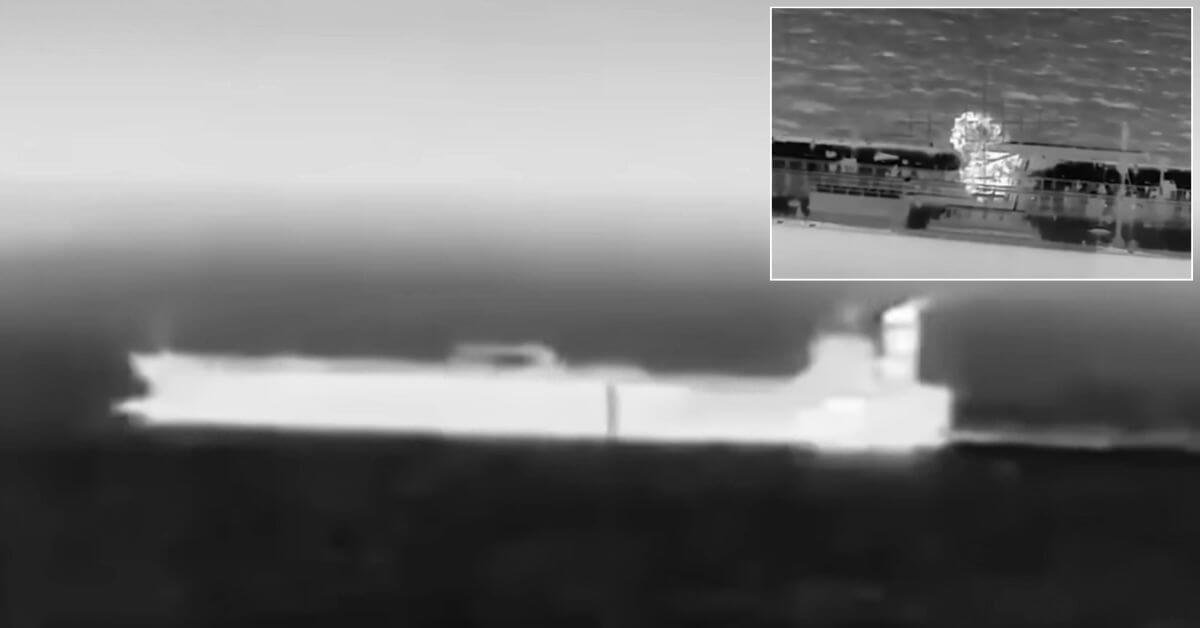

Ukraine has carried out a drone attack on a Russian-linked oil tanker in the Mediterranean Sea, marking the first confirmed strike of this kind so far from the Black Sea.
A source from Ukraine’s Security Service (SBU) said the target was the Oman-flagged crude oil tanker Qendil, which is part of Russia’s so-called “shadow fleet”.
The official said the tanker was empty at the time of the attack and suffered critical damage. The strike took place more than 2,000 kilometres from Ukrainian territory.
Ship-tracking data showed the Qendil was sailing in the Mediterranean off Libya’s coast at around 1330 GMT. Ukrainian officials did not give the exact time or location of the attack.
Video footage shared by a source showed a small explosion on the tanker’s deck. Reuters confirmed that the vessel in the video was the Qendil by comparing it with earlier images, but could not independently confirm when or where the footage was recorded.
The SBU said the operation involved several stages and was carried out by its Special Group “Alpha”. According to security sources, aerial drones were used to drop munitions onto the tanker from above.
On Dec. 18, at the direction of @SecWar Pete Hegseth, Joint Task Force Southern Spear conducted lethal kinetic strikes on two vessels operated by Designated Terrorist Organizations in international waters. Intelligence confirmed that the vessels were transiting along known… pic.twitter.com/CcCyOgYRto
— U.S. Southern Command (@Southcom) December 19, 2025
This suggests the drones were launched from a nearby vessel and carried out a short-range attack. The damage appeared to affect the tanker’s upper structures, although the full extent of the damage is not yet clear.
The Qendil was built in 2006 and has a deadweight capacity of 115,338 tonnes. Before the incident, it had loaded Russian crude oil at the Black Sea port of Novorossiysk in early November.
It then sailed through the Bosphorus, the Mediterranean and the Suez Canal to India, where it unloaded its cargo at Jamnagar on 1 December. After unloading, the tanker was heading back towards the Russian port of Ust Luga in the Baltic Sea when it was struck.
Ukrainian officials said the attack did not pose any environmental risk because the tanker was not carrying oil at the time. They also said the vessel was a legitimate target as it was being used to help Russia evade sanctions and earn money for the war.
Per maritime tracking data, the attack may have taken place while the tanker was sailing west in the Mediterranean between Malta and Crete, placing it around 930 miles from Ukraine.
AIS data showed the vessel made a sudden U-turn shortly before midnight and changed its destination to Port Said in Egypt for reasons that remain unclear.
A British maritime risk management firm said the incident showed a clear expansion in Ukraine’s use of uncrewed aerial systems against ships linked to Russia’s sanctioned oil trade.
The Qendil has been sanctioned by both the European Union and the United Kingdom as part of efforts to curb Russia’s shadow fleet. These vessels often use complex ownership structures and frequent flag changes to avoid restrictions. Russia is estimated to operate more than 1,000 such ships to keep its oil exports moving.
References: Reuters, TWZ
Disclaimer :
The information on this website is for general purposes only. While efforts are made to ensure accuracy, we make no warranties of any kind regarding completeness, reliability, or suitability. Any reliance you place on such information is at your own risk. We are not liable for any loss or damage arising from the use of this website.
Disclaimer :
The information on this website is for general purposes only. While efforts are made to ensure accuracy, we make no warranties of any kind regarding completeness, reliability, or suitability. Any reliance you place on such information is at your own risk. We are not liable for any loss or damage arising from the use of this website.
1. eBooks for Engine Department
Master machinery operations, troubleshooting, and safety procedures with expertly written guides tailored for marine engineers. Prevent costly breakdowns and onboard accidents through practical knowledge.
👉 Explore Engine Department eBooks
2. eBooks for Deck Department
Sharpen your seamanship, navigation, and cargo-handling skills with real-world case studies and practical insights designed for deck officers and cadets.
👉Discover Deck Department eBooks
3. eBooks on Electrical Fundamentals & Issues
Understand marine electrical systems, identify potential faults, and prevent onboard electrical failures with step-by-step explanations from industry experts.
4. Pocket Guides for Quick Reference
Compact, handy, and loaded with essential checklists—perfect for on-the-go reference during operations and emergencies at sea.
5. Combo Packs to Save Big
Access multiple expert eBooks at discounted prices. Ideal for professionals seeking complete safety and operational knowledge across various ship departments.
6. Digital Maritime Courses – Learn at Your Own Pace
Upgrade your competence with Marine Insight Academy’s online courses. Learn from industry professionals anytime, anywhere, and become a safer, smarter seafarer.