Wärtsilä: All-Time High Operating Result And Cash ...
2 months ago

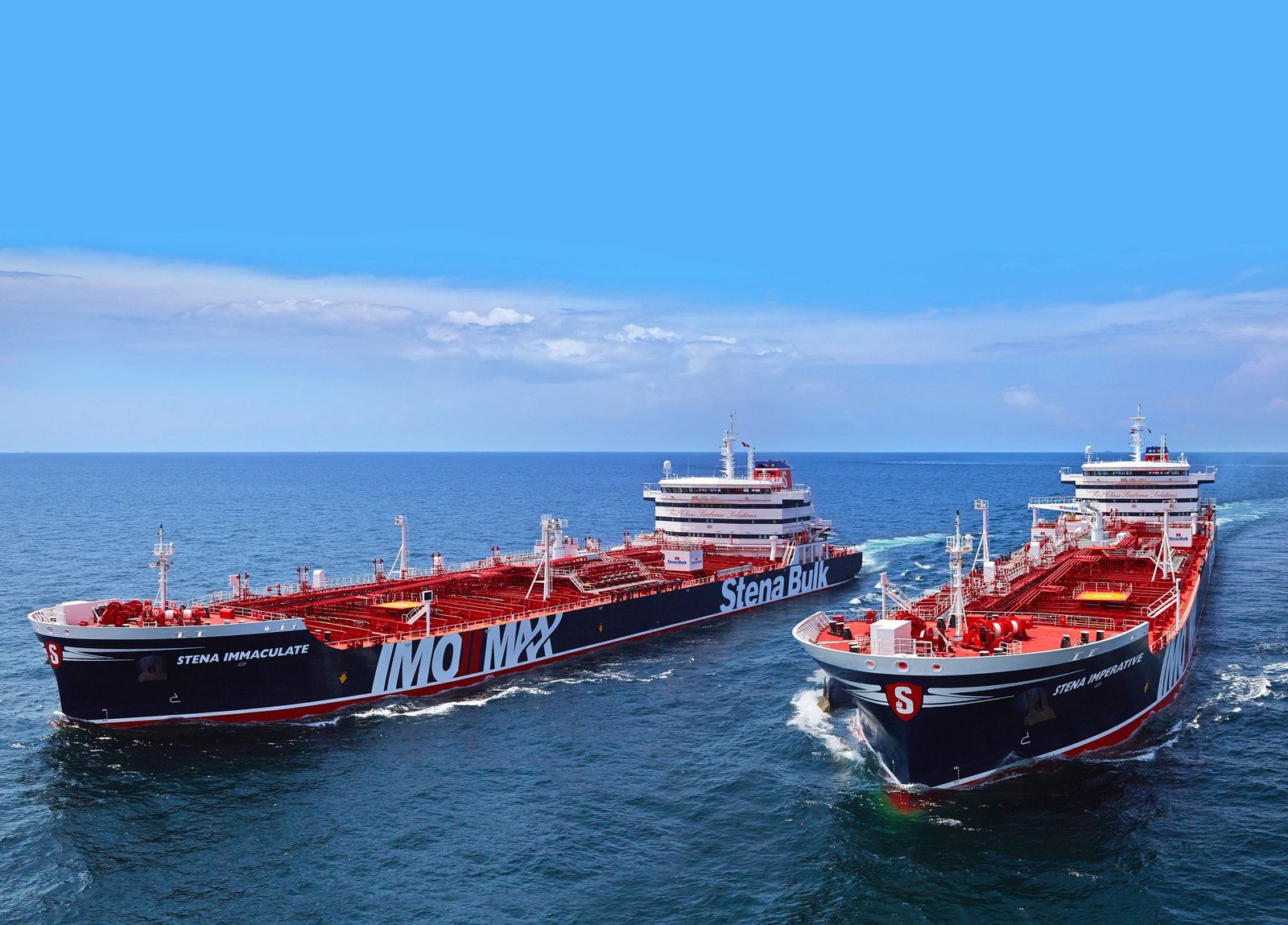
A merchant tanker transiting the Strait of Hormuz was harassed by Iranian forces on Monday in an incident that now appears to involve the U.S.-flagged Stena Imperative, a strategically important vessel enrolled in the U.S. Tanker Security Program, according to updated military and maritime security reporting.
Initial advisories from United Kingdom Maritime Trade Operations (UKMTO) said a merchant vessel was hailed by multiple small armed craft at approximately 0900 UTC on February 3 while transiting the inbound traffic separation scheme of the strait, roughly 16 nautical miles north of Oman. The vessel declined demands to stop and continued on its planned route.
Subsequent statements from the U.S. military indicate the ship was the Stena Imperative, a U.S.-flagged, U.S.-crewed product tanker operated by Crowley and Stena Bulk. According to U.S. Central Command, two Islamic Revolutionary Guard Corps (IRGC) fast boats and an Iranian Mohajer drone approached the tanker at high speed, ordered it to stop engines, and threatened to board and seize the vessel.
The tanker instead increased speed and continued its transit. A U.S. Navy destroyer, USS McFaul, operating nearby, moved to escort the vessel, after which the situation de-escalated. The Stena Imperative is reported to be proceeding safely.
Martin Kelly, Head of Advisory at EOS Risk Group, described the encounter as “IRGC flexing in the SoH,” noting that while Iranian forces regularly hail vessels in the strait, the current regional backdrop has sharply raised the stakes.
The harassment occurred just hours after a separate military incident in which a U.S. Navy F-35C fighter jet shot down an Iranian Shahed drone that had approached the USS Abraham Lincoln aircraft carrier group in the Arabian Sea “with unclear intent,” according to U.S. officials. The incident was first reported by Reuters.
The Stena Imperative is not a routine commercial tanker. The vessel is part of the U.S. Maritime Administration’s Tanker Security Program (TSP), a fleet of 10 U.S.-flagged product tankers designated to support Department of Defense fuel requirements during contingencies. In August 2025, the ship’s crew earned CONSOL certification from Military Sealift Command, enabling the tanker to conduct complex underway ship-to-ship refueling operations for U.S. naval forces.
That capability has become increasingly critical following the closure of the Navy’s Red Hill fuel storage facility in Hawaii and the growing reliance on commercial tankers to sustain carrier strike groups at sea.
The Strait of Hormuz incident comes days ahead of planned U.S.–Iran nuclear negotiations and amid a visible U.S. naval buildup in the region following Iran’s violent crackdown on anti-government protests last month. President Donald Trump has warned publicly that “bad things would probably happen” if talks fail, while Tehran has demanded limits on the U.S. military presence near its waters.
UKMTO has reiterated its guidance for vessels transiting the area to proceed with caution and report any suspicious activity.
The Strait of Hormuz remains one of the world’s most critical maritime chokepoints, carrying roughly one-fifth of global oil supply. Incidents involving U.S.-flagged and militarily significant vessels underscore how quickly miscalculation in the waterway could spill into broader confrontation.

Sign up for gCaptain’s newsletter and never miss an update