Wärtsilä: All-Time High Operating Result And Cash ...
2 months ago

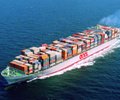
Cosco Shipping subsidiary Orient Overseas Container Line (OOCL) expects next month’s looming port docking fees on Chinese vessels to have a “relatively large” impact on the ocean carrier.
The Hong Kong-based container shipping firm said in its interim first half earnings report in late August that despite the additional charges, the shifting global trade patterns could help create opportunities for carriers to refine their shipping strategies in segmented markets.
As of Oct. 14, the U.S. Trade Representative (USTR) is expected to charge a fee of $50 per net ton on Chinese vessel operators for every voyage that includes U.S. ports. An extra $30 per net ton will be added each year through 2028.
For Chinese-built vessels, which are staple at companies like Mediterranean Shipping Company (MSC), fees will amount to $18 per net ton, or roughly equivalent to $120 per container. That will increase in $5-per-ton annual increments over the next three years.
These fees were revised downward from proposed levies that were initially harsher for all carriers with Chinese-built ships.
OOCL and Cosco Shipping, which is a Chinese state-owned enterprise, were always anticipated to be the ocean carriers most impacted by the fees. After the USTR dialed back the fees in April due to concerns from U.S. businesses, Cosco called them “discriminatory” measures that distorted fair competition among container shipping companies.
Analysts have expected Cosco and OOCL to minimize the fees in some way via the Ocean Alliance vessel-sharing agreement, in which the firms are likely to adjust their network by assigning CMA CGM and Evergreen to more trans-Pacific, U.S.-bound sailings.
But Ocean Alliance ties aside, Cosco’s fleet is likely to see some impact.
In the first half of 2025, 18 percent of Cosco Shipping’s total cargo volume (including OOCL) sailed on the trans-Pacific trade lane, well below the volume moved between Asian countries (34 percent). Another 21 percent of cargo volume was shipped between separate ports on Mainland China, the liner said in its interim report.
However, the trans-Pacific route brings in a much higher share of revenue to Cosco. The trade lane generated 29 percent of container shipping revenue, just beating out the intra-Asia lane (28 percent) for the top spot.
Cosco, which also unveiled its first-half results in late August, did not address the port docking fees. But the company’s managing director, Wu Yu, said in an earnings call that the Chinese carrier was experiencing challenges tied to the U.S. trade war, alongside a tightening regulatory environment against foreign investment in many countries.
Given all the uncertainty surrounding China-U.S. relations, Cosco Shipping is seeking out more opportunities to expand in Southeast Asia, South America, Africa and the Middle East, according to the company. In one such example, Cosco is currently in the process of acquiring minority stakes in two terminal operators at Thailand’s Laem Chabang Port. That deal is set to close in September.
“While China’s exports to the U.S. are declining, shipments to emerging markets are showing a clear upward trend,” Wu said during the call.
According to Chinese customs data for the first seven months of this year, exports to the U.S. fell 12.6 percent year over year in dollar terms, while those to ASEAN countries rose 13.5 percent. Exports to Vietnam, Thailand and Cambodia all climbed more than 20 percent.
Despite the allusions to possible acquisitions, Cosco Shipping would not comment directly on CK Hutchison’s planned sale of 43 ports worldwide, which the company has been tied to in media reports.
In the initial $22.8 billion transaction, Hutchison was set to sell two Panama Canal-adjacent ports, among dozens of others, to a consortium that included Mediterranean Shipping Company (MSC) and American hedge fund BlackRock. That deal has seen
CK Hutchison confirmed it was seeking a Chinese investor in the newest iteration of the deal, although no company was identified.
Cosco has never commented on its potential role in the deal, but the Financial Times has previously indicated that the container shipping giant sought a 20 percent to 30 percent stake.
For the second quarter, Cosco’s total revenue declined 3.4 percent to $7.1 billion, while revenue from its container shipping operation decreased 5.9 percent to $6.3 billion on the back of lower freight rates. Net income plummeted 42.3 percent to $815.3 million during the quarter.
As of June, the ocean carrier operates a self-owned container fleet of 557 vessels with a total capacity over 3.4 million 20-foot equivalent units (TEUs). The company holds an orderbook of 51 newbuildings, adding more than 910,000 TEUs to its fleet.
Source: Sourcing journal