Wärtsilä: All-Time High Operating Result And Cash ...
2 months ago

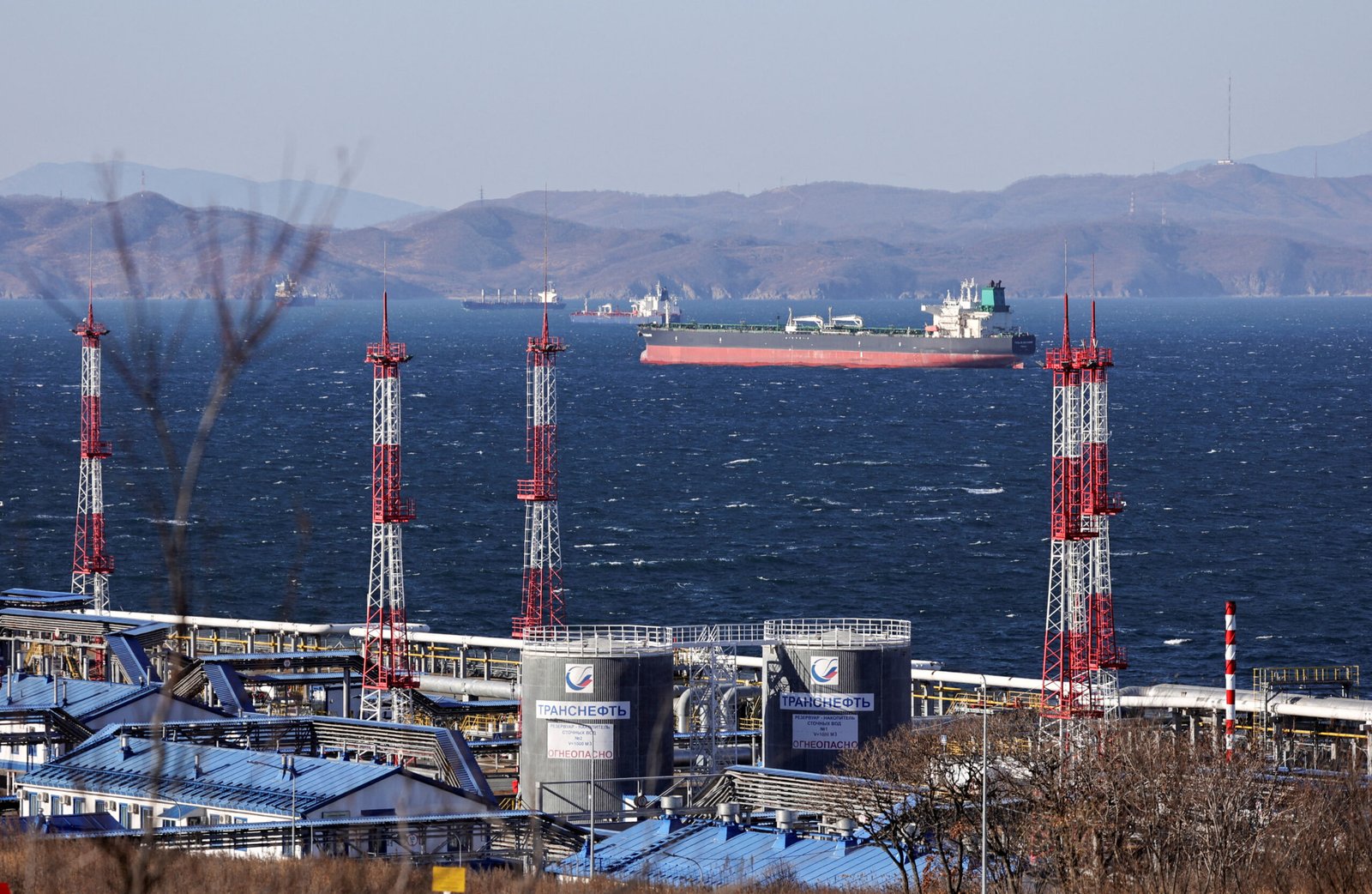
By Julian Lee (Bloomberg) — Russia is loading its oil onto tankers at an unprecedented pace — but those shipments are stacking up at sea, weighing on prices and undermining Moscow’s ability to finance its war in Ukraine.
While the country’s crude exports rose strongly for a second week, offloading the cargoes is proving a major challenge. That, combined with longer voyages as ships divert to China from India, has driven a 28% jump in Russian supplies at sea since the end of August. The resulting 2 1/2-year high for the glut of Russia’s oil on water is one of several factors depressing prices and curbing the revenues that the Kremlin needs to refill its war chest.
The build-up comes as seaborne flows continue to rise. Moscow shipped 3.68 million barrels a day in the four weeks to Dec. 7, according to vessel-tracking data compiled by Bloomberg. That’s up by about 220,000 from the period to Nov. 30 and follows a similar increase the previous week. The advance was driven by the highest weekly shipments since the invasion of Ukraine in February 2022.
But the surge in flows was largely offset by the 10th straight drop in crude prices, to leave the four-week average value of Moscow’s seaborne exports up by just 1%. Using that measure, Urals crude shipped from the Black Sea and the Pacific ESPO grade were trading at the lowest prices since the war began, according to data from Argus Media. The Urals discount to North Sea Dated crude has widened to $25.80 a barrel, more than twice what it was immediately before the latest US sanctions.
And Moscow may be about to see its largest buyer of seaborne crude retreat, at least temporarily. India’s imports of Russian crude are expected to slump to a near four-year low early next year, amid US pressure. How long the pull-back lasts will depend on the emergence of workarounds and progress toward a US-India trade deal, with New Delhi attempting to balance its relations with the two nations.
Meanwhile, Ukraine continues to strike Russia’s oil refineries and export ports, while Moscow keeps up its bombardment of Ukraine’s gas and power infrastructure. The attacks show no sign of easing while a breakthrough in the US-led peace plan remains elusive.
A total of 38 tankers loaded 29.65 million barrels of Russian crude in the week to Dec. 7, vessel-tracking data and port-agent reports show. The volume was up from 27.61 million barrels on 35 ships the previous week.
On a daily average basis, shipments in the week to Dec. 7 jumped to 4.24 million barrels a day, up by about 290,000 barrels a day from the previous week to the most since the full-scale invasion of Ukraine in February 2022. Separately, one cargo of Kazakhstan’s Kebco grade was shipped from each of Ust-Luga and Novorossiysk during the week.
The jump in flows was driven by a surge in shipments from Novorossiysk, which came despite several attacks on vessels in the Black Sea, and an uptick in flows from the Sakhalin 1 and 2 projects in the Pacific, which is likely due to cargo scheduling, rather than output increases.
On a four-week average basis, the gross value of Moscow’s exports was little changed at $1.14 billion a week in the 28 days to Dec. 7, with the higher export quantities largely offset by the 10th straight drop in average prices.
Using this measure, the export prices of Russia’s Urals from the Baltic fell by about $2.40 a barrel to $41.16, while prices for Black Sea cargoes were down by $2.80 a barrel to $38.28. The price of Pacific ESPO crude dropped by $1.60 to average $52.36 a barrel. Delivered prices in India also fell, down by $1 to $57.70 a barrel, another new low for the period since March 2023. All prices are according to numbers from Argus Media.
On a weekly basis, the value of exports averaged about $1.27 billion in the 7 days to Dec. 7, up by 6% from the period to Nov. 30, as the jump in exports was partly offset by a small drop in prices.
Observed shipments to Russia’s Asian customers, including those showing no final destination, rose to 3.46 million barrels a day in the 28 days to Dec. 7, up from 3.27 million in the period to Nov. 30. That’s the most since May 2023.
While the amount of Russian crude heading to both China and India appears to be falling sharply, that’s mostly being offset by growing quantities on vessels yet to show a final destination, allowing for much of that pattern to be reversed. Tankers are increasingly showing no final destination until they are well across the Arabian Sea, while some never show a final calling point, even after mooring to discharge.
Vessels are also spending longer at sea, with several tankers diverting from initial destinations on the west coast of India or in Turkey. They are also getting held up waiting to discharge at Chinese ports.
There is now more crude on tankers yet to show a final destination than the combined amount on ships signaling that they are heading to China, India or Turkey.
Flows on tankers signaling Chinese ports stood at 740,000 barrels a day in the four weeks to Dec. 7, down from 960,000 for the period to Nov. 30. The amount destined for India fell to 880,000 barrels a day from a revised 1.04 million in the period to Nov. 30. But there is the equivalent of 1.84 million barrels a day on vessels yet to show a final destination.
Of that, about 1.76 million barrels a day is on ships from Russia’s western ports showing their destination as Port Said or the Suez Canal, or those from Pacific ports with no clear delivery point, and a further 80,000 barrels a day is on tankers yet to signal a destination.
In the past, those cargoes have almost all ended up in India or China, but tougher US sanctions may keep that oil on the water unless, or until, workarounds can be found by the Russian sellers.
Flows to Turkey in the four weeks to Dec. 7 edged up to about 200,000 barrels a day. Shipments to Syria remained at zero. Tankers hauling Russian crude to the east Mediterranean nation rarely signal their destination and usually disappear from automated tracking systems when they’re south of Crete, making it difficult to estimate flows in advance of ships arriving off the port of Baniyas, where they can usually be picked up on satellite photos. The last Russian ship to discharge its cargo there left Murmansk at the end of September, arriving at the start of November.
© 2025 Bloomberg L.P.
Sign up for gCaptain’s newsletter and never miss an update