Wärtsilä: All-Time High Operating Result And Cash ...
1 month ago

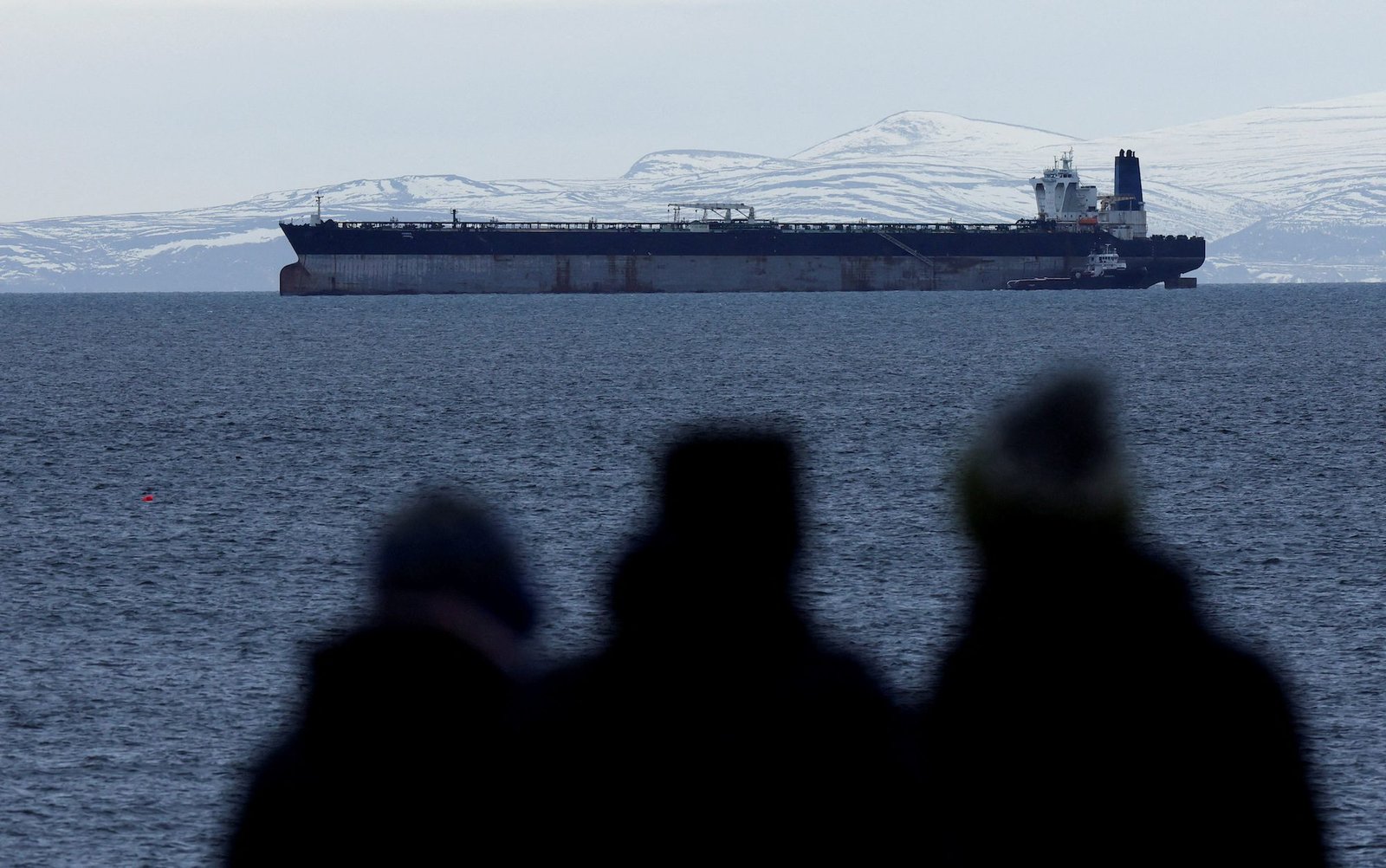
The seizure of the oil tanker Marinera, formerly known as Bella 1, and its prolonged standoff off the coast of Scotland has become one of the most significant maritime enforcement cases in recent years, illustrating how aggressively Western governments are now prepared to act against so-called shadow fleet operations and how individual ship officers are increasingly exposed at the sharp end of geopolitical policy.
By Paul Morgan (gCaptain) – After the seizure, the vessel was escorted to the Moray Firth off Scotland’s north-east coast, where it was moored under the watch of a US Coast Guard cutter. Images of the tanker sitting in UK waters under American control quickly drew attention across the shipping industry, raising questions about jurisdiction, crew rights and the boundaries of allied cooperation.
Those questions came sharply into focus around the fate of the vessel’s master and first officer. While the remainder of the crew was permitted to disembark and begin repatriation, the two senior officers remained aboard under US custody. A legal challenge was launched in Scotland on behalf of the captain’s wife, seeking to prevent his removal from UK jurisdiction and arguing that he was being unlawfully detained without charge.
For a brief period, it appeared that the Scottish courts might intervene. An interim interdict was granted to prevent the removal of the master and first officer while the legality of their detention was considered. But during court proceedings it emerged that the two men had already been transferred from Marinera to the US Coast Guard cutter Munro, which had sailed beyond UK territorial waters. With the officers no longer within reach of the court, the interim order was recalled.
The outcome was unambiguous. The master and first officer were no longer in Scotland and were now under US control outside British jurisdiction. The remaining 26 crew members had been processed ashore at a British Army facility near Inverness. Five opted to travel onward to the United States, while the rest made arrangements to return to their home countries. For most of the crew, the ordeal ended with disruption and uncertainty. For the two senior officers, it marked the beginning of a far more serious legal and personal ordeal.
That divergence is central to understanding the significance of the case. It suggests a deliberate enforcement approach that distinguishes between general crew welfare and individual accountability. Authorities appear willing to release rank-and-file seafarers once immediate concerns are addressed, while isolating and removing senior officers deemed operationally responsible. In effect, the bridge has become the enforcement choke point.
The Marinera affair fits squarely into a wider campaign against shadow fleets, ageing tankers with opaque ownership, unstable flag registrations and trading patterns designed to evade sanctions. For years, enforcement relied heavily on financial pressure, restricting access to insurance, banking, classification and ports. This case demonstrates a willingness to escalate further, using naval assets and legal warrants to physically seize vessels and control personnel.
It is not an isolated development. Only days earlier, French naval forces, supported by British intelligence and maritime patrol assets, intercepted and diverted the tanker Grinch in the western Mediterranean on suspicion of sanctions evasion linked to Russian oil. In that case, too, authorities cited concerns over flag legitimacy and shadow fleet behaviour. Together, the incidents point to a coordinated Western strategy that increasingly treats sanctions evasion as a maritime security issue rather than a purely regulatory one.
For shipping companies, the implications are profound. Sanctions compliance has traditionally been managed through corporate structures, charterparty clauses and due diligence processes. The Marinera case shows that enforcement can now land directly on the shoulders of masters and senior officers, even when they are not the beneficial owners or primary commercial decision-makers.
This raises uncomfortable questions for operators and managers. How much responsibility can realistically be placed on a master to verify the legality of a voyage when ownership, chartering and cargo interests are deliberately opaque? What legal protections exist if senior officers become the focus of enforcement action? And how will recruitment, crewing and insurance be affected if certain trades are perceived as carrying unacceptable personal risk?
The insurance market has already begun to respond. Sanctions and war-risk clauses are tightening, with greater scrutiny of ownership transparency, flag stability and trading history. Banks and commodity traders are also reassessing exposure, aware that a vessel detained at sea can unravel entire supply chains far more dramatically than a paper sanction.
There is also a sensitive geopolitical dimension. The standoff off Scotland highlighted the fine line between allied cooperation and national legal sovereignty. While the UK government framed its role as supportive, facilitating crew processing while backing efforts to degrade shadow fleet activity, the sight of a US cutter removing individuals from waters adjacent to the UK sparked debate among legal observers. The case is likely to prompt further discussion over how similar situations should be handled in future, particularly if EU or UK-flagged vessels are involved.
What remains unresolved is the final legal fate of Marinera, its cargo and its detained officers. US authorities have released few details, and such cases typically unfold over months rather than weeks. But regardless of the outcome, the precedent has been set. Physical interdiction, prolonged detention and the removal of key personnel are now firmly part of the enforcement toolkit.
For an industry already grappling with Red Sea insecurity, drone attacks in the Black Sea and intensifying regulatory pressure, this marks another escalation. Shipping has always operated at the intersection of commerce and geopolitics, but the balance is shifting rapidly.
The Marinera case is therefore more than a single seizure. It is a warning to owners, managers and masters alike that sanctions risk is no longer abstract or remote. In the emerging enforcement environment, the distance between geopolitical decisions and life on the bridge has never been shorter.
Sign up for gCaptain’s newsletter and never miss an update