Wärtsilä: All-Time High Operating Result And Cash ...
1 month ago

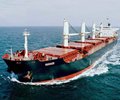
According to tanker data, over 40% of crude oil imported by Indian refiners is transported from various oil-producing countries in West Asia via the Strait of Hormuz. Its importance for India’s energy supply and security cannot be understated.
The unrest in Iran and the possibility of US military strikes against the country have other West Asian powers like Saudi Arabia, the United Arab Emirates, Qatar, and Oman evidently worried.
While several Gulf countries have had a rather strained relationship with Iran, they have been actively working with the Donald Trump administration in a bid to prevent US military action that could topple the regime in Tehran, according to reports in international media.
The efforts seem to have worked for now, but the situation remains tense and fragile, and the possibility of US intervention has not been ruled out. Trump recently said that a US naval armada was heading towards the region, but added that he would “rather not see anything happening”, and Washington was watching Iran “very closely”.
“And maybe we won’t have to use it… We have a lot of ships going that direction, just in case, we have a big flotilla going in that direction, and we’ll see what happens,” Trump told reporters late last week on Air Force One while returning from the World Economic Forum in Davos.
The answer to why powerful capitals in West Asia have been working hard for de-escalation lies in their pursuit of regional balance and their own economic and strategic interests. They see a destabilised Iran as a bigger threat to their interests and stability than an unfriendly regime in Tehran. And among the key drivers for their neutral stance and de-escalation efforts is a usual suspect — oil and gas — and a supply chokepoint that is central to global energy flows.
Strait of Hormuz: critical region for international oil and gas supplies
The Strait of Hormuz is a narrow waterway between Iran and Oman, which connects the Persian Gulf with the Gulf of Oman and the Arabian Sea. The US Energy Information Administration (EIA) calls it the “world’s most important oil transit chokepoint”, with around one-fifth of global liquid petroleum fuel consumption and global liquefied natural gas (LNG) trade transiting the Strait.
According to global real-time data and analytics provider Kpler, West Asian oil producers remain uniquely exposed to disruption in the Strait of Hormuz, roughly 15 million barrels per day (bpd) of seaborne crude and around 20% of global LNG volumes transit daily from this important chokepoint.
Iran has, time and again, threatened a blockade of the Strait and strikes against tankers transiting it. Moreover, there is a lurking threat of strikes by Iran’s proxies in Yemen against tankers transiting the Bab el-Mandeb that connects the Red Sea to the Gulf of Aden and the Arabian Sea, and is a critical artery for global energy flows that transit the Suez Canal.
Beyond direct strikes on infrastructure, other potential retaliatory pathways include: harassment or temporary closure of the Strait of Hormuz and escalation around alternative maritime chokepoints, notably the Bab el-Mandeb, threatening Red Sea trade routes and tanker flows,” Homayoun Falakshahi, Head of Crude Oil Analysis at Kpler, said in a recent note.
“Officials reportedly feared that US strikes on Iranian targets could have triggered Iranian retaliation against Gulf oil and gas infrastructure including offshore platforms, processing facilities and export terminals. This is likely why Riyadh and Doha reportedly insisted they would not allow US fighter jets to use their airspace,” Falakshahi, who termed the Strait of Hormuz as the region’s “strategic vulnerability”, added.
West Asian majors depend heavily on oil and gas revenue, and a military conflict that threatens to disrupt their energy exports is the last thing they want, as it could hit their national finances at a time when the global economy is fragile, and some of these countries have embarked upon ambitious, long-term transformation projects. The Strait’s blockade, if it actually were to happen, would most certainly send energy prices soaring, hurting the global economy, with additional pain points for energy-import-dependent countries like India.
According to tanker data, over 40% of crude oil imported by Indian refiners is transported from various oil-producing countries in West Asia via the Strait of Hormuz. The importance of the chokepoint for India’s energy supply and security cannot be understated, as the country is the world’s third-largest consumer of crude oil and depends on imports to meet over 88% of its requirement.
Although the West Asian oil exporters have some capacity to bypass the Strait of Hormuz due to the presence of a few pipelines, that capacity is limited. Even if these alternative pipeline systems are fully utilised, roughly 9 million bpd of crude supply — equivalent of around 9% of global oil demand — would still be structurally at risk in the event of major escalation, analysts point out.
“This is precisely why a strike on Iran carries a fundamentally different market risk profile than pressure campaigns elsewhere (including Venezuela): the Mideast Gulf’s export system is globally systemic, and the ability to reroute is limited,” said Falakshahi.
Hormuz blockade improbable, but risky to rule out
Even as Iran has in the past threatened to close the Strait on multiple occasions, it has never actually done it, even during some of its worst wars. A large number of energy sector experts and analysts, while viewing any threat of the Strait’s closure with concern, maintain that the possibility was quite low, primarily because such a move would impose a high cost on Iran, which would outweigh any benefit the country may get.
“These concerns persist even though Tehran had not openly threatened to close the Strait this time, a threat it is often quick to raise when under pressure. In practice, a full closure would be politically self-destructive for Iran. Around 40% of China’s seaborne oil imports pass through Hormuz, meaning any sustained disruption would not only alienate Gulf neighbours, but also risk undermining Beijing, Iran’s key crude buyer and political backer,” said Kpler.
Iran remains structurally reliant on the Strait of Hormuz. While it has an oil export terminal located outside the Persian Gulf, its effective capacity is only a fraction of Iran’s oil export volumes that cannot bypass the Strait. Additionally, Iran would certainly face international military retaliation if it tried to block the Strait of Hormuz or target the transiting oil shipments.
Also, any closure will infringe upon Oman’s territorial waters, souring Iran’s relationship with its neighbour, which would have been counterproductive for a country that doesn’t exactly have a lot of friends and allies in its neighbourhood, analysts pointed out. Iran depends on Oman for back-channel diplomacy with the US, and alienating Muscat could significantly constrain Iran’s diplomatic options.
Notably, Iran, while threatening a blockade of the Strait of Hormuz during its military conflagration with Israel in June last year, did not do so. This was despite the US bombing Iran’s nuclear facilities during the conflict. But if the regime in Tehran feels cornered and fears an imminent collapse, the likelihood of the conflict spilling over to the Strait of Hormuz and the wider West Asian region could rise significantly, according to analysts. And most other Gulf states do not want it to come to that.
Source: The Indian Express