Wärtsilä: All-Time High Operating Result And Cash ...
1 month ago

More than three months have passed since the last Houthi attack on commercial shipping in the Red Sea, yet the Suez Canal remains well below capacity. According to BIMCO, traffic is still running about 60% lower than pre-crisis levels as the maritime industry wrestles with lingering security fears and economic uncertainty.
The Minervagracht was the last vessel targeted by Houthi militants, on September 29, 2025. Forty-three days later, the Iran-backed group announced a suspension of its maritime operations. But as the first week of 2026 comes to a close, the long-anticipated wave of ships returning to the critical waterway has yet to arrive.
“100 days ago, on 29 September, the Minervagracht was to become the last ship to be attacked by the Houthis, at least for now,” said Niels Rasmussen, Chief Shipping Analyst at BIMCO. “Forty-three days later, the Houthis declared an end to their attacks on ships. Despite this, traffic through the Suez Canal have not significantly increased and in the first week of 2026 remained 60% below the corresponding week in 2023, before ships started diverting around the Cape of Good Hope.”
According to Lloyd’s List, the Houthis attacked or hijacked ships 99 times between November 2023 and the final incident in September 2025. While the initial strikes in late 2023 had little immediate effect on canal volumes, quarterly deadweight tonnage transiting Suez has fallen 51–64% below 2023 levels since January 2024, according to BIMCO.
The fallout has not been evenly spread across shipping segments. BIMCO points out that container shipping has been hit hardest, with fourth-quarter 2025 transits down 86% compared with 2023. Nearly all containerships have avoided the canal since the crisis began, although some major carriers are now beginning to test a cautious return.
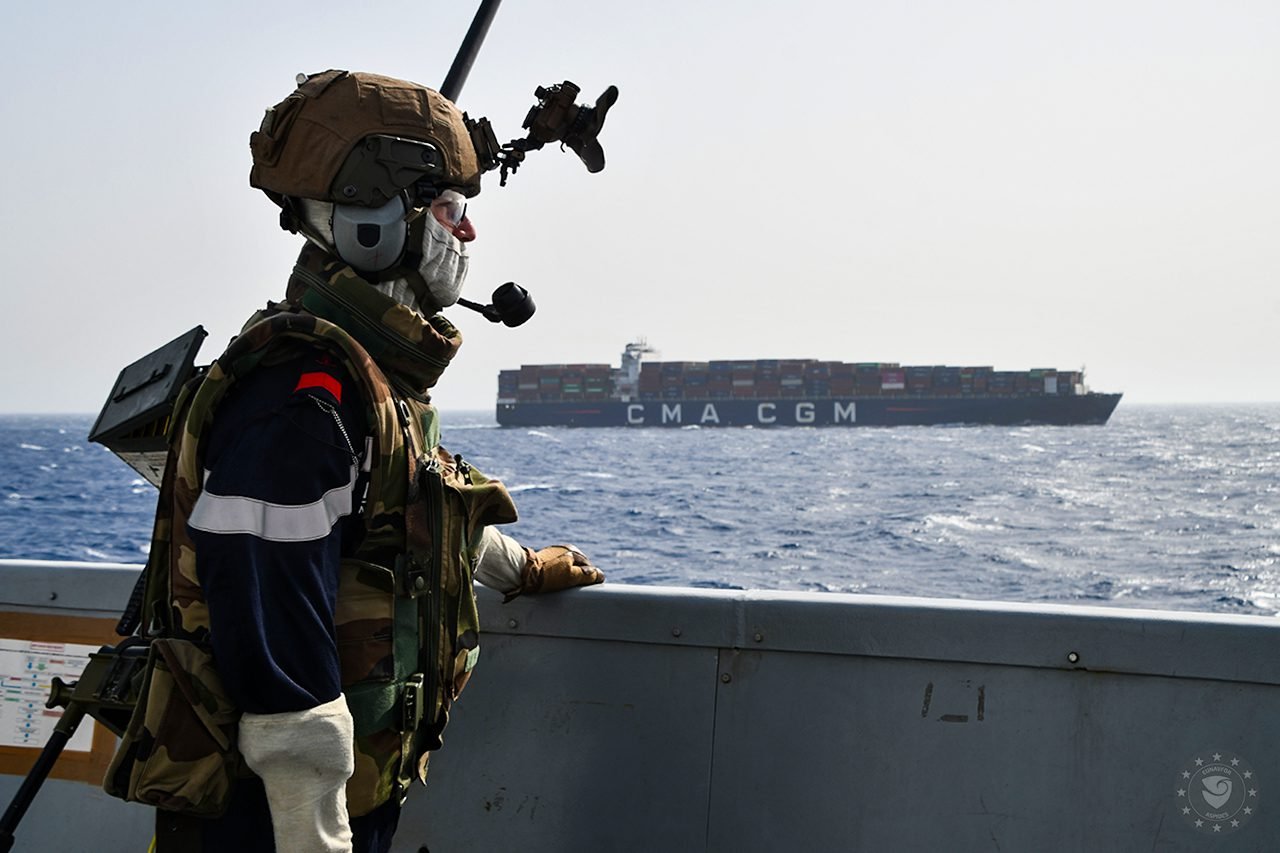
CMA CGM has led the limited return to the route, announcing last month that its MEDEX and INDAMEX services will resume Suez transits starting this month.
On December 19, the Maersk Sebarok became the first Maersk vessel to transit the canal since early 2024, though the company has not committed to additional passages, stating only that “assuming that security thresholds continue to be met, we are considering continuing our stepwise approach towards gradually resuming navigation along the East-West corridor via the Suez Canal and the Red Sea.”
Days after the Maersk Sebarok transit, the CMA CGM Jacques Saade transited the canal southbound on its voyage from Morocco to Malaysia. Stretching 400 meters long and capable of carrying 23,000 containers, the LNG-powered giant became the biggest containership to use the Suez route since the Red Sea crisis began. The CMA CGM Adonis, with a capacity of over 15,500 TEUs, also made a northbound transit.
Product tankers have been the quickest to come back, drawn by rising freight rate premiums. In the fourth quarter of 2025, transits for this segment were down just 19% from 2023, a notable recovery from the 45% decline seen during 2024, according to BIMCO.
Financial pressure to return to Suez is building. War-risk insurance premiums for the Red Sea dropped to about 0.2% of hull value in early December, the lowest level since November 2023 and well below the 0.5% charged before the Israel-Hamas ceasefire. Even so, insurance costs remain high enough to deter many large shipping lines from fully resuming canal transits.
The Houthi suspension, announced on November 11, 2025, was also conditional. Newly appointed Chief of Staff Yousef Hassan Al Madani warned that attacks could restart if Israel renews operations in Gaza, stating: “We are closely monitoring developments and declare that if the enemy resumes its aggression against Gaza, we will return to our military operations deep within the Zionist entity, and we will reinstate the ban on Israeli navigation in the Red and Arabian Seas.”
Security specialists have cautioned against complacency. Martin Kelly, Head of Advisory at EOS Risk Group, stressed that lower risk is not the same as no risk. “As of 11 November, the risk of Houthi attacks against shipping in the Red Sea and Gulf of Aden and broader region is significantly lower,” Kelly said in November. “However, despite the declared pause, the Houthis retain the capability to conduct missile, drone, and USV attacks against commercial shipping.”
A full normalization of Suez traffic would carry major economic consequences. Rasmussen said that “a normalisation of ship transits now appears more likely than at any point during the last two years, but it remains unknown if, or how fast, this may happen. A return to the Suez Canal would reduce shipping companies’ costs significantly but also hurt ship demand. A full normalisation is estimated to reduce container ship demand by approximately 10% while other sectors could see 2-3% reductions.”
For now, the canal remains in limbo — officially open, but functionally underused — as shipowners balance the mounting financial incentive to return against security concerns that have yet to fully fade after two years of conflict.
Sign up for gCaptain’s newsletter and never miss an update