Wärtsilä: All-Time High Operating Result And Cash ...
1 month ago

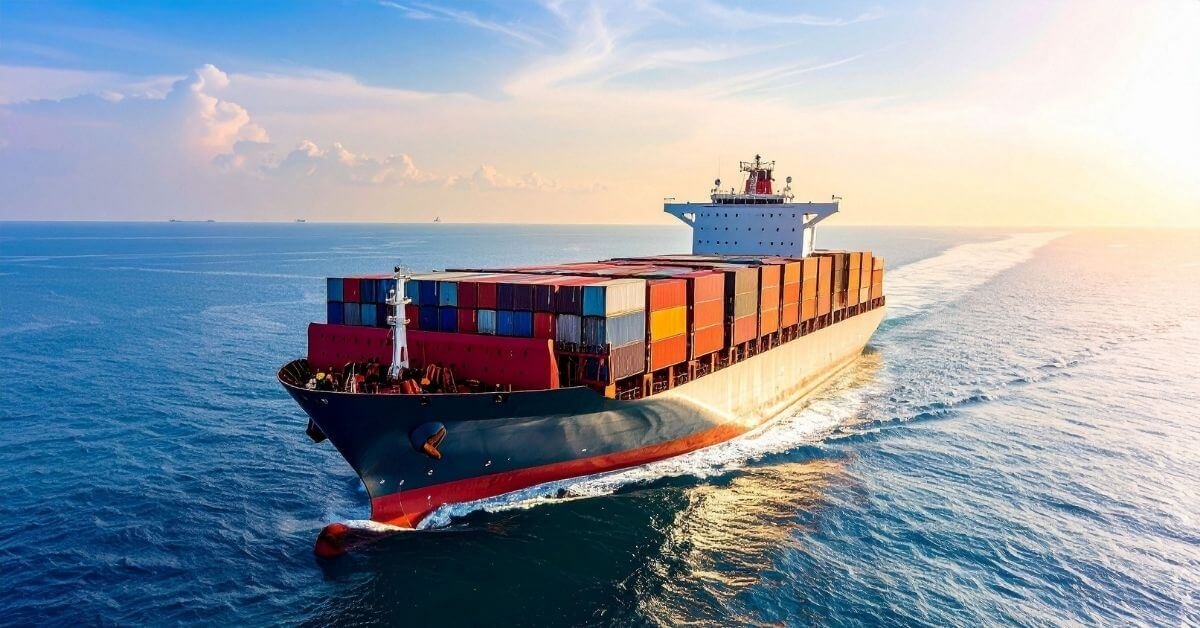

Collisions between marine vessels and stationary structures, like offshore oil platforms and depleted wellheads, are becoming increasingly common. These collisions come with a cost — including the financial burden of lost goods and potential loss of life.
Ocean engineering researchers at Texas A&M University are developing a smarter system to combat these collisions and their costs. By combining raw radar imaging data with advanced machine learning, researchers have created SMART-SEA, a system that gives seafarers real-time guidance on how and when to maneuver their vessel.
To design a practical system for seafarers, researchers conducted a focus group with Texas A&M at Galveston faculty members, many of whom are former seafarers.
Researchers also collaborated with industry experts, the U.S. Navy and the U.S. Coast Guard. Their experience assisted researchers in defining practical decision-making skills — like when to yield and how far to turn — and implementing them into the SMART-SEA system.
“Many of these collisions are caused by human error,” said Dr. Mirjam Fürth, an assistant professor of ocean engineering. “By using data to provide seafarers with real-time instructions, we hope to reduce marine collisions.”
At its core, the SMART-SEA system aims to provide seafarers with the ideal maneuvers to ensure vessel safety, without controlling movements autonomously. SMART-SEA provides the information visually on a dashboard, but the decision and steering of the vessel is controlled by the seafarer.
Key data points used by SMART-SEA to provide maneuvering suggestions are raw radar images and vessel maneuverability — determined through a tiered model based on seafarer experience, state of the art computational fluid dynamics models and machine learning trained on past vessel motions.
Raw radar images are processed using a machine learning tool that identifies and classifies stationary objects near the vessel. Once identified, the vessel’s maneuverability and seafarer’s experience level are considered to recommend the safest action for the vessel.
Fürth and her team, including former seafarer and Texas A&M Galveston Professor of Practice Ryan Vechan, tested SMART-SEA aboard the Texas A&M research vessel Trident, with preliminary data supporting the prototype as a way to reduce marine collisions.
SMART-SEA can detect stationary objects in all weather conditions, and seafarers can choose how to receive the data — either visually, audibly or a combination of the two.
“I do think SMART-SEA could reduce marine collisions and possibly pave the way for more autonomous vessels,” Fürth said.
The project’s initial funding came from the U.S. Department of the Interiors and the U.S. Department of Energy through the Ocean Energy Safety Institute under a one-year contract.
Researchers hope to secure additional funding to continue testing SMART-SEA on other vessels and to improve the system. Fürth believes that the system’s low costs could allow it to be adapted for recreational vessels, reducing boating accidents.
“I hope we get to continue this research in the future. I think we just scratched the surface,” said Fürth.
Also collaborating on this research from the ocean engineering department are Ph.D. students Andrew Deng and Yijun Sun, Research Assistant Professor Dr. Björn Winden, and Assistant Professor Dr. Freddie Witherden.
Press Reference
Disclaimer :
The information on this website is for general purposes only. While efforts are made to ensure accuracy, we make no warranties of any kind regarding completeness, reliability, or suitability. Any reliance you place on such information is at your own risk. We are not liable for any loss or damage arising from the use of this website.
Disclaimer :
The information on this website is for general purposes only. While efforts are made to ensure accuracy, we make no warranties of any kind regarding completeness, reliability, or suitability. Any reliance you place on such information is at your own risk. We are not liable for any loss or damage arising from the use of this website.
1. eBooks for Engine Department
Master machinery operations, troubleshooting, and safety procedures with expertly written guides tailored for marine engineers. Prevent costly breakdowns and onboard accidents through practical knowledge.
👉 Explore Engine Department eBooks
2. eBooks for Deck Department
Sharpen your seamanship, navigation, and cargo-handling skills with real-world case studies and practical insights designed for deck officers and cadets.
👉Discover Deck Department eBooks
3. eBooks on Electrical Fundamentals & Issues
Understand marine electrical systems, identify potential faults, and prevent onboard electrical failures with step-by-step explanations from industry experts.
4. Pocket Guides for Quick Reference
Compact, handy, and loaded with essential checklists—perfect for on-the-go reference during operations and emergencies at sea.
5. Combo Packs to Save Big
Access multiple expert eBooks at discounted prices. Ideal for professionals seeking complete safety and operational knowledge across various ship departments.
6. Digital Maritime Courses – Learn at Your Own Pace
Upgrade your competence with Marine Insight Academy’s online courses. Learn from industry professionals anytime, anywhere, and become a safer, smarter seafarer.
By subscribing, you agree to our Privacy Policy and may receive occasional deal communications; you can unsubscribe anytime.