Wärtsilä: All-Time High Operating Result And Cash ...
2 months ago

From Monitoring to Intervention
The dark fleet – tankers engaging in dark activities while moving sanctioned oil, cycling through false flags, and obscuring ownership – has continued to expand, reaching more than 1,900 vessels by the end of Q3. Governments had visibility into this activity. What was less consistent was how that intelligence translated into enforcement outcomes.
That changed with the seizure of Skipper.
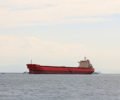
When U.S. forces boarded and seized the large crude carrier off the coast of Venezuela, it marked a shift in how sanctions enforcement is being applied. The operation did not rely on a military escalation or a declared conflict. It was grounded in documented sanctions violations, false flagging, and the vessel’s lack of legitimate nationality.
For years, dark fleet vessels operated in the space between detection and consequence. The Skipper seizure shows that this space is narrowing. Vessels that rely on spoofing, false registries, and legal ambiguity are now facing direct intervention, not just continued monitoring.
What the Skipper Seizure Reveals About the Modern Dark Fleet
Skipper was not an outlier. It represented the dominant operating model of today’s dark fleet.

Sanctioned in 2022 for its role in an oil-smuggling network tied to Iran and Hezbollah, the vessel continued operating by exploiting systemic weaknesses. It broadcast AIS data that later proved inconsistent with its true movements.
At the time of the boarding, Skipper’s AIS placed the tanker more than 500 nautical miles away, off the coast of Guyana. Windward’s Remote Sensing Intelligence showed otherwise. Satellite-based detections confirmed the vessel was nowhere near its declared position and had been conducting GNSS manipulation since October 28, broadcasting false coordinates while covertly loading sanctioned crude at Venezuela’s José terminal.
Its position reappeared more than 360 nautical miles from its last spoofed signal. It sailed under the flag of Guyana, a registry that has not existed since 2021, rendering the vessel effectively stateless.
This combination – sanctions exposure, AIS manipulation, and false flagging – is now common. Roughly 400 tankers are currently broadcasting affiliation with fraudulent registries listed by the International Maritime Organization, with nearly 300 already sanctioned. Together, they form part of a broader dark fleet of around 1,000 tankers transporting sanctioned oil for Russia, Iran, and Venezuela.
What distinguishes Skipper is not its behavior, but the response it triggered.
What Has Changed in Enforcement Posture
The seizure of Skipper reflects a more direct application of existing sanctions authorities rather than a new legal framework.
The day after the seizure, the United States sanctioned six shipowners whose VLCCs had been transporting Venezuelan crude. According to the U.S. Treasury, four of those vessels manipulated AIS to conceal port calls and vessel movements. These practices were already well documented. What changed was how that information was acted upon.

In Skipper’s case, the vessel was sanctioned, falsely flagged, and effectively stateless. Those conditions removed many of the protections that dark fleet operators have historically relied on to continue trading despite enforcement pressure. The seizure did not require a military escalation or a new sanctions regime. It relied on existing legal authorities applied decisively.
This signals a narrower but more consequential shift: when sanctions violations, AIS manipulation, and false flagging converge, enforcement may no longer stop at designation alone. Physical intervention has become a viable outcome under specific, documentable conditions.
What Governments Should Expect Next
As enforcement accelerates, pressure will shift upstream.
Interdictions will increasingly rely on early detection rather than last-minute response. Authorities will need to identify which vessels are moving toward seizure-grade risk before they enter contested waters or complete cargo transfers. That requires more than static sanctions lists or AIS tracks viewed in isolation.
Dark fleet operations are networked. Vessels share ownership structures, registries, operational patterns, and deceptive behaviors across regions. AIS manipulation rarely occurs alone. It coincides with false documentation, implausible routing histories, and coordinated loitering patterns that only become visible when viewed as part of a wider system.
Governments that surface these connections early will be positioned to act decisively. Others will remain reactive.
Source: Windward