Wärtsilä: All-Time High Operating Result And Cash ...
1 month ago

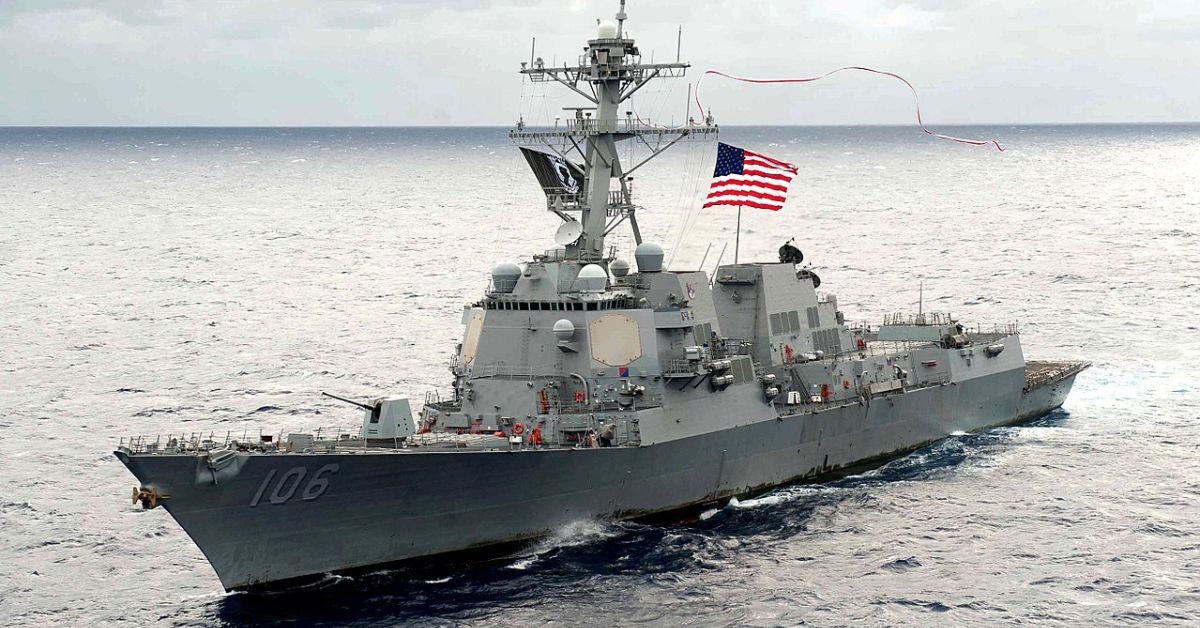

A sanctioned Russian oil tanker attempting to deliver fuel to Venezuela has been forced to retreat after a United States Navy destroyer moved directly across its route near the country’s coast, according to Bloomberg vessel-tracking data reviewed on 21 November.
The tanker, Seahorse, was sailing towards Venezuela with a fuel cargo on 13 November when the USS Stockdale intersected its path just off the Venezuelan coastline.
Following the encounter, the Russian vessel abruptly reversed course towards Cuba, while the US warship continued past Venezuelan territorial waters en route to Puerto Rico.
Tracking data shows the Seahorse has made two further attempts to approach Venezuela since then, turning away on each occasion when the destroyer again appeared in its sailing corridor.
The ship is currently idling in the Caribbean with no clear progress towards any destination. The pattern is considered unusual, as Russian fuel carriers typically do not make U-turns or remain stationary on the established shipping route between Cuba and Venezuela.
US Southern Command declined to comment on the movements of the Stockdale, which has been deployed in the Caribbean since late September as part of President Donald Trump’s expanded anti-narcotics mission. The operation also includes the aircraft carrier USS Gerald R. Ford and several other Navy vessels.
The Seahorse is under sanctions imposed by the United Kingdom and the European Union and is one of four Russian tankers known to supply naphtha and other fuel products to Venezuela and Cuba.
These shipments form part of Russia’s “shadow fleet” activity, which seeks to maintain energy flows despite restrictions from Western nations.
Venezuela relies heavily on imported naphtha because much of the limited supply it produces domestically is used for gasoline production in the fuel-starved country. Although the nation has abundant oil reserves, its crude is thick and sulphurous, making diluents essential for pipeline transport.
A senior defence adviser at the Center for Strategic and International Studies in Washington was cited in reports as saying the incident appeared to be another step in the pressure the United States is applying on the Maduro government.
The adviser suggested that reduced oil exports could significantly damage the regime, as oil remains its primary source of revenue.
The Seahorse had earlier discharged a cargo in late October, called at Cuba and then headed back towards Venezuela before the US warship appeared along its route.
While Venezuela had previously received naphtha shipments from Chevron during the Biden administration, these imports have stopped under President Trump’s renewed “maximum pressure” policy on Caracas. As a result, the country now depends on Russian deliveries.
In a separate development, Russia’s Foreign Minister Sergey Lavrov stated earlier that Moscow did not plan to provide military assistance to Venezuela.
Reference: Bloomberg
Disclaimer :
The information on this website is for general purposes only. While efforts are made to ensure accuracy, we make no warranties of any kind regarding completeness, reliability, or suitability. Any reliance you place on such information is at your own risk. We are not liable for any loss or damage arising from the use of this website.
Disclaimer :
The information on this website is for general purposes only. While efforts are made to ensure accuracy, we make no warranties of any kind regarding completeness, reliability, or suitability. Any reliance you place on such information is at your own risk. We are not liable for any loss or damage arising from the use of this website.
1. eBooks for Engine Department
Master machinery operations, troubleshooting, and safety procedures with expertly written guides tailored for marine engineers. Prevent costly breakdowns and onboard accidents through practical knowledge.
👉 Explore Engine Department eBooks
2. eBooks for Deck Department
Sharpen your seamanship, navigation, and cargo-handling skills with real-world case studies and practical insights designed for deck officers and cadets.
👉Discover Deck Department eBooks
3. eBooks on Electrical Fundamentals & Issues
Understand marine electrical systems, identify potential faults, and prevent onboard electrical failures with step-by-step explanations from industry experts.
4. Pocket Guides for Quick Reference
Compact, handy, and loaded with essential checklists—perfect for on-the-go reference during operations and emergencies at sea.
5. Combo Packs to Save Big
Access multiple expert eBooks at discounted prices. Ideal for professionals seeking complete safety and operational knowledge across various ship departments.
6. Digital Maritime Courses – Learn at Your Own Pace
Upgrade your competence with Marine Insight Academy’s online courses. Learn from industry professionals anytime, anywhere, and become a safer, smarter seafarer.