U.S Navy’s Only Independent Close-In Weapon System...
2 hours ago

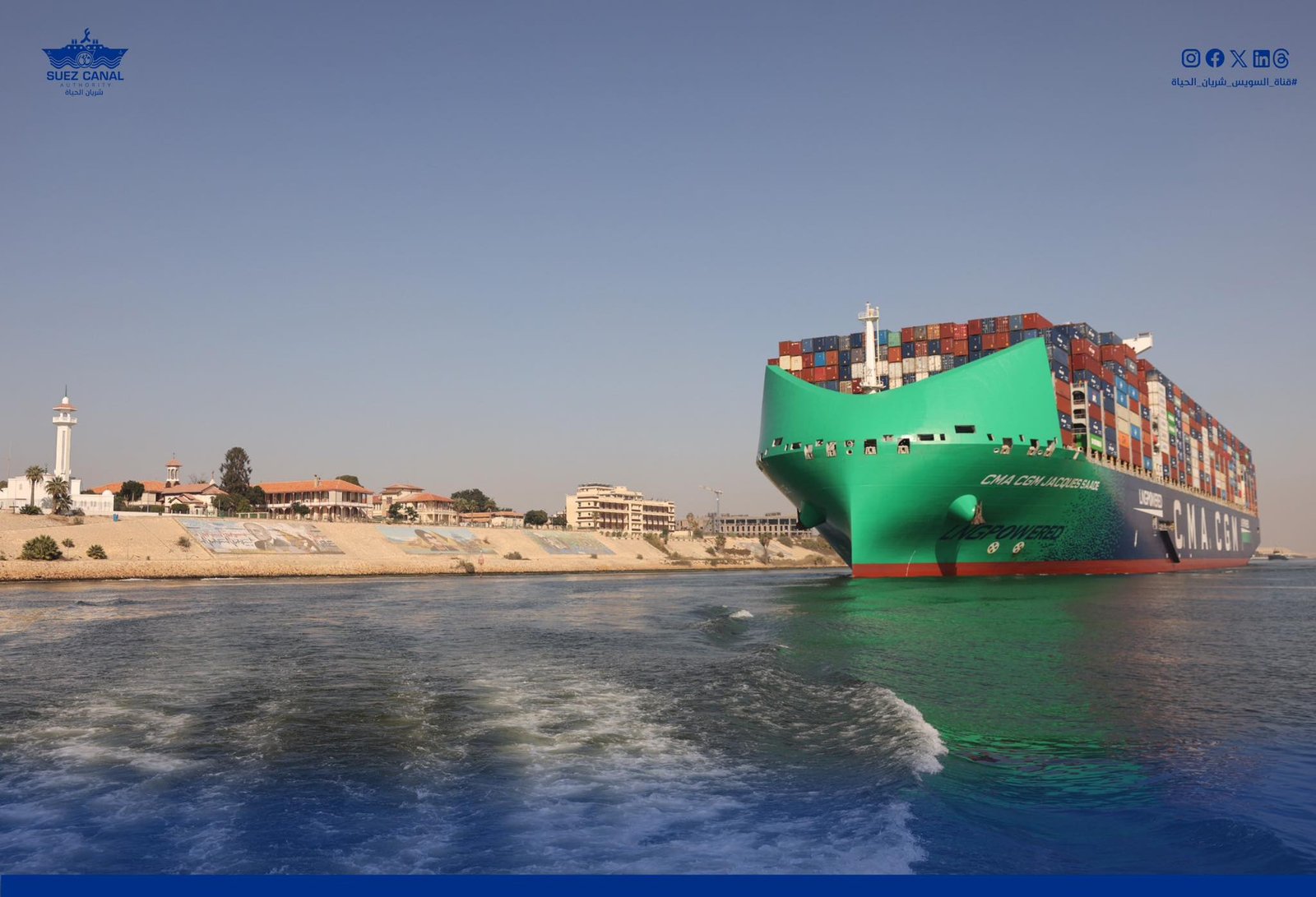
French carrier’s U-turn on Suez transits jolts shipper confidence and reopens questions about whether Red Sea stability is real—or just another false dawn.
Just days after shipping giant Maersk announced its first structural return to the Suez Canal in over two years, competitor CMA CGM has abruptly reversed its own Red Sea plans, rerouting three major Asia-Europe services back around the Cape of Good Hope and raising fresh concerns about the predictability of global ocean supply chains.
The French carrier cited “the complex and uncertain international context” in its decision to once again divert its FAL1, FAL3, and MEX services away from the Suez Canal. The move comes despite CMA CGM having been “previously the most pro-active major carrier in returning the Red Sea,” according to Xeneta analysts.
The reversal creates a striking contrast with industry bellwether Maersk, which just last week confirmed the permanent return of its Middle East-India-U.S. East Coast (MECL) service through the trans-Suez route. Maersk’s decision followed successful trial transits and was viewed as a potential turning point after nearly two years of Red Sea diversions.
For Xeneta’s Senior Market Analyst Destine Ozuygur, CMA CGM’s about-face highlights a fundamental problem threatening the shipping industry’s recovery: unpredictability itself.
“Shippers crave predictability in supply chains,” Ozuygur said. “Carriers taking the decision to return to the Red Sea then reversing that decision – even if it is done for important safety reasons – still risks undermining confidence in schedule reliability and eroding trust in partnerships.”
The analyst went further, warning that “unpredictability is toxic for supply chains. Shippers want certainty over when containers arrive at port, even if that means longer transit times around Cape of Good Hope.”
The impact is measurable. Xeneta data shows that transit times on CMA CGM’s FAL1 service—which connects China and Singapore to six European ports—had dropped from 105 days to 98 days when ships began transiting the Suez Canal again. Now those gains will be reversed, potentially catching shippers off guard.
“What if a shipper paid a higher freight rate for the FAL1 or MEX service due to faster transit times through the Suez Canal, only to find shipments are moved back a week?” Ozuygur asked.
The uncertainty may extend beyond the three services CMA CGM has officially rerouted. The carrier’s INDAMEX service, connecting India to the U.S., remains scheduled to transit the Suez Canal on both fronthaul and backhaul legs. But shippers are now questioning whether that plan will hold.
Xeneta data shows the INDAMEX transit time from Port Qasim in Karachi to New York fell from 40 days to 36 days after returning to the Suez Canal in January. “There has not been a CMA CGM announcement on the INDAMEX service, but shippers will look at the decision on FAL and MEX services and fear containers will be arriving later than planned,” Ozuygur said. “Do shippers plan for a transit time of 40 days or 36 days? What impact does this have on warehousing or detention and demurrage fees?”
“Multiply this uncertainty across all services and carriers and the risk of widespread disruption becomes clear,” the analyst warned.
The Red Sea crisis began on November 19, 2023, when Iranian-backed Houthi forces seized the Galaxy Leader off Yemen following the breakout of the Gaza War. More than 100 merchant vessels were subsequently targeted, with four ships sunk, one seized, and at least eight seafarers killed.
The disruption slashed Red Sea traffic by roughly 60 percent and forced carriers to divert thousands of miles around southern Africa. Before the attacks, the Suez Canal handled about 12 percent of global seaborne trade and routinely processed around 80 containerships weekly.
A Gaza ceasefire in October 2025 and subsequent lull in Houthi attacks had raised hopes for normalized traffic. By the week ending January 11, 26 containerships transited the canal—the highest weekly total in over a month, though still far below historical norms.
CMA CGM had moved aggressively, sending the 23,000-TEU CMA CGM Jacques Saade—the largest vessel to use the canal in two years—through the route in late December. But the carrier has now pulled back, citing ongoing geopolitical uncertainties including unrest in Iran and warnings from U.S. President Donald Trump about possible intervention in the region.
The uncertainty comes at a precarious time for container shipping economics. Diversions around the Cape of Good Hope continue to absorb approximately 2 million TEU of global container shipping capacity, with the crisis having reduced global shipping capacity by an estimated 8 percent.
Average spot rates from Far East to North Europe, Mediterranean and U.S. East Coast—three trades that would ordinarily transit the Red Sea—are all down more than 50 percent since the start of 2025. “Carriers are already heading into loss-making territory and freight rates are expected to fall up to 25 percent globally in 2026, even with no change to the situation in the Red Sea,” Xeneta’s Peter Sand said in October.
A large-scale return to the Red Sea would flood the market with capacity and drive rates even lower. But the stop-start nature of the current situation may prove worse. “Shippers should be making contingency plans because a large-scale return would cause severe disruption across global ocean supply chains as services transiting Suez Canal are reinstated,” Sand warned.
For now, the industry remains split. While Maersk proceeds cautiously with its MECL service, most carriers continue to hedge their bets. In the same week that saw 26 Suez transits, traffic around the Cape of Good Hope surged to 203 voyages—more than double the previous week’s total, according maritime consultancy Drewry.
As Drewry analyst Philip Damas noted, “The return to the Suez Canal is one of this year’s key swing factors for capacity, freight rates and transit times,” with carriers closely watching insurance costs, competitor behavior, and the risk of port congestion.
Whether the Red Sea is truly reopening or merely offering a brief lull remains an open question—one that every transit continues to test in real time.
Sign up for gCaptain’s newsletter and never miss an update