Wärtsilä: All-Time High Operating Result And Cash ...
2 months ago

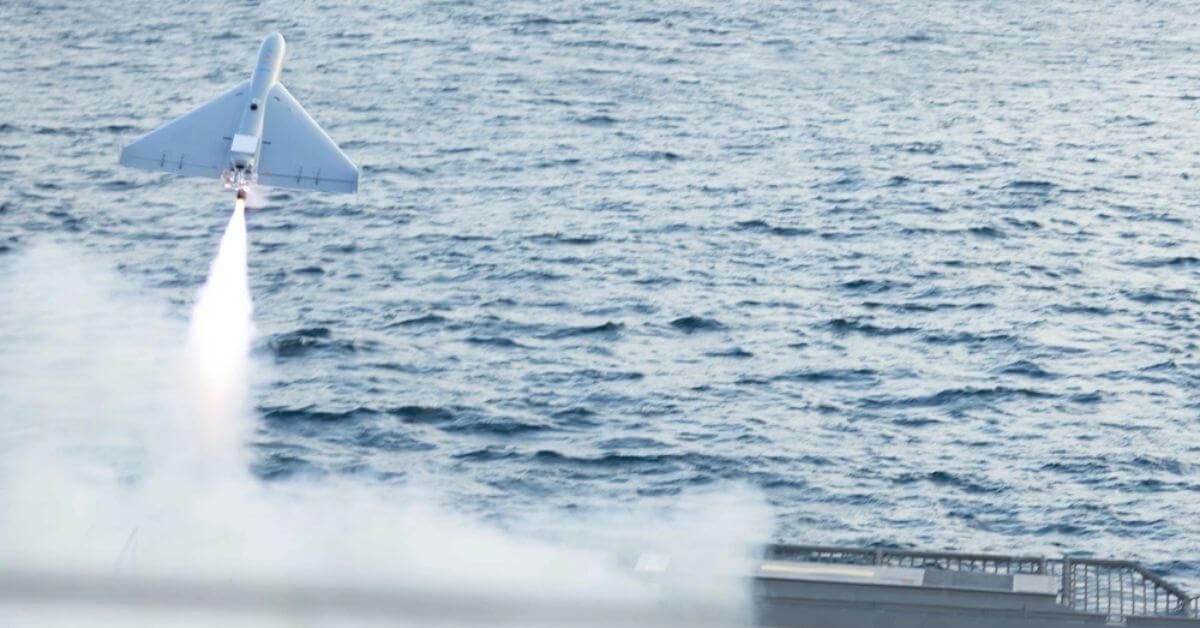

The US Navy has successfully launched a one-way attack drone from a warship at sea for the first time. The launch took place on December 16 in the Arabian Gulf.
Personnel from US Naval Forces Central Command and the US 5th Fleet launched a Low-cost Unmanned Combat Attack System, known as LUCAS, from the flight deck of the Independence-class littoral combat ship USS Santa Barbara during routine operations in the region.
The US Navy said the test showed that disposable attack drones can be operated from existing ships without major changes to ship design or crew requirements. The launch is part of the Navy’s effort to bring unmanned and autonomous systems into everyday fleet operations.
Vice Admiral Curt Renshaw, commander of US Naval Forces Central Command and the US 5th Fleet, said the successful launch showed progress in providing affordable and effective unmanned capabilities to deployed forces. He also said the LUCAS system is expected to help strengthen maritime security and deterrence in the region.
The LUCAS drone launched from USS Santa Barbara belongs to Task Force Scorpion Strike, a newly formed squadron created to rapidly provide US forces with unmanned strike systems.
Earlier this month, US Central Command announced the deployment of the US military’s first dedicated one-way attack drone squadron to the Middle East.
One-way attack drones, also known as loitering munitions, are designed to fly towards a target and destroy it on impact instead of returning to base. These systems are increasingly used for precision strikes due to their lower cost and operational flexibility.
“Bravo Zulu. U.S. Navy forces in the Middle East are advancing warfighting capability in new ways, bringing more striking power from the sea and setting conditions for using innovation as a deterrent.” – Adm. Brad Cooper, CENTCOM Commander https://t.co/TgQ4WLbph3 pic.twitter.com/WUiAVojTht
— U.S. Central Command (@CENTCOM) December 18, 2025
The ship-based launch was carried out by Task Force 59, the Navy’s unit responsible for unmanned and autonomous operations under US Naval Forces Central Command.
Established in 2021, Task Force 59 focuses on testing and integrating unmanned surface vessels, aerial drones, and artificial intelligence systems into regular naval operations, particularly in busy and high-risk maritime areas.
According to the Navy, the LUCAS system is designed to be flexible and can be launched in several ways. These include launches from ships, ground-based catapults, rocket-assisted take-off systems, and vehicle-mounted launchers. This allows the drones to be deployed from different locations with limited infrastructure.
The LUCAS drone was developed by US company SpektreWorks and is based on a reverse-engineered version of Iran’s Shahed-136 loitering munition. The drone is about 10 feet long with a wingspan of roughly eight feet.
While detailed performance information from the recent launch was not shared, the system is intended to provide a low-cost, long-range strike option. Its reported unit cost is around $35,000.
Iran and its regional allies have used Shahed-136-type drones extensively in recent years, including attacks against targets in Israel and on ships operating in and around the Red Sea.
Russia has also developed and produced its own versions of the drone, which have been used in attacks on Ukrainian cities and military positions.
US Naval Forces Central Command is the maritime arm of US Central Command and operates across an area covering about 2.5 million square miles of water. This includes the Arabian Gulf, the Red Sea, the Gulf of Oman, and parts of the Indian Ocean, covering waters near 21 countries.
The command’s area of responsibility includes three critical global maritime chokepoints: the Strait of Hormuz, the Bab al-Mandeb Strait near Yemen, and the Suez Canal. These routes are vital for global energy supplies and international trade.
Reference: US Navy
Disclaimer :
The information on this website is for general purposes only. While efforts are made to ensure accuracy, we make no warranties of any kind regarding completeness, reliability, or suitability. Any reliance you place on such information is at your own risk. We are not liable for any loss or damage arising from the use of this website.
Disclaimer :
The information on this website is for general purposes only. While efforts are made to ensure accuracy, we make no warranties of any kind regarding completeness, reliability, or suitability. Any reliance you place on such information is at your own risk. We are not liable for any loss or damage arising from the use of this website.
1. eBooks for Engine Department
Master machinery operations, troubleshooting, and safety procedures with expertly written guides tailored for marine engineers. Prevent costly breakdowns and onboard accidents through practical knowledge.
👉 Explore Engine Department eBooks
2. eBooks for Deck Department
Sharpen your seamanship, navigation, and cargo-handling skills with real-world case studies and practical insights designed for deck officers and cadets.
👉Discover Deck Department eBooks
3. eBooks on Electrical Fundamentals & Issues
Understand marine electrical systems, identify potential faults, and prevent onboard electrical failures with step-by-step explanations from industry experts.
4. Pocket Guides for Quick Reference
Compact, handy, and loaded with essential checklists—perfect for on-the-go reference during operations and emergencies at sea.
5. Combo Packs to Save Big
Access multiple expert eBooks at discounted prices. Ideal for professionals seeking complete safety and operational knowledge across various ship departments.
6. Digital Maritime Courses – Learn at Your Own Pace
Upgrade your competence with Marine Insight Academy’s online courses. Learn from industry professionals anytime, anywhere, and become a safer, smarter seafarer.