Gunboat diplomacy returns to Hormuz
2 hours ago

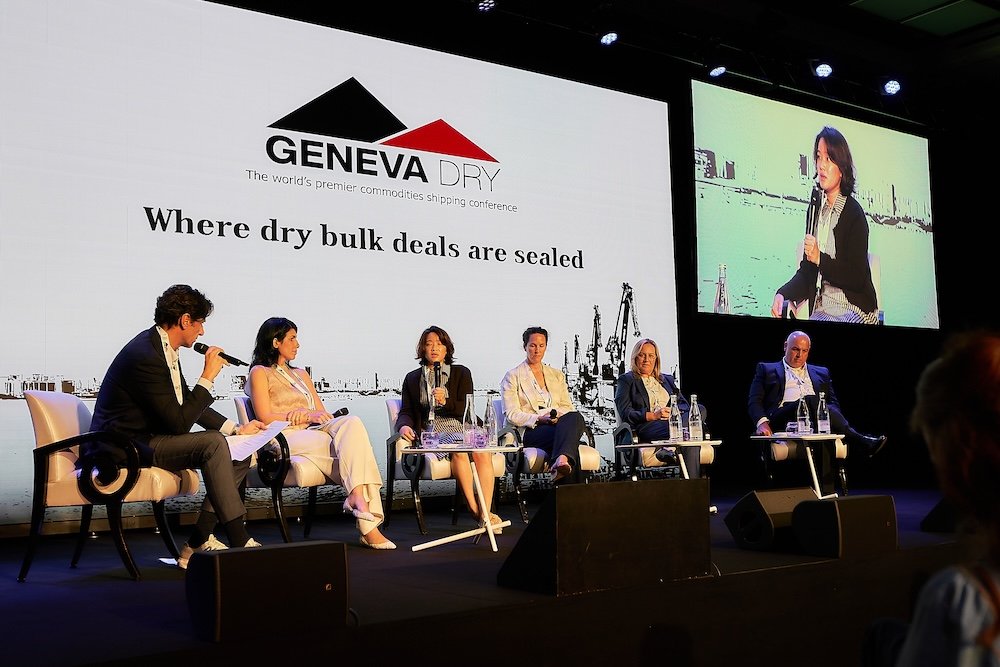
The final session of Geneva Dry’s opening day tackled what many in the room consider the dry bulk industry’s most existential question: in a world of instant data, AI-powered analysis and algorithmic trading, what exactly is the broker for? The answer, delivered with candour and occasional humour by a panel of owners, charterers and a data platform executive, was reassuringly human – but with important caveats.
Moderator Emanuele Ravano, co-CEO of broker IFCHOR GALBRAITHS, opened by highlighting the stakes. “Will we be out of a job in the next 10 years?” he asked. The session that followed suggested the answer is no – but the job is changing faster than most are comfortable admitting.
The panel’s opening round-robin on what has shifted most in fixing over five years revealed a consensus around one word: complexity. Kalli Livanos, chief commercial officer of Kyla Shipping, pointed to the cascade of external pressures. “Geopolitical turmoil, a pandemic, regulations changing, the move towards decarbonisation – the allocation of risk has made our negotiations much more complicated and lengthy.”
Malgorzata Gill of Holcim Trading offered the counterpoint. “What did not change is picking up the phone, calling a broker, calling an owner, drafting a recap and executing it. This didn’t change, amazingly.”
Emily Koo, group managing director of Hong Kong shipowner TCC Group, identified the structural shift beneath the noise. “There’s a lot more noise in the market and a much wider variety of players. But what stays remarkably the same is people – whether it’s our relationships with business partners or colleagues at sea.”
The session’s richest debate centred on the balance between data and intuition. Andrew Roberts of RightShip described what he sees as a fundamental model shift: “Ten years ago we had a human-led, data-assisted model. Now we’re moving into a machine-led, human-assisted model.” He cited RightShip’s 2m data points on port state control alone as an example of how AI can surface risk assessments in seconds that would previously have taken days.
But Livanos pushed back with a concrete example. When two cargoes look identical on paper, she reaches for the phone. “I will call up and ask, have other people had bad experiences with this counterpart? Intuition is you take an immediate decision based on human gut and data that you cannot put into algorithms. And it can be a game changer.”
Emilie Nourry, head of shipping at Eramet, made the point that cut through most cleanly. “When it comes to fixing, taking decisions, vessel screening, vetting of the counterparty – we basically don’t use AI. And for me as head of shipping, fixing – yes or no, and with who – is a matter of responsibility. AI or not, the responsibility will still stand with me.”
Nourry was equally direct about what she now expects brokers to provide above all else. “What I need to know from the brokers is who’s behind. And this is not going to come from ChatGPT or Claude. It’s going to come from experience, from judgment, from awareness. This is where the human matters.”
A theme of the panel was the shift in what charterers scrutinise most carefully. Nourry said Eramet now focuses more on the owner than the vessel. “From bad experiences, we know that it’s important to choose the right counterparty where trust, transparency and relationship is key.” Compliance, she argued, has become one of the defining features of daily fixing life – a sentiment Gill echoed, though with a more optimistic tone. “Compliance is a competitive advantage for us. Sticking to our guns will give us a competitive advantage in the future.”
On the existential question of the broker’s future, the panel was clear-eyed. Gill drew laughter with a sharp observation. “I’ve been hearing about the imminent death of brokers since I started. It was the time of fax machines still. And it’s 25 years later and we are all still here.” Her definition of what a good broker delivers today: “They are my eyes and ears, bringing transparency from an untransparent market. They are my additional set of hands and, when my brain is otherwise occupied, an additional set of brains.” Her benchmark question for new brokers has not changed. “What do you bring to the table that we don’t have in-house? If they have nothing to say, there is nothing to start a new relationship on.”
Koo offered the most sentimental defence of the broker relationship. “Some brokers have taken care of us for generations. I use them as a source of understanding how my grandfather looked at putting together a piece of business. That’s very intangible value, and I hope more brokers can veer towards that.”
On the boutique versus conglomerate question, Gill saw complementary rather than competing roles. “Big broker houses have great research but the personal touch sometimes gets lost. Boutique brokers don’t have research departments, but their personal touch and years of experience handling the same account give them a competitive advantage. They satisfy different needs.”
Asked to envision fixing in 10 years, the panel resisted fantasy. Nourry was succinct: “A human being will still be behind every decision.” Koo predicted efficiency gains rather than transformation: “We won’t change what we do – transporting cargo safely from A to B.” Roberts was honest about the limits of forecasting: “The themes being discussed at this conference versus two years ago are already taking a different course. It’s impossible to say.”
Gill offered the session’s most memorable line. Fixing may soon get dramatically faster at matching ships to cargoes. But, she noted, the industry is still typing recaps in all caps using abbreviations inherited from the telex era. “What can surprise us is how little will change. Our industry is very conservative. We take change very reluctantly.”
The cocktail hour that followed – featuring a drink the sponsors had named the Arrow Fixer – suggested the human element of fixing, at least, is in no immediate danger of digital disruption.