Peter Tirschwell leaves JOC after 34 years to go i...
2 hours ago

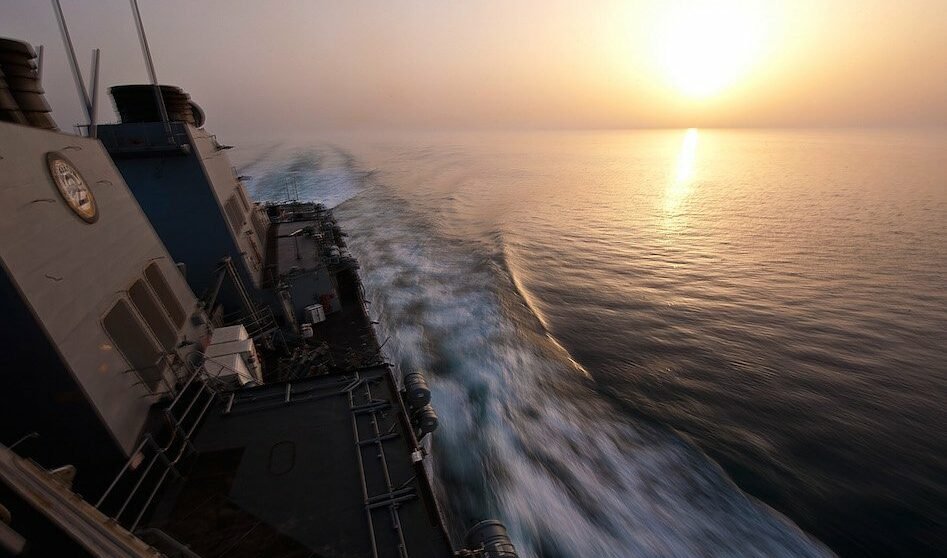
Three VLCCs transited the Strait of Hormuz outbound on Wednesday in what maritime intelligence firm Windward described as the strongest single indicator yet of a coordinated operating protocol on the corridor – the first sign in almost 12 weeks that some form of guided passage may be resuming through the critical oil chokepoint.
Two Chinese-controlled vessels exited in a synchronised pair, travelling in tight 5-10 km formation with AIS transmitting openly, carrying Iraqi and Qatari crude destined for Quanzhou and Ningbo respectively. A third vessel, a South Korean-flagged VLCC carrying Kuwaiti crude for Ulsan and Onsan, transited in the same window but outside the Chinese formation, operating with AIS dark.
Windward assessed the coordinated Chinese departure as significant. The open AIS transmission across the strait, it noted, may indicate a tacit operational understanding between Washington and Beijing that Chinese-controlled lifts of Iraqi and Qatari crude are not primary enforcement targets under the current US posture.
Oslo shipbroker Fearnleys confirmed the movements and added that Eastmed’s Grand Lady was said to be transiting inbound to load inside the Gulf.
“Combined with chatter of a deal between the US and Iran being close, it could possibly indicate that things could slowly move towards a solution of sorts,” Fearnleys said. “Here’s hoping, but we’ve been disappointed before.”
Iran’s Islamic Revolutionary Guard Corps navy separately claimed that 26 commercial vessels – including oil tankers and container ships – had transited the strait over the previous 24 hours in coordination with Iranian authorities. Iranian Foreign Ministry spokesperson Esmaeil Baghaei said Tehran is seeking to establish a mechanism with Oman to ensure sustainable security in the Strait and is prepared to develop protocols for safe shipping in cooperation with other coastal states.
Iran’s self-declared Persian Gulf Strait Authority published what appears to be the clearest geographic definition yet of the maritime zone it claims to control, describing its supervision area as spanning from the line connecting Kuh Mobarak in Iran and the south of Fujairah in the UAE in the east, to the line connecting the end of Qeshm Island and Umm al-Qaiwain in the west. An accompanying map (pictured) depicted broad areas of the Persian Gulf and Gulf of Oman under what it described as Iranian armed forces oversight.
The PGSA said vessels operating within the area require coordination and a permit from the authority to pass through the strait.
On the water, US forces continued enforcement operations. CENTCOM said marines boarded the Iranian-flagged tanker Celestial Sea in the Gulf of Oman after the vessel was suspected of attempting to violate the US blockade by transiting toward an Iranian port. The vessel was searched and released after its crew was directed to alter course. US officials say the blockade campaign has now redirected more than 90 commercial ships operating near Iranian ports.
The transit developments came as BIMCO, INTERTANKO, OCIMF, the International Chamber of Shipping and other major industry groups issued new joint guidance warning that conditions inside Hormuz remain potentially dangerous even if the waterway appears open. The 22-page advisory warned of simultaneous threats including GNSS jamming and spoofing, AIS manipulation, mines, drones, unmanned surface vessel attacks, and the risk of extreme congestion if large numbers of vessels attempt to transit simultaneously after months of delays.
“Transit planning must consider both security risk and navigational risk,” the guidance states, adding that deferring transit should be considered a safer option when threat assessments deteriorate.
Operators were also advised to disable bluetooth, wifi and location services on personal devices amid concerns that connected devices could leak vessel position data.
Industry scepticism about any Iranian-administered transit regime remains deep, with legal exposure from direct coordination with the PGSA – an entity linked to the IRGC – a significant concern for owners and their insurers.