Border town key port for trade with Europe
9 hours ago

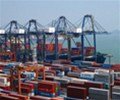
APAC port and airport operators would face mixed but increasingly negative credit effects if Iran-linked shipping and airspace disruption persists, Fitch Ratings says. Congestion can lift some storage and ancillary income at container ports, but weaker schedule reliability typically raises unit costs and reduces productivity, pressuring margins at operators with high fixed costs. The main tail risk is a prolonged closure of the Strait of Hormuz, which would amplify volume and cost shocks across energy, bulk and container supply chains.
APAC ports face network disruption, such as re-routing, blank sailings and vessel bunching, which can create short-term congestion and longer dwell times, but also increases yard re-handling, labour and equipment costs and can reduce berth and yard productivity. Demand effects can follow as higher bunker and war-risk insurance costs lift freight rates and delivered costs, delaying cargo decisions and weakening trade volumes.
Chinese container ports are likely to experience the clearest impact through network dislocation rather than material Middle East exposure. Service adjustments can lead to blank sailings, late arrivals and vessel bunching when schedules are reset, raising yard congestion and increasing labour, equipment and storage costs even if headline throughput holds up. Ports with higher transhipment exposure and tighter yard capacity typically see the largest swings in productivity and dwell times.
Import-focused energy terminals face a different risk. China partially relies on Gulf-linked crude and products. Sustained disruption would require longer-haul replacement cargoes and create discharge timing mismatches. This can increase port delay charges and inventory financing needs and may reduce throughput at terminals tied to specific trade lanes. Dry bulk effects are mixed. Higher energy prices can support thermal coal demand in parts of Asia, but cost inflation can weaken industrial activity and reduce demand for iron ore and other bulk products.

The financial impact will depend on tariff structures and operating leverage. Landlord ports with diversified revenue and flexible storage income can offset volatility, while operator-model ports with higher fixed costs and performance-linked contracts face more margin pressure if congestion reduces productivity. Working-capital pressure can rise if ports absorb higher energy costs or face slower collections.
Fitch believes Zhejiang Seaport and Lianyungang Port have sufficient headroom to absorb short-lived volatility from congestion, schedule disruption and higher operating costs. Ratings should remain anchored by their sponsoring municipal governments’ creditworthiness even if their standalone credit profiles weaken, reflecting a high likelihood of support.
Fitch expects rated Australian coal terminals to remain supported by take-or-pay capacity arrangements and diversified shipper bases, helping maintain earnings through short-lived dislocation. Fitch expects Port of Melbourne’s landlord model and regulated pricing framework to limit exposure to terminal operating cost increases and support revenue resilience.
Fitch expects some volume pressure on Indian ports if the conflict persists due to higher freight costs, economic slowdown and port congestion from schedule disruptions, although the impact should be manageable. Rated Indian port operators have limited exposure to crude and liquefied natural gas-related cargoes (around 5% for Adani Ports and Special Economic Zone and JSW Infrastructure), while the contribution of overseas operations with higher exposure to the conflict is limited to less than 10% of group EBITDA.
APAC, especially Indian, airports, could face near-term traffic volatility if disruption to West Asian airspace persists. West Asia is an important and sizeable source of air traffic into India and a hub for Europe‑ and US‑bound connectivity, which would be sensitive to prolonged closure or restriction of West Asian airspace. This could reduce rated Indian airports’ traffic through cancellations, diversions and longer flying times. Short‑lived disruptions can generally be absorbed, but an extended closure would heighten downside risks to revenue and margins.
Source: Fitch Ratings