New CEO takes the reins at Chinese giant oil &...
57 minutes ago

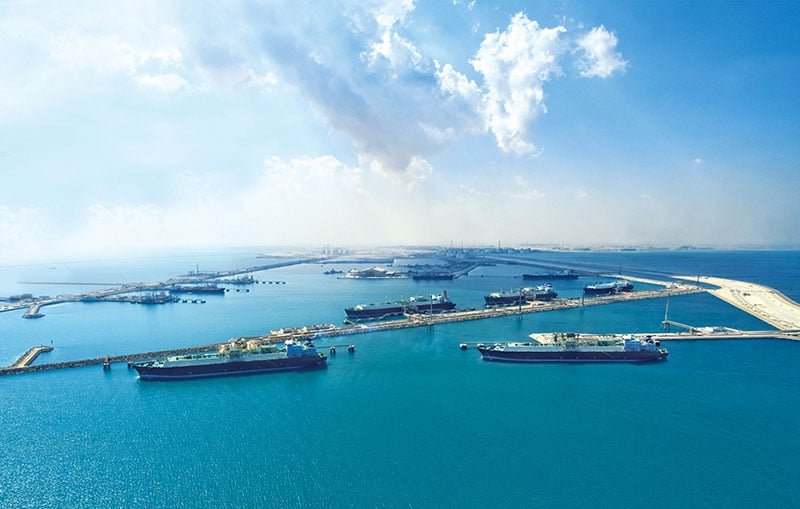
Qatar’s state-owned oil and gas giant QatarEnergy has confirmed a curtailment in its liquefied natural gas (LNG) capacity in the aftermath of recent missile strikes at its LNG facilities.
Following the U.S. and Israel’s launch of a military campaign against Iran, which sparked the latest Middle East crisis, Iran closed the Strait of Hormuz, which caused QatarEnergy to halt LNG production and associated products at some of its assets, and followed the move with a declaration of force majeure to its LNG buyers.
The situation became even more complex when Iran issued a warning about its planned attack on oil and gas facilities across the Gulf region in response to Israel’s attack on its South Pars gas field, which is known as the North field on Qatar’s side. The Qatari giant confirmed a missile attack at the Ras Laffan Industrial City on March 18, 2026.
Saad Sherida Al-Kaabi, Qatar’s Minister of State for Energy Affairs, President and CEO of QatarEnergy, has explained that the missile strikes reduced the country’s LNG export capacity by 17% and caused an estimated loss of $20 billion in annual revenue.
According to QatarEnergy’s update on the damage from the missile attacks on Ras Laffan Industrial City, the extensive damage to its production facilities will take up to five years to repair and compel it to declare long-term force majeure, impacting supply to markets in Europe and Asia.
Minister Al-Kaabi highlighted: “I am relieved to confirm that no one was injured by these unjustified and senseless attacks, which weren’t just an attack on the State of Qatar but attacks on global energy security and stability. This was an attack on all of us who stand for development and human progress that is sustained by a fair, reliable, and secure access to energy.”
The attacks damaged two LNG producing trains, 4 and 6, totaling 12.8 million tons per annum (mtpa) of production, representing approximately 17% of Qatar’s exports. The first train is a joint venture between QatarEnergy (66%) and ExxonMobil (34%), and the second one between the Qatari giant (70%) and the same partner (30%).
Al-Kaabi added: “The damage sustained by the LNG facilities will take between three to five years to repair. The impact is on China, South Korea, Italy and Belgium. This means that we will be compelled to declare force majeure for up to five years on some long-term LNG contracts.”
The company claims the recent attacks targeted the Pearl GTL facility, a production sharing agreement (PSA) operated by Shell, that converts natural gas into high-quality cleaner-burning drop-in fuels and produces base oils used to make premium engine oils and lubricants, and paraffins and waxes.
The firm underscores that there will be a loss of associated product production due to the outage, encompassing condensates of 18.6 million barrels (around 24% of Qatar’s exports), LPG of 1.281 metric tons (mt) (around 13% of exports), naphtha of 0.594 mt (6% of exports), sulfur of 0.18 mt (6% of exports), and helium of 309.54 mcfa (14% of exports).
“The damage caused to one of the two trains at Pearl GTL is being assessed and is expected to be offline for a minimum of one year,” emphasized Minister Al-Kaabi.

Take the spotlight and anchor your brand in the heart of the offshore world!
Join us for a bigger impact and amplify your presence at the core hub of the offshore energy community!